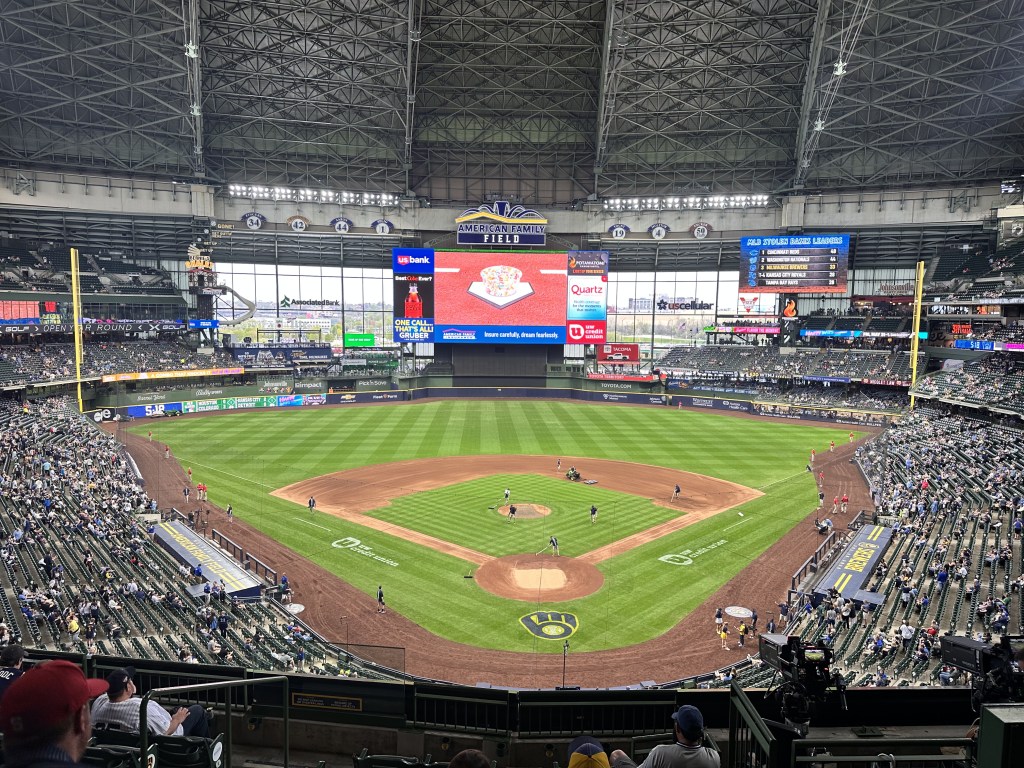
American Family Field, home of the Milwaukee Brewers, was ballpark #8 for us. Following is the list of all active ballparks that we’ve visited at the time of this writing:
1 — Baltimore Orioles (1992; date unknown)
2 — Philadelphia Phillies (2004; date unknown)
3 — Pittsburgh Pirates (July 30, 2022)
4 — Atlanta Braves (May 28, 2023)
5 — Miami Marlins (July 7, 2023)
6 — Washington Nationals (August 19, 2023)
7 — Chicago White Sox (September 1, 2023)
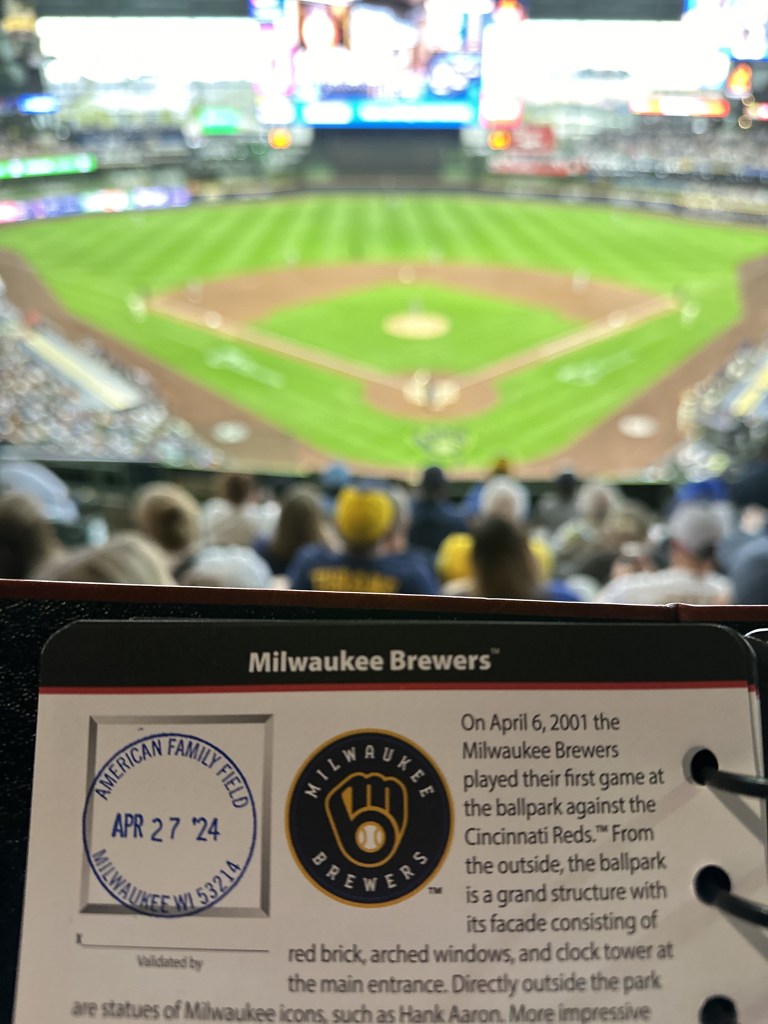
8 — Milwaukee Brewers (April 27, 2024)
American Family Field is located about 5 miles west of downtown Milwaukee. It is in a remote location that is not within walking distance to hotels, bars, or restaurants. For this reason, the majority of fans arrive by car and park in one of several large parking lots that surround the stadium.
If pregaming at a bar is your thing, there are several popular downtown Milwaukee bars that offer free shuttle service to games. This is a great option for those that don’t want to deal with driving in traffic or paying for parking.
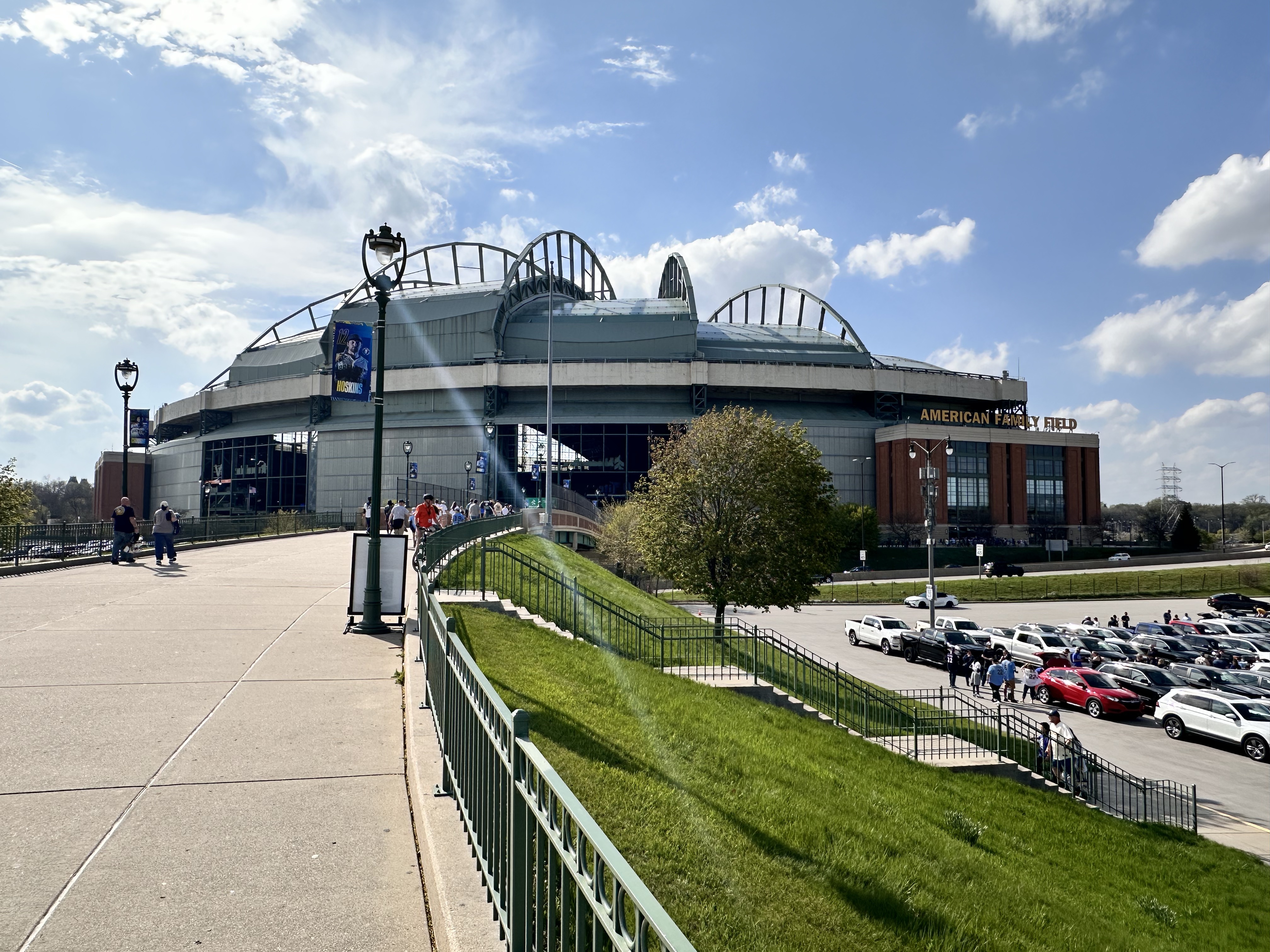
Since we were staying in a hotel near the airport, we chose to use a ride share app to get to the game. The Brewers have a dedicated ride share parking lot across Brewers Boulevard from the center field gate. It was very convenient as we were dropped off at the foot of a pedestrian bridge that extends over Brewers Boulevard. The following site map shows the location of this ride share lot and the pedestrian bridge we crossed. Also depicted are a number of special features outside of the ballpark that are worth visiting before entering the game.
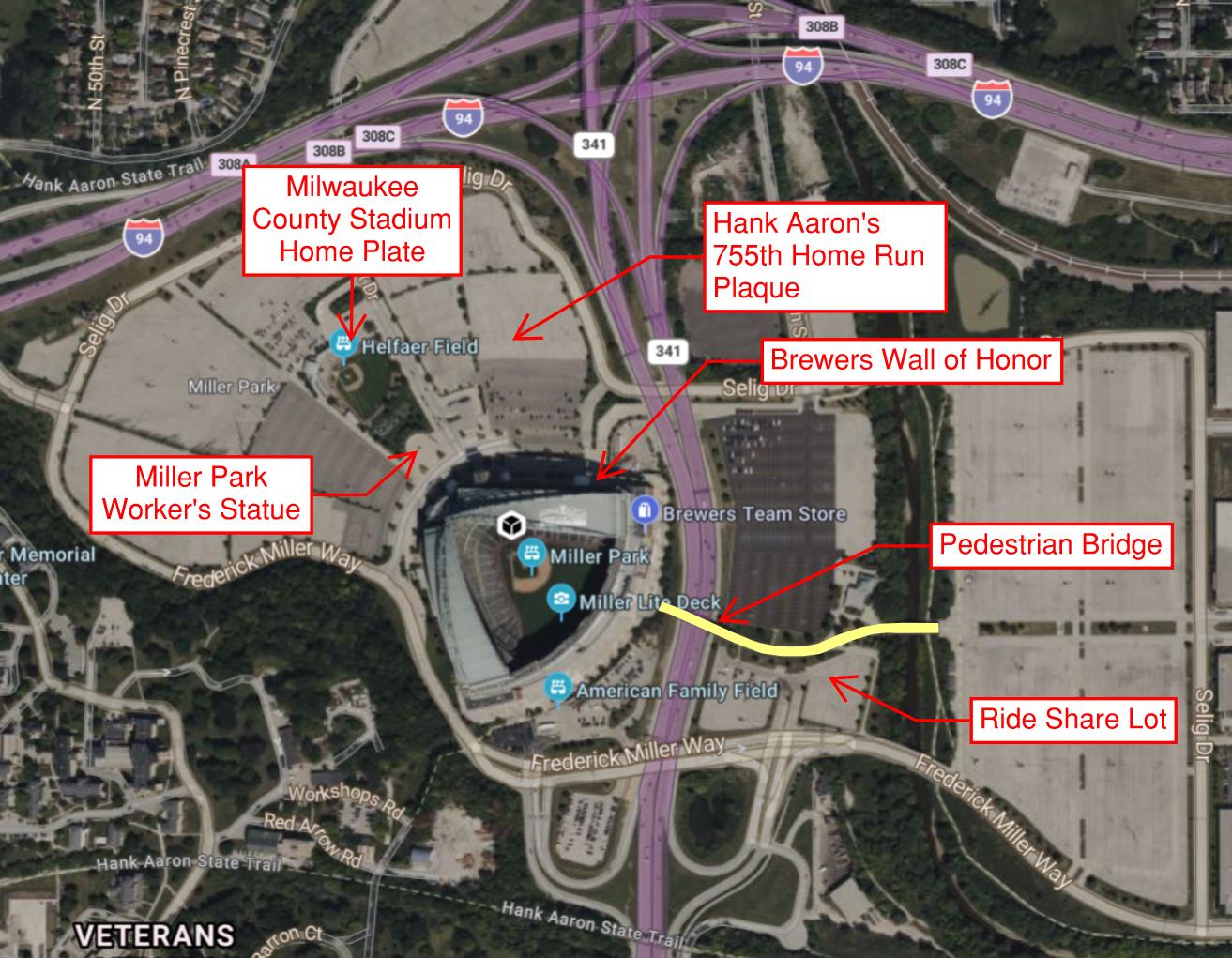
Before entering, we explored the grounds surrounding the ballpark. There are several monuments sprinkled throughout the parking areas that are worth checking out.
First, as we walked around the perimeter, we noticed the Walk of Fame. This consists of a series of home plate shaped granite plaques set within brick pavers, commemorating great names in Milwaukee Brewers History. You’ll find names like Robin Yount, Hank Aaron, Prince Fielder, Rollie Fingers, Paul Molitor, Don Money, Bob Uecker, and many others.
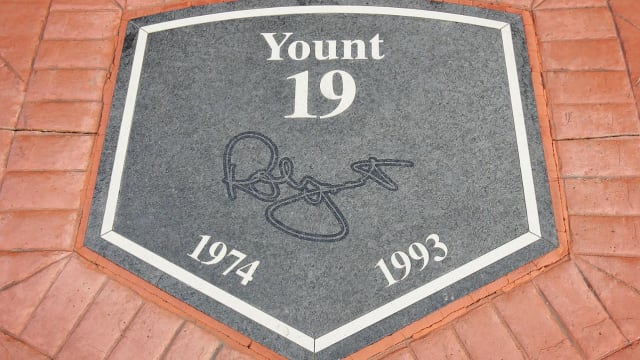
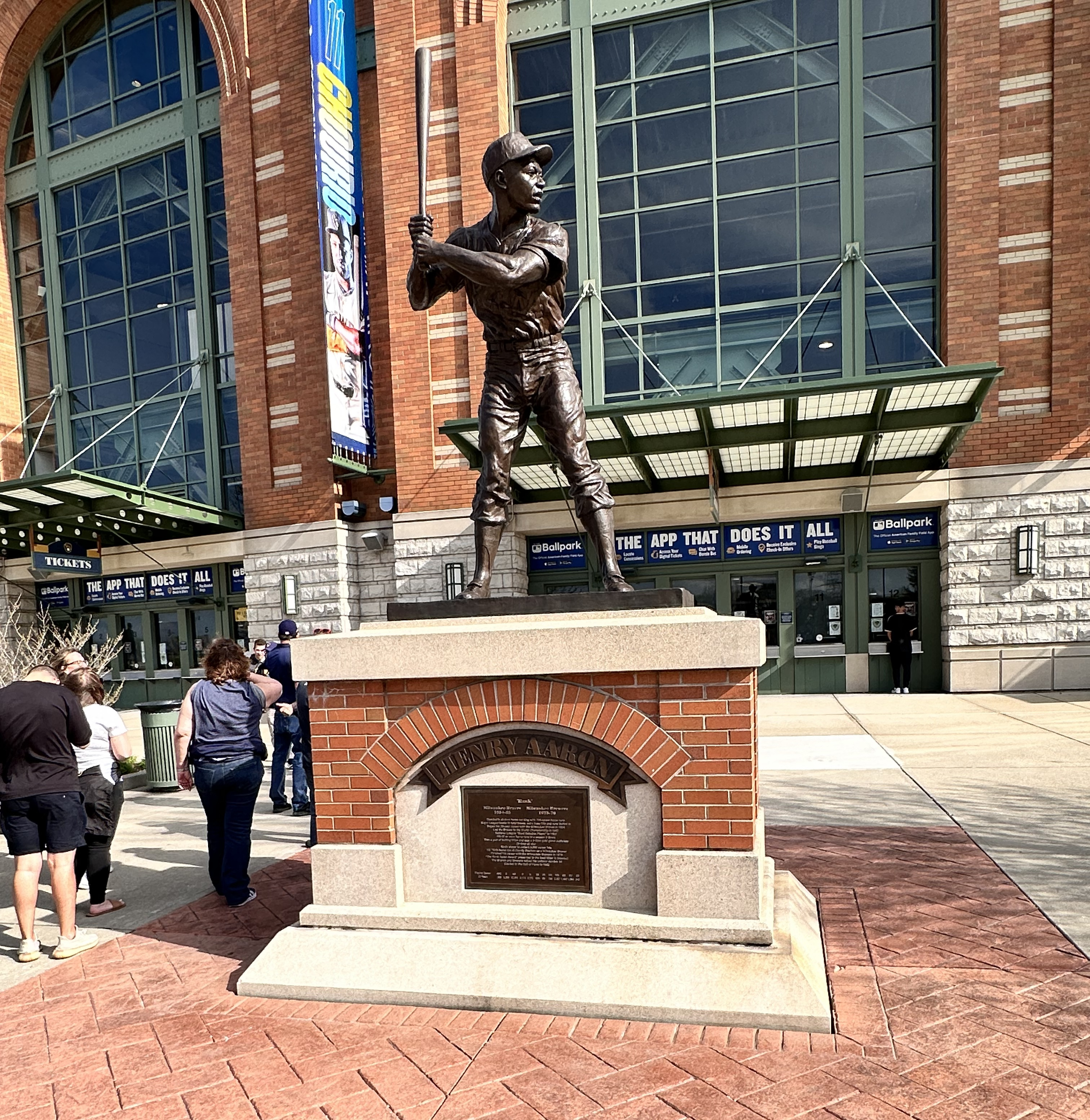
Also sprinkled along the Walk of Fame are statues dedicated to Hank Aaron, Robin Yount, Bud Selig, and Bob Uecker.
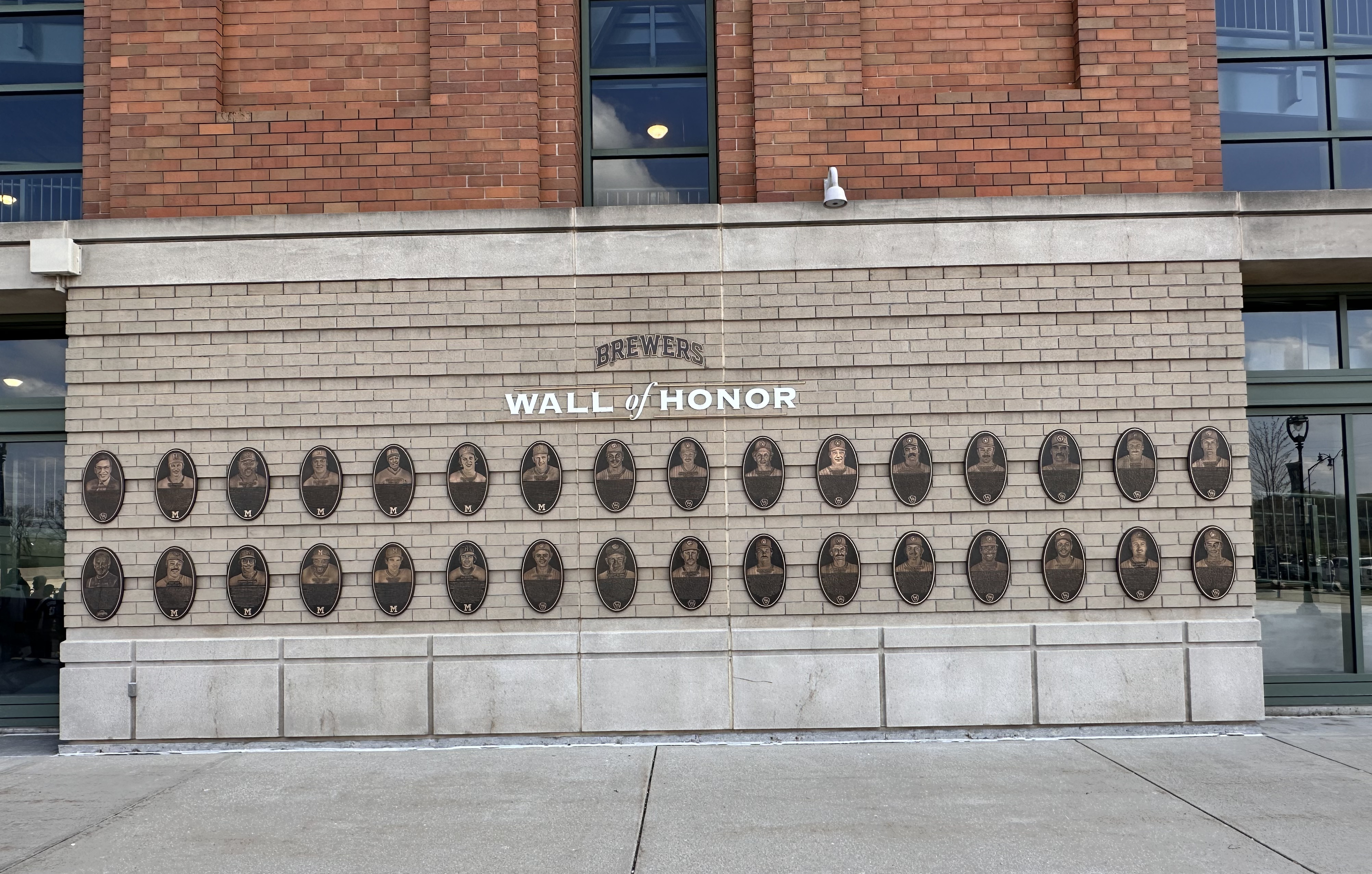
On the exterior wall of the ballpark, along the third base line, you will find both the Braves and Brewers Walls of Honor. These consist of wall mounted plaques that recognize Milwaukee’s baseball legends of the past.

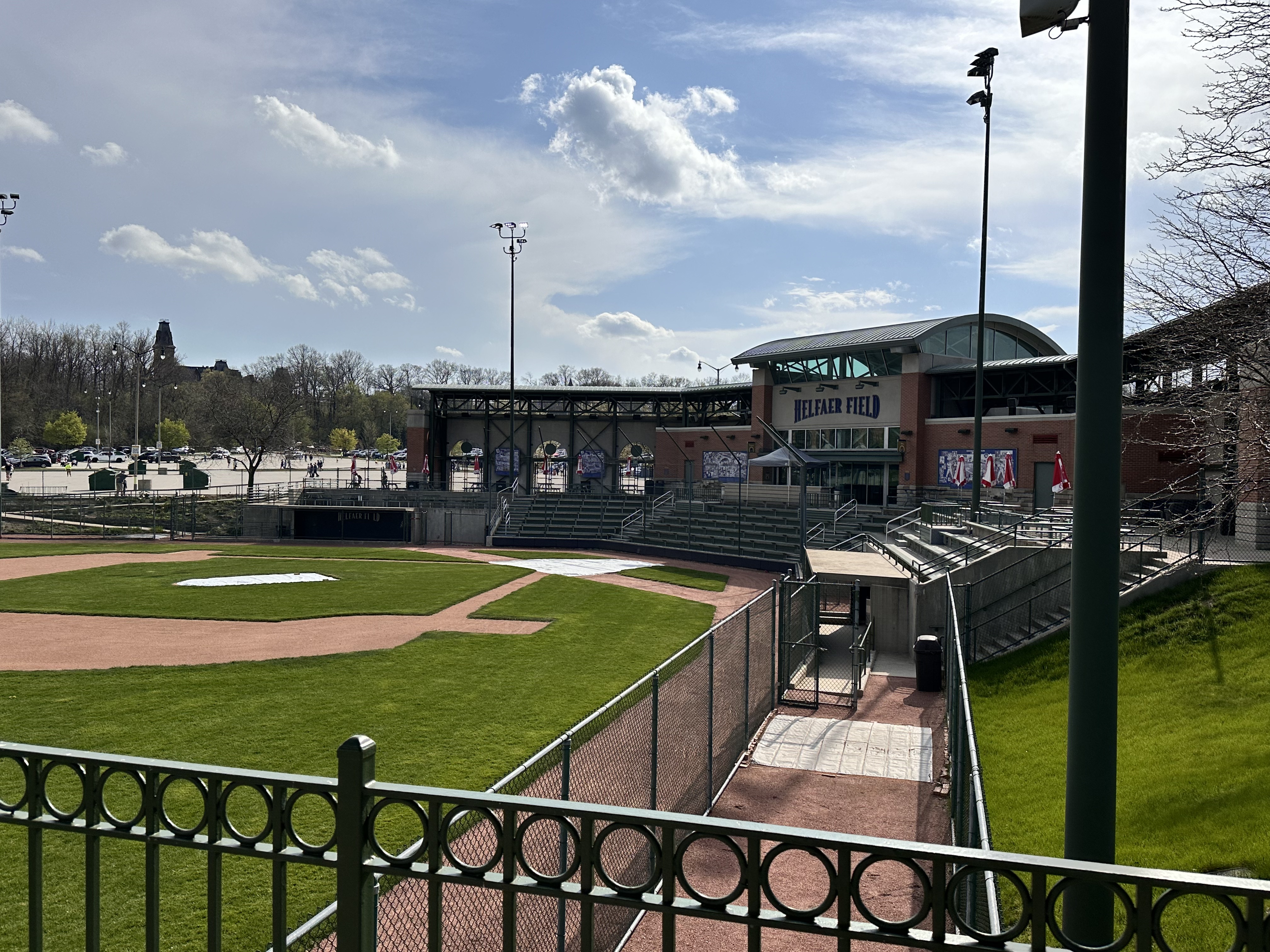
As we approached the home plate entrance, we noticed a little league field in the middle of the parking lot, so we walked over to check it out. This field was built on the site of former Milwaukee County Stadium, home of the Braves from 1953-1965 and the Brewers from 1970 – 2000. In a plaza above the third base dugout is a marker commemorating the location of home plate in Milwaukee County Stadium.
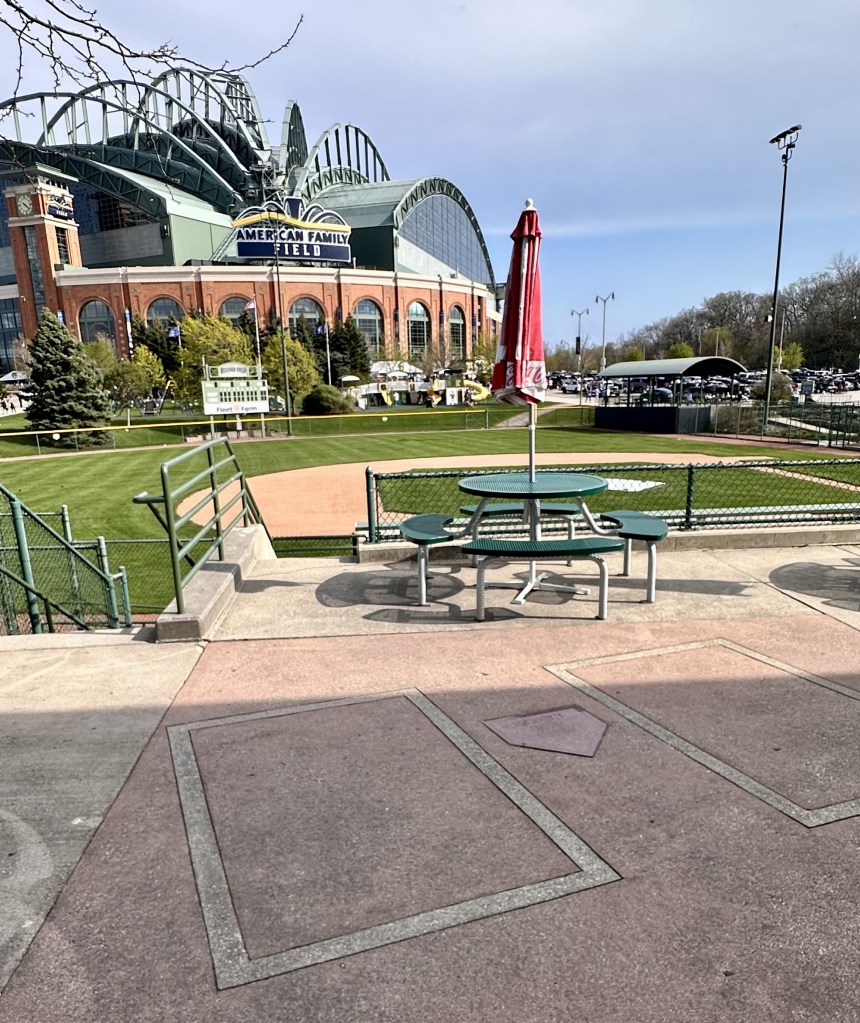
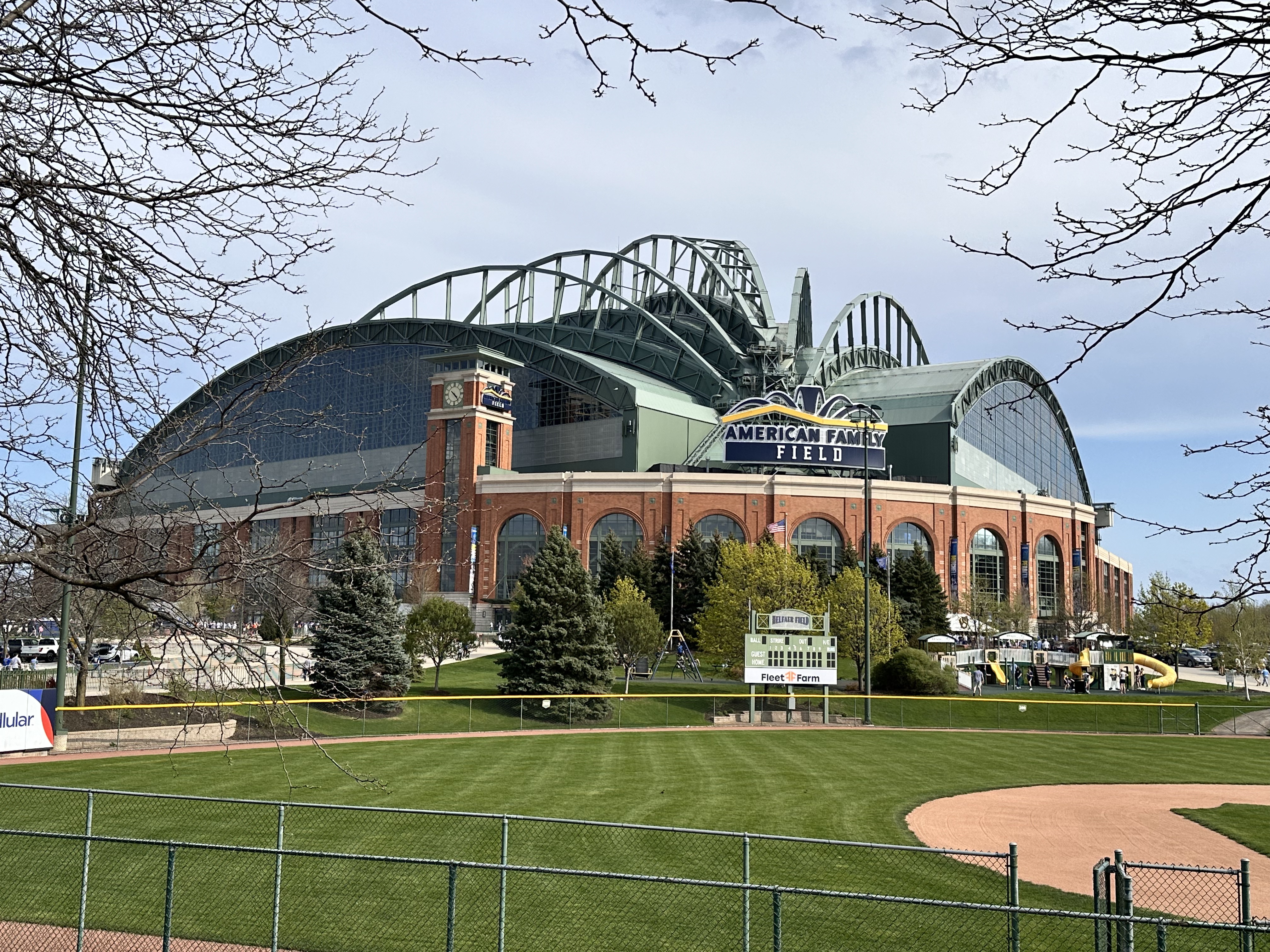
Adjacent to this little league park is a monument commemorating the Braves tenure in Milwaukee, including their 1957 World Series victory over the New York Yankees.
Another item to look for is a plaque in the parking lot that commemorates the location where Hank Aaron’s 755th home run landed. Unfortunately, we were in a rush to get into the game by this point and didn’t end up finding it.
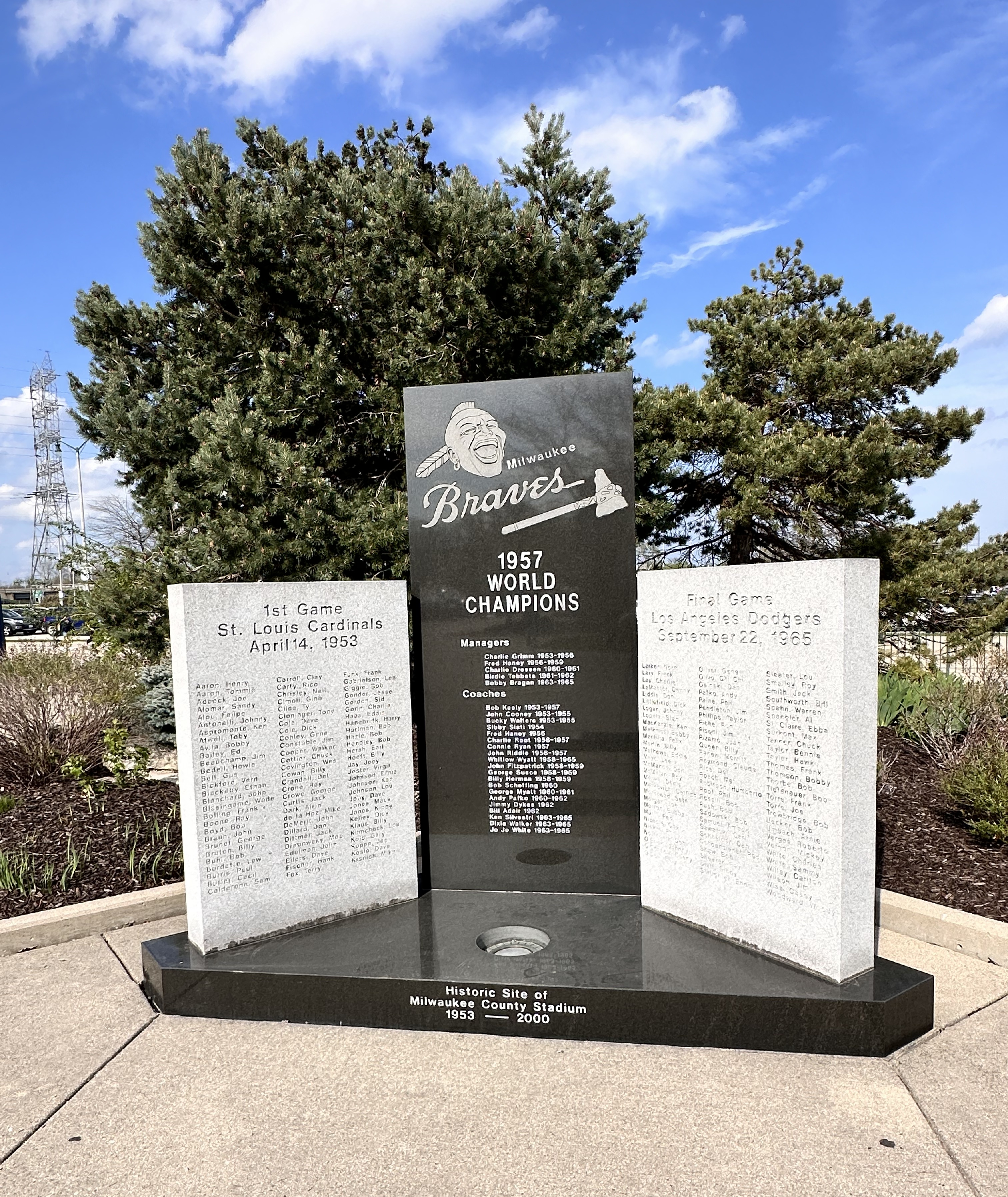
The last item we came across as we made our way back from the little league park is a memorial to the construction workers who built American Family Field, including three who tragically lost their lives in a construction accident.
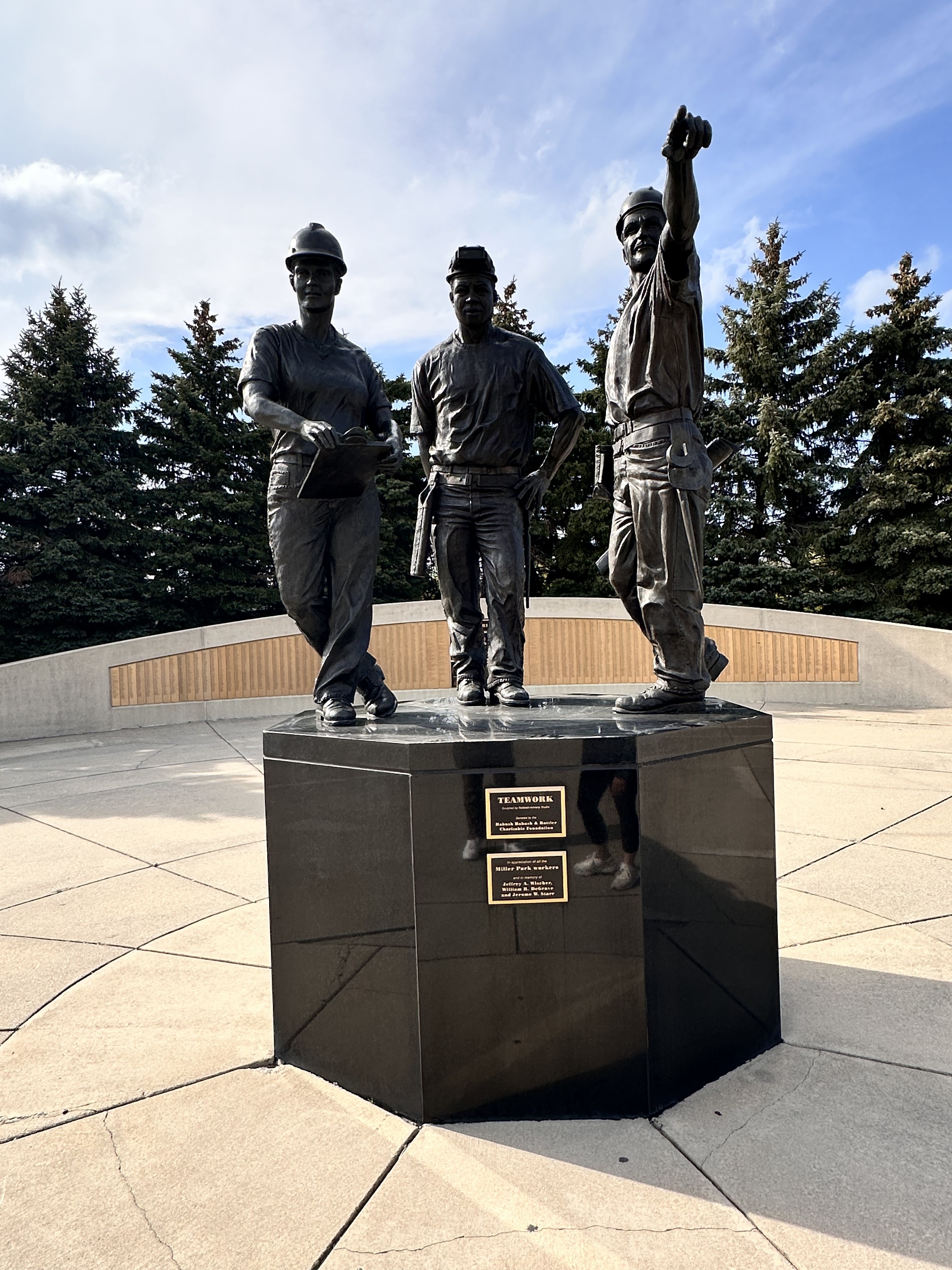
As mentioned previously, American Family Field is in a remote location, far from bars and restaurants. For this reason, tailgating is HUGE here. Infact, it is known to be the best tailgating scene in major league baseball. Many fans get to the game early, set up camp, and tailgate for hours. If you arrive early, there’s a good chance you can make some friends and score yourself a pregame beer.
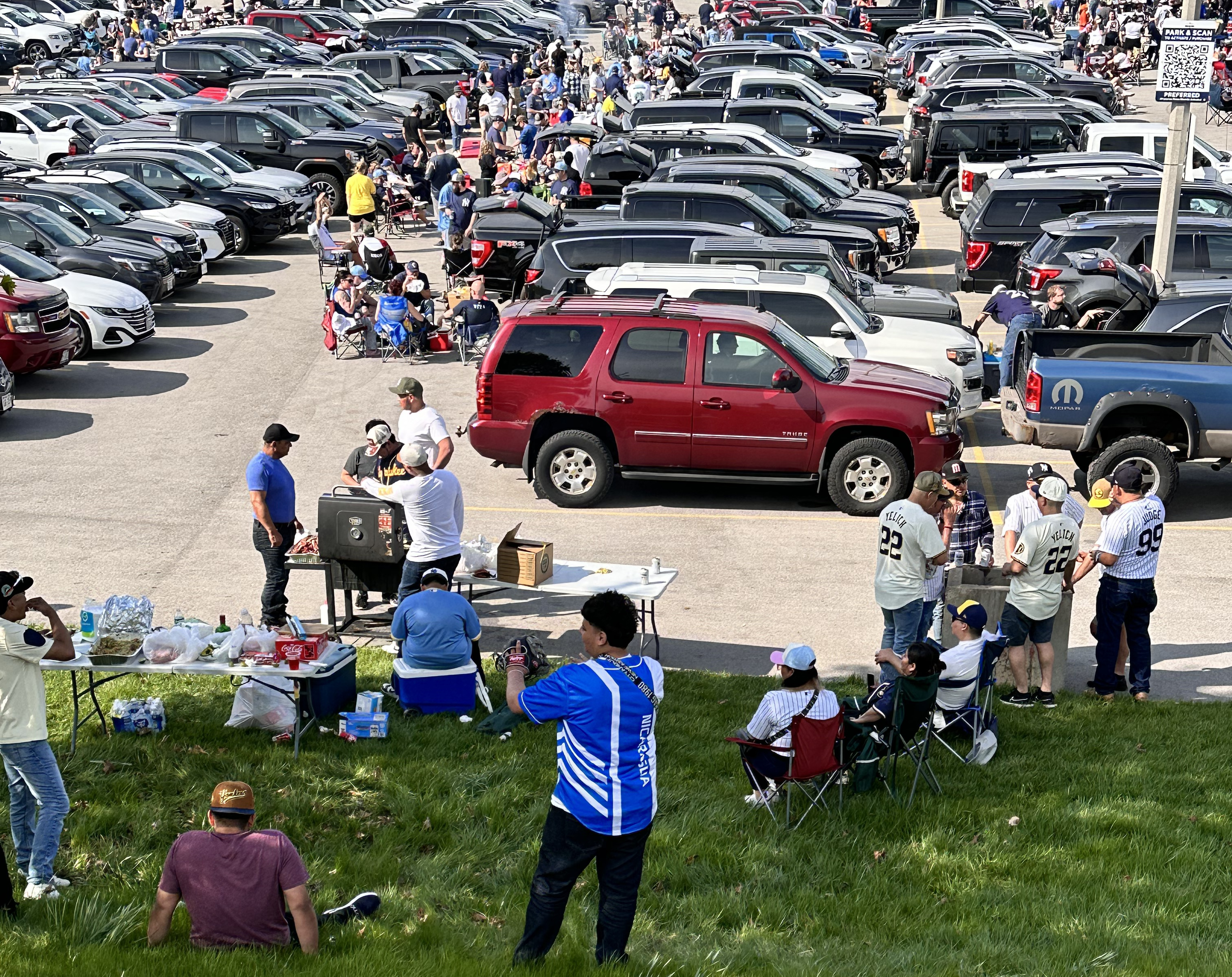
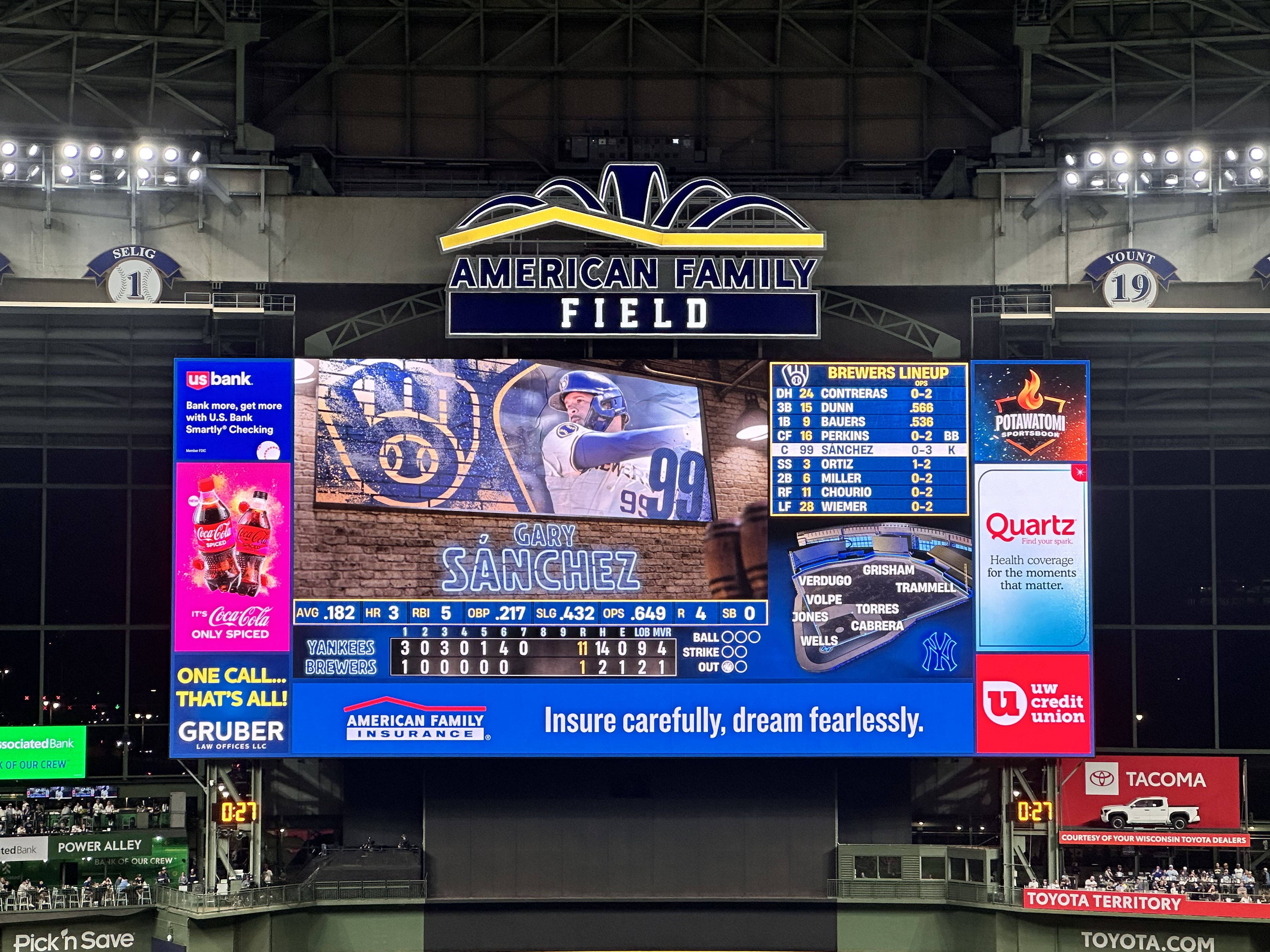
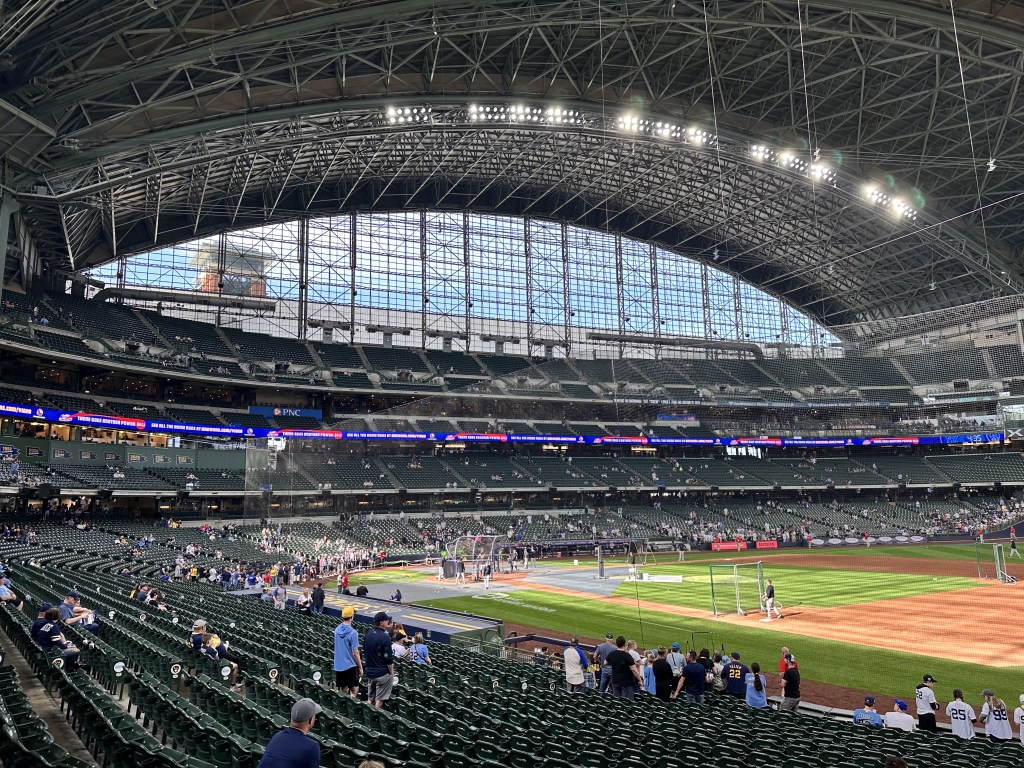
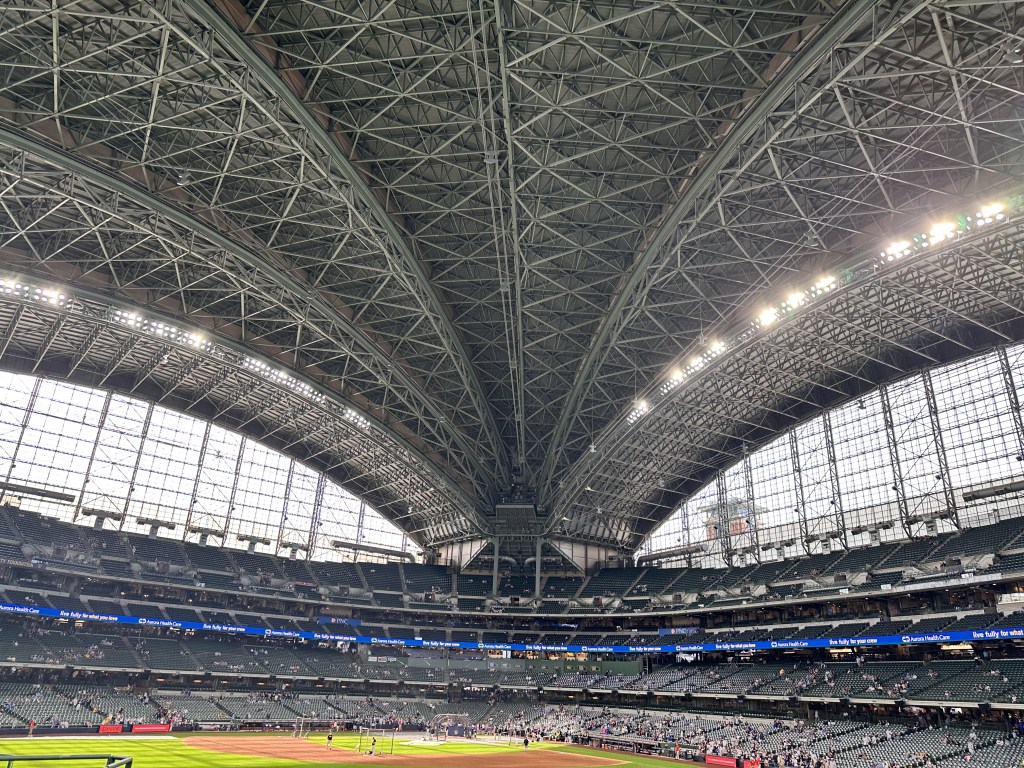
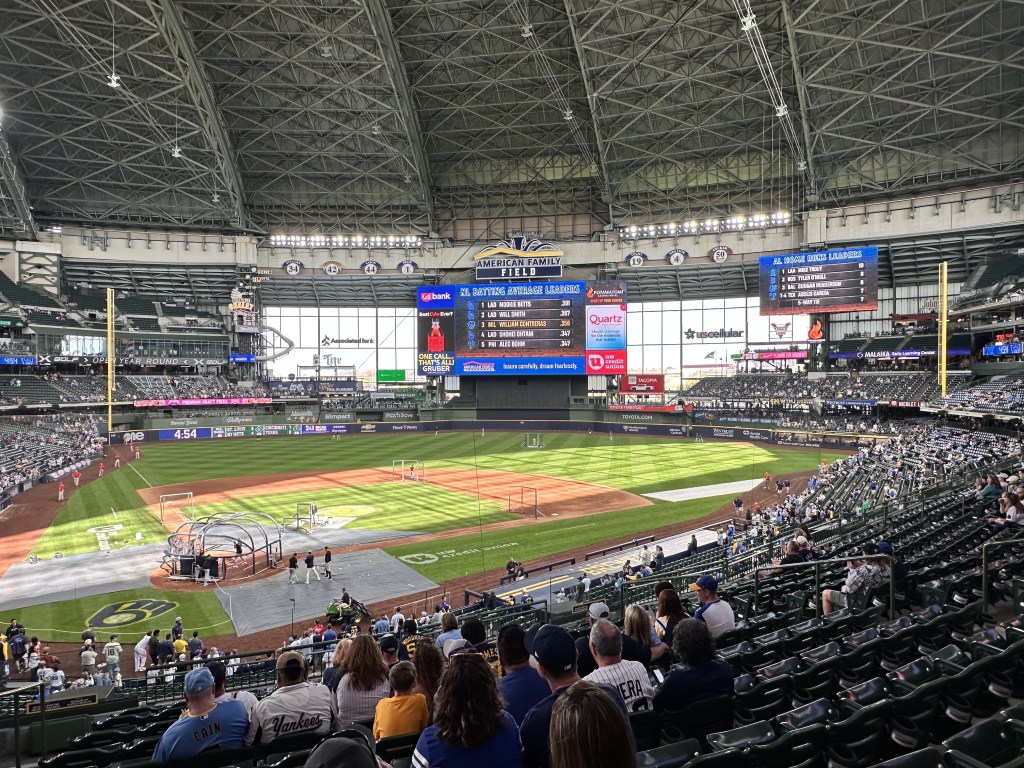
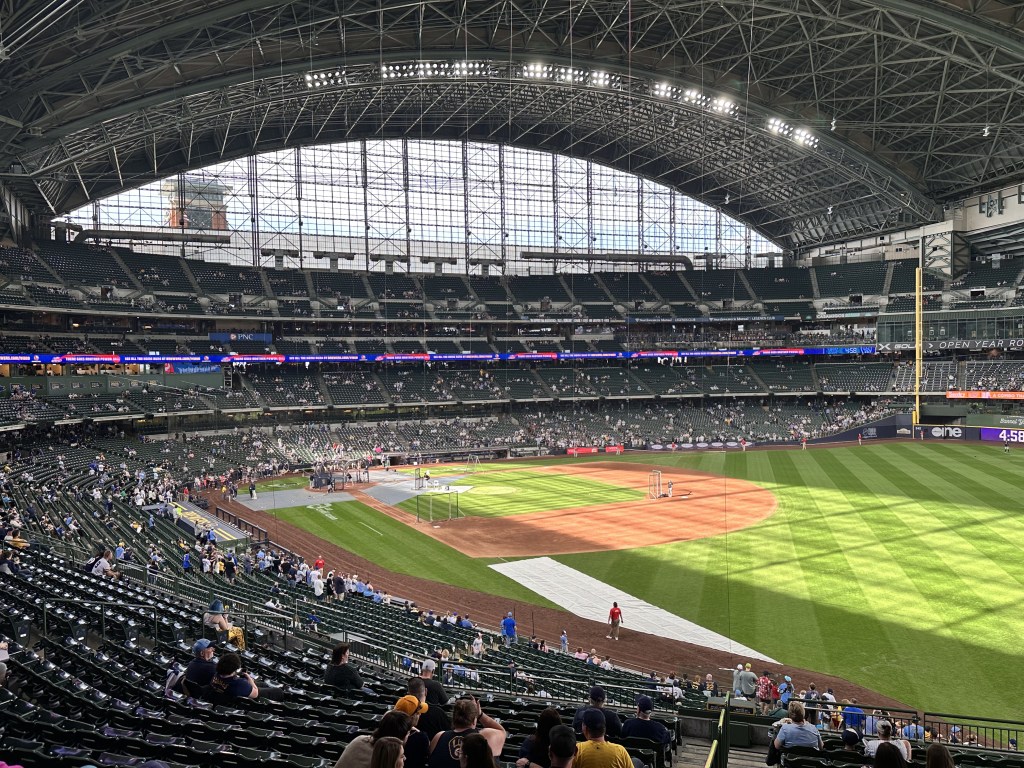
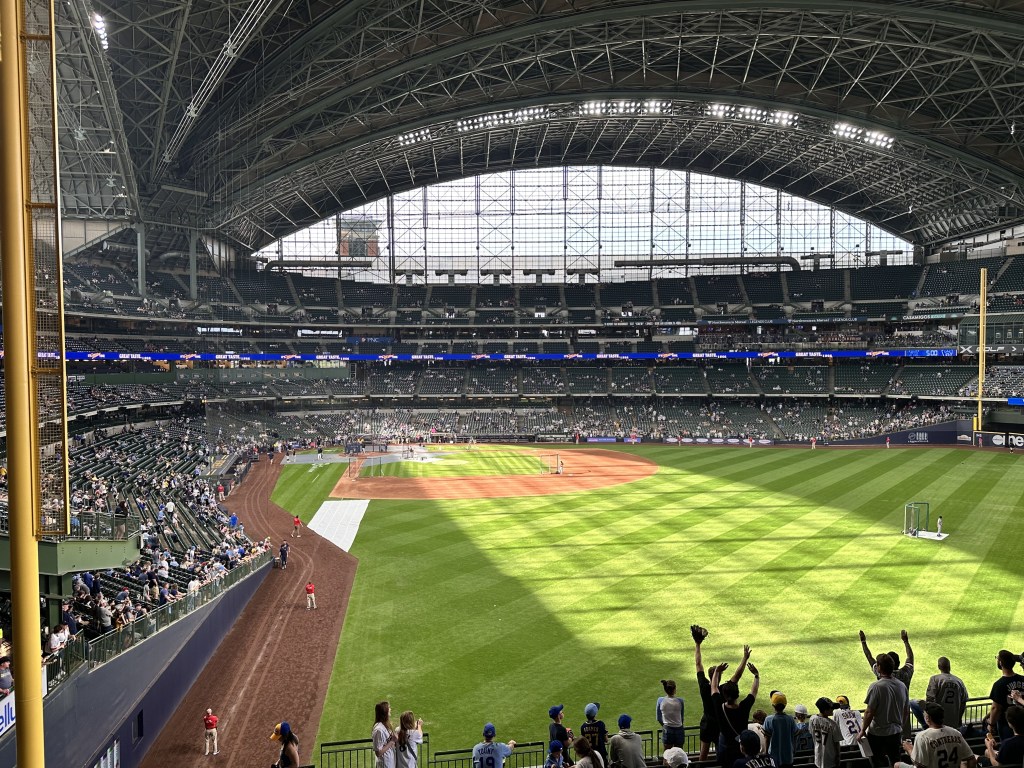
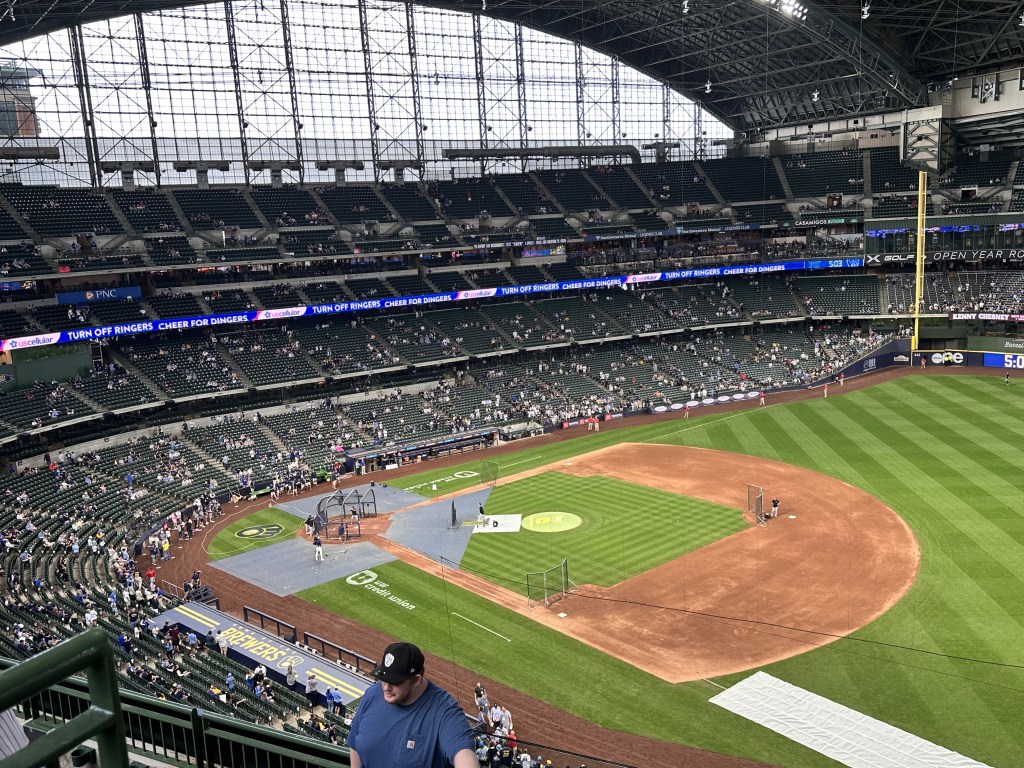
American Family Field has a retractable roof. This roof has a unique fan shape that grabs your attention and makes the ballpark feel very large. When the roof opens, the segments open from center and come to rest above large arched windows along both the first and third base stands. These arched windows are a prominent architectural feature both inside and outside of the stadium.
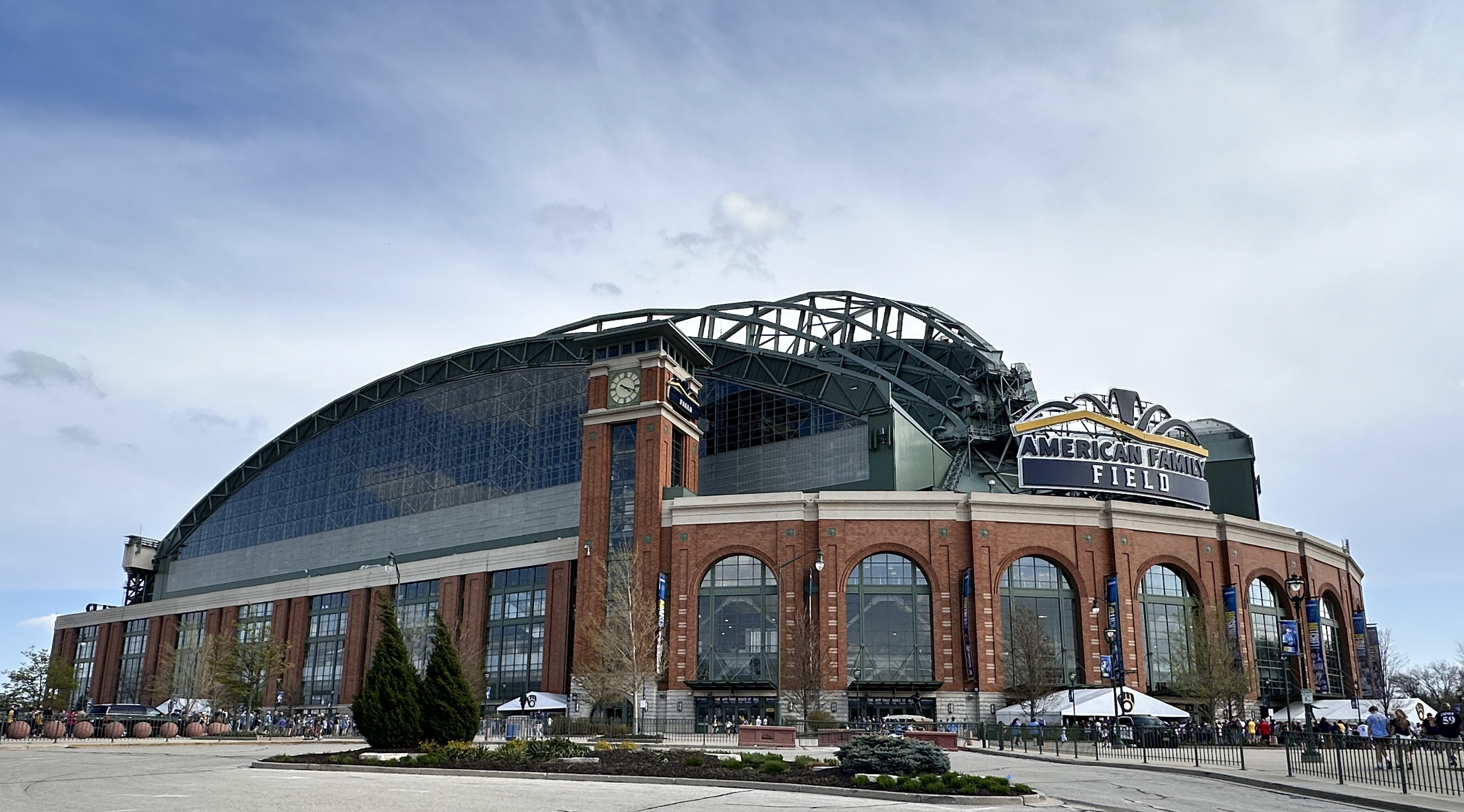
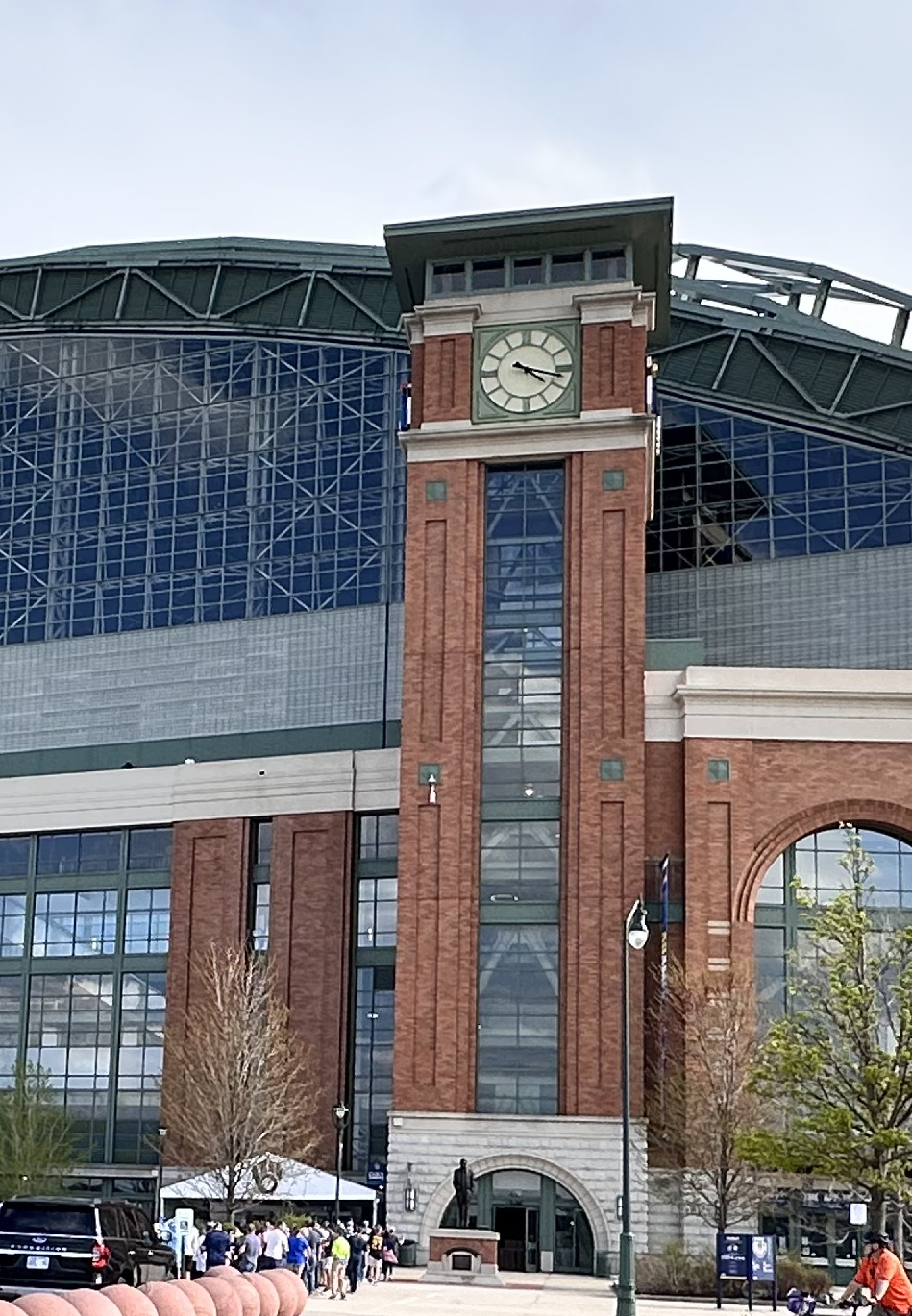
While the upper portion of the facade is steel and glass, the lower portion is brick. This brick base anchors the domed structure that towers above. There are a series of repeating glass arches that wrap around the facade. A different color brick is used at the base of the wall to bring the large mass down to a human scale. A clock tower was also incorporated into the facade along the third base side of the ballpark. It is all well-proportioned and handsome.
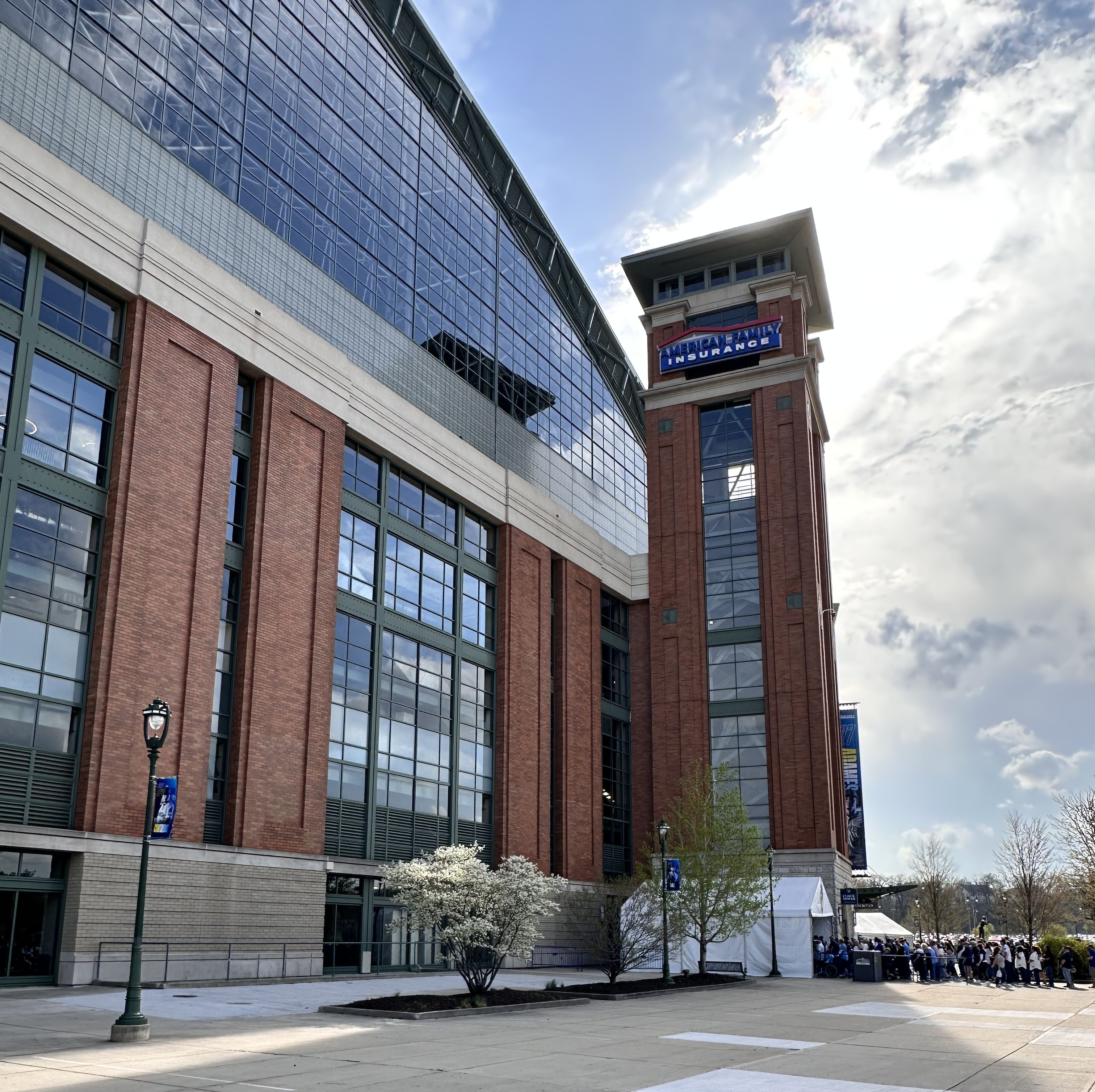
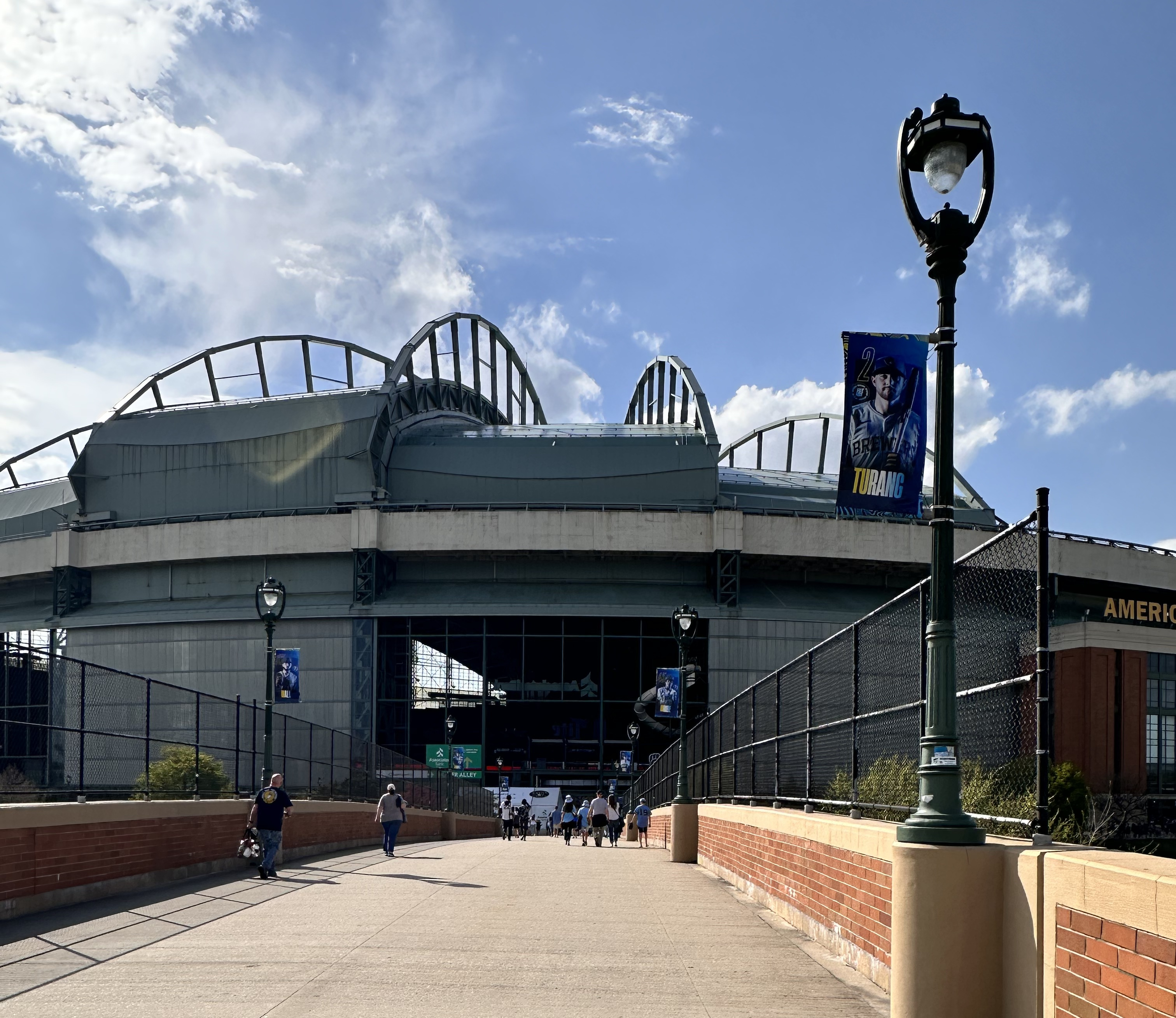
The outfield facade is all green steel. It is showing its age and is in need of some upkeep. The green color is faded and has very noticeable rust streaks.
The windows you see in the image below do not contain glass, but rather are open-air. In fact, we noticed several birds that got in through these windows and were flying around during the game.
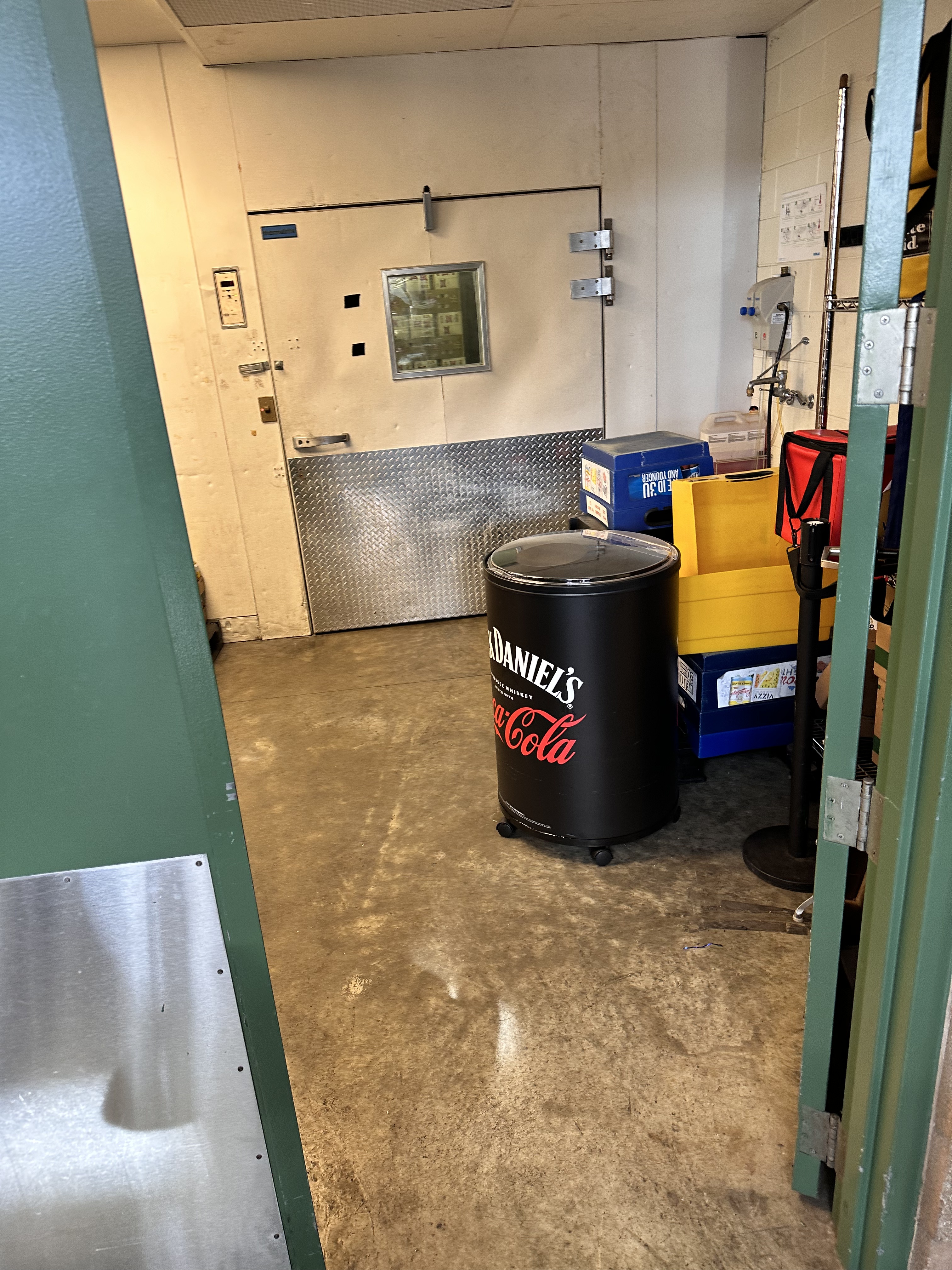
Upon entering the stadium behind home plate, we began walking around the main level concourse. The concourse felt narrow and dark. It was very crowded because the Yankees were in town, and it was a sellout crowd. There are spots where the field isn’t visible from the concourse. Specifically, behind home plate where a series of suites blocked views to the field. At one location, a storage room door was open, and we could see into the back of house space instead of enjoying a view of the field.
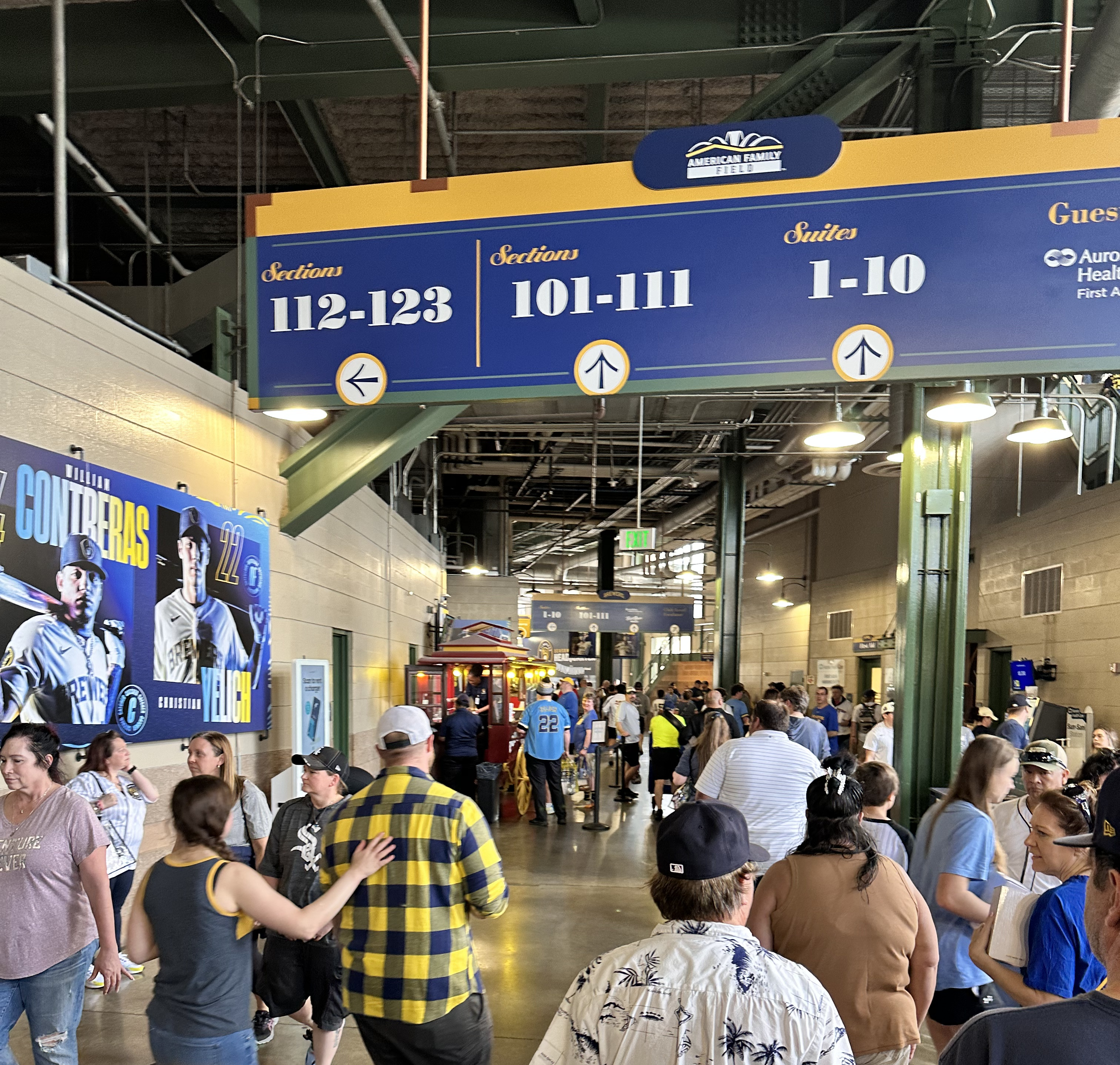
As you venture down the concourse, away from home plate, the concourse does widen, and views to the field become available. This is the location where the concession stands occur. Things felt a lot less crowded in these areas, and it was nice to have a bunch of food options all in one location as opposed to having to walk around the concourse looking for something specific.
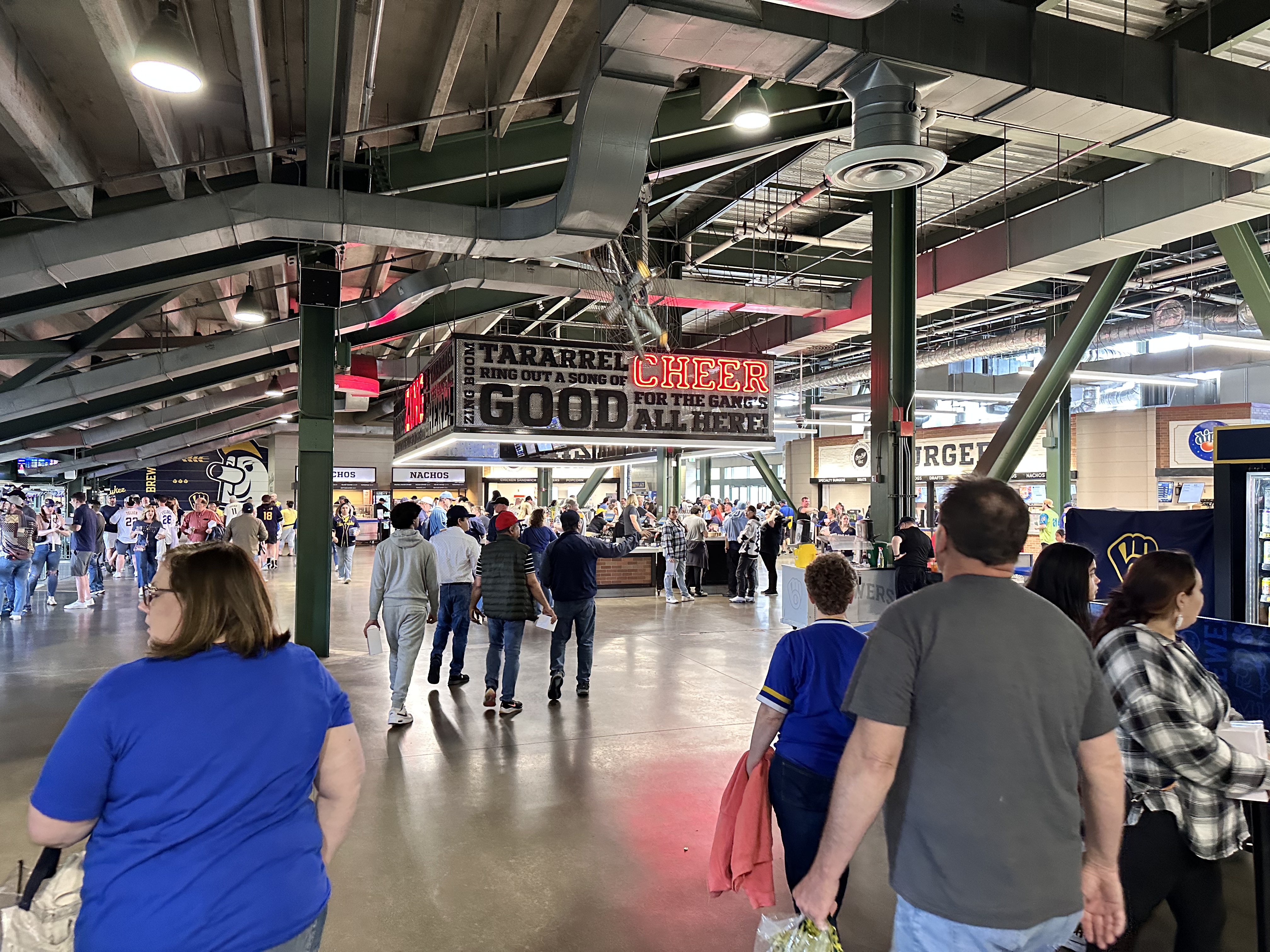
We continued our journey around the outfield portion of the concourse. It becomes very narrow out here, and views to center field are blocked by the large scoreboard. It was not a very appealing location when compared to other ballparks that have large active gathering spaces in their outfield concourses.

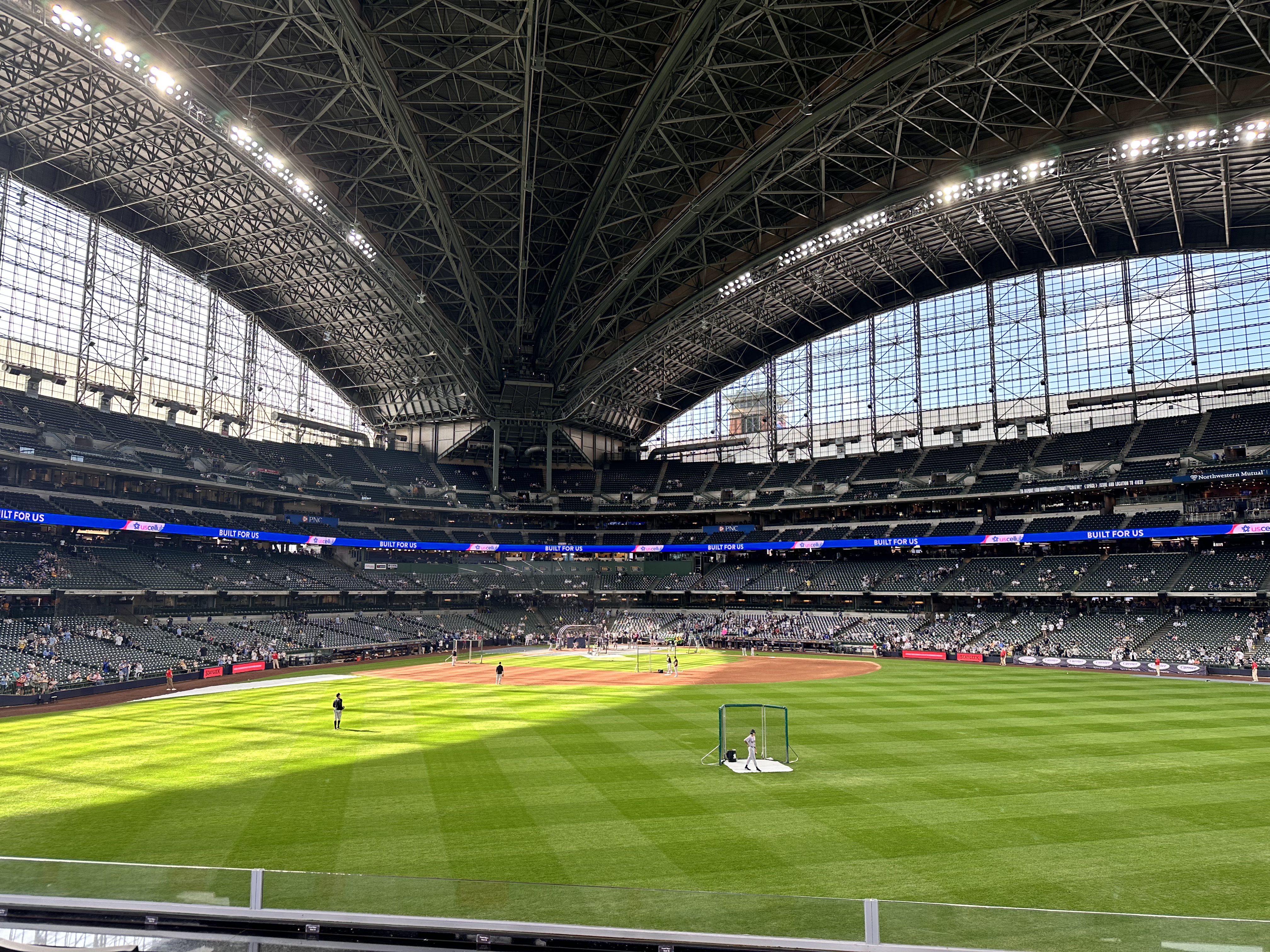
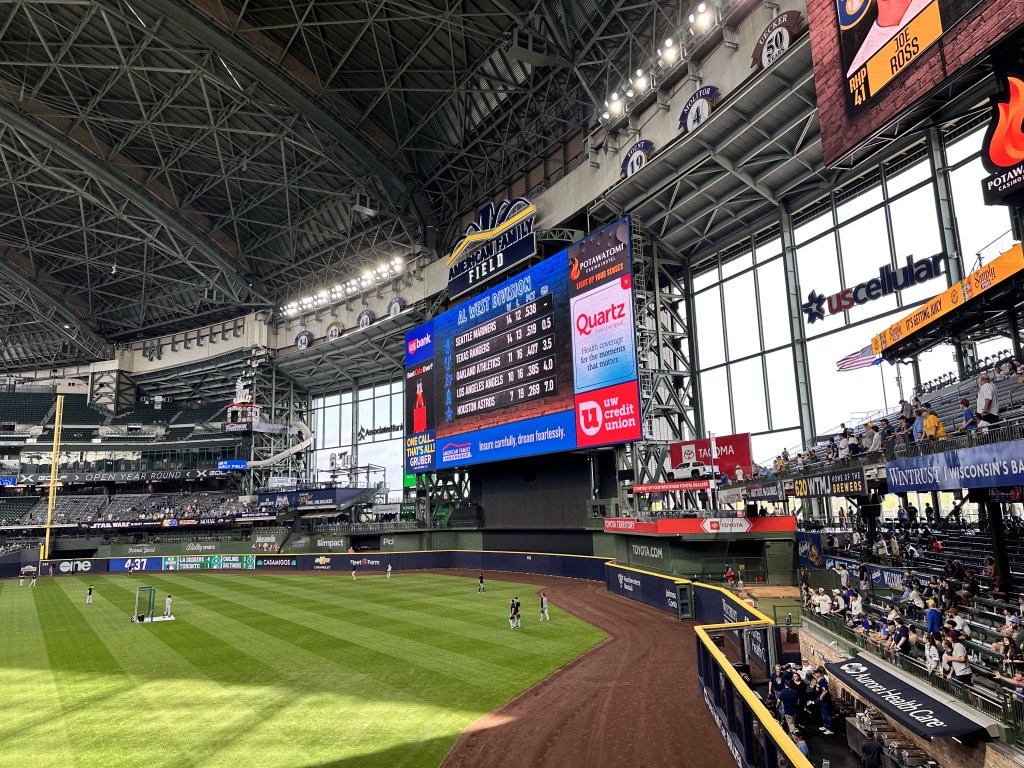
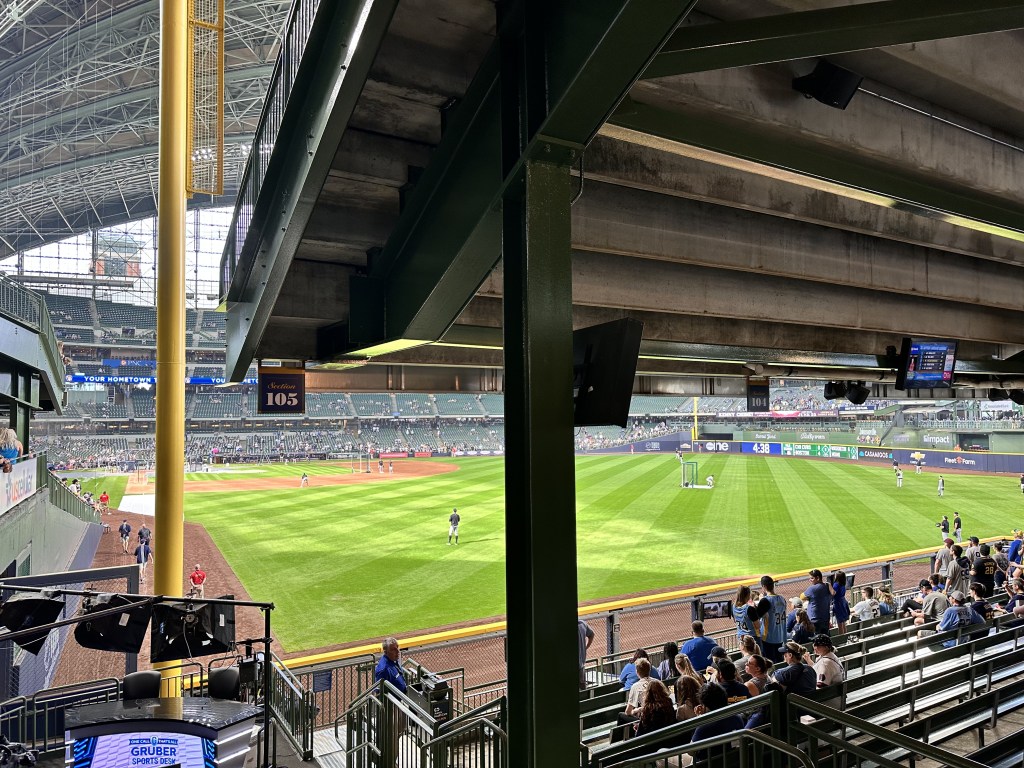
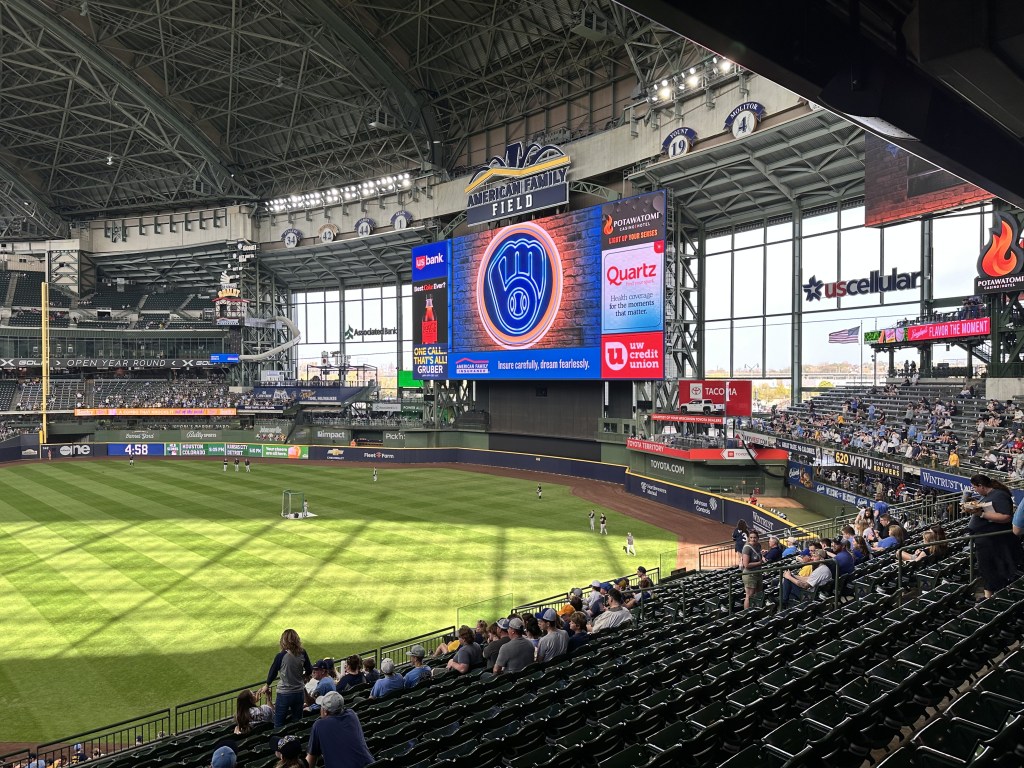
There are small seating areas to each side of the scoreboard that offer views of the outfield and the bullpen. The views from these areas were spectacular as they revealed the scale of the massive roof structure and large arched windows along each baseline.
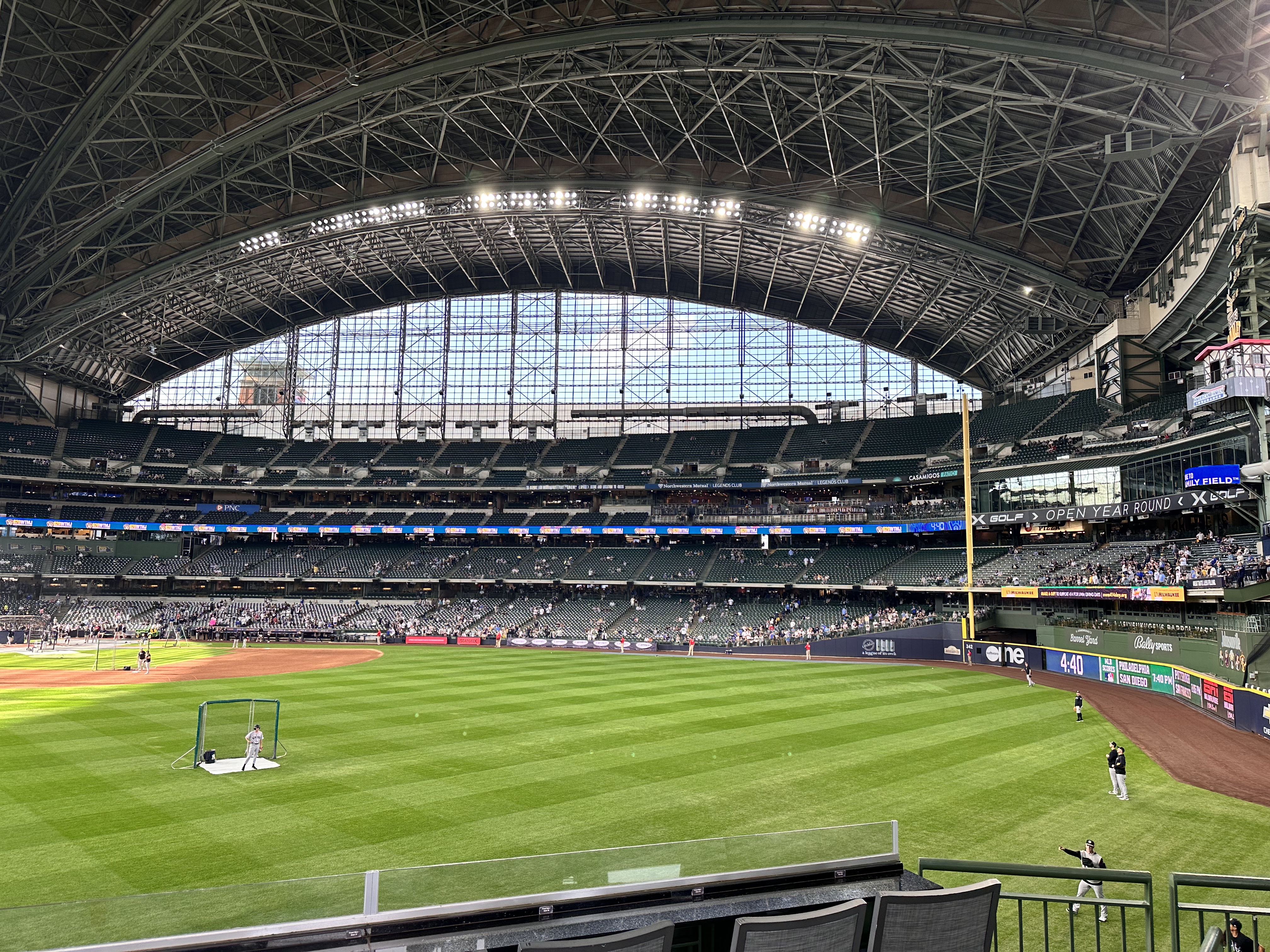
Overall, we were non-plussed with the concourse. It felt utilitarian, serving only as a means to get from point A to point B. It was narrow, dark, and crowded when compared to other ballparks we’ve been to. There are several locations where prominent views are blocked, and there are no signature gathering plazas (i.e. Ashburn Alley in Philly, or Eutaw Street in Baltimore).
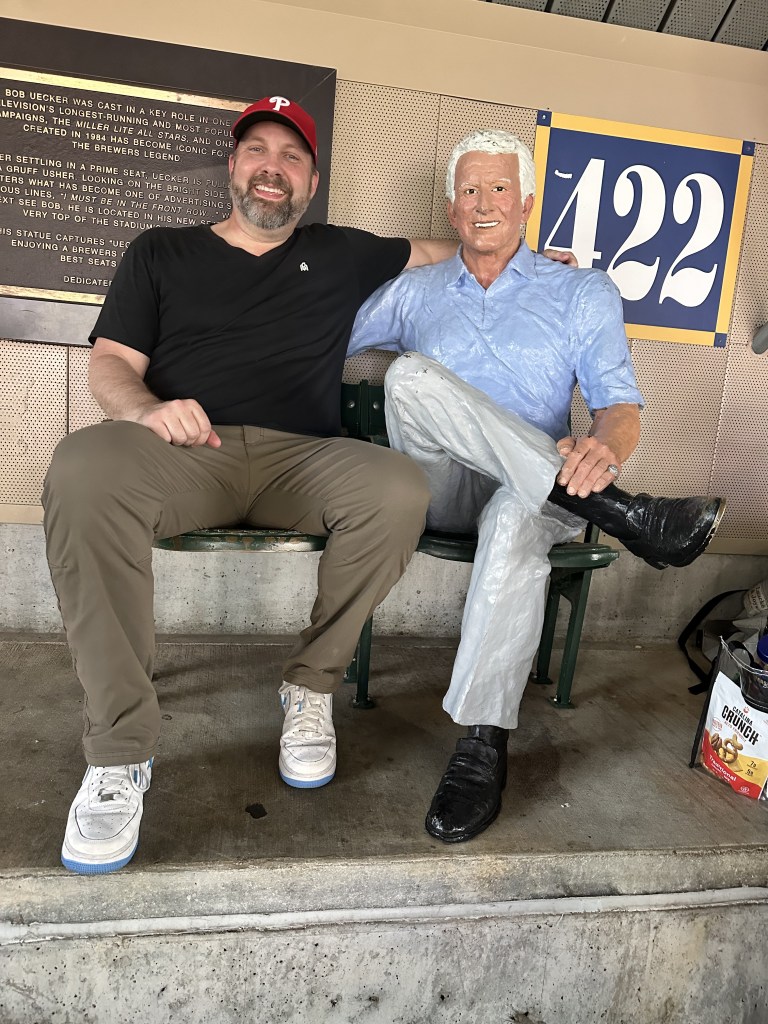
One easter egg we found as we explored the stadium is the Bob Uecker statue sitting in the last row of the upper deck directly behind home plate. I’m not quite old enough to remember his playing days, but I definitely remember him from Mr. Belvedere. I had to venture up and get my picture with him. LOL!
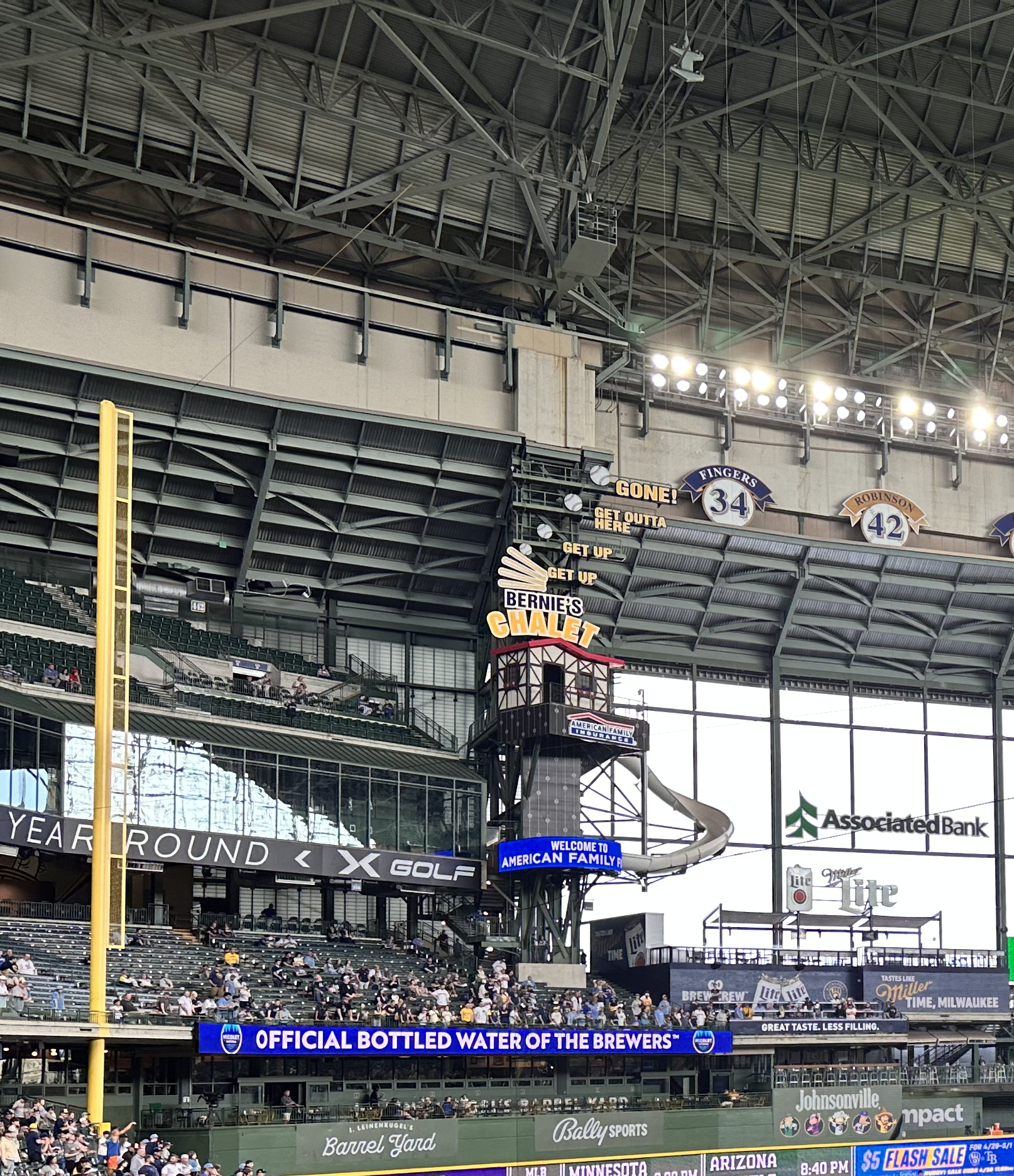
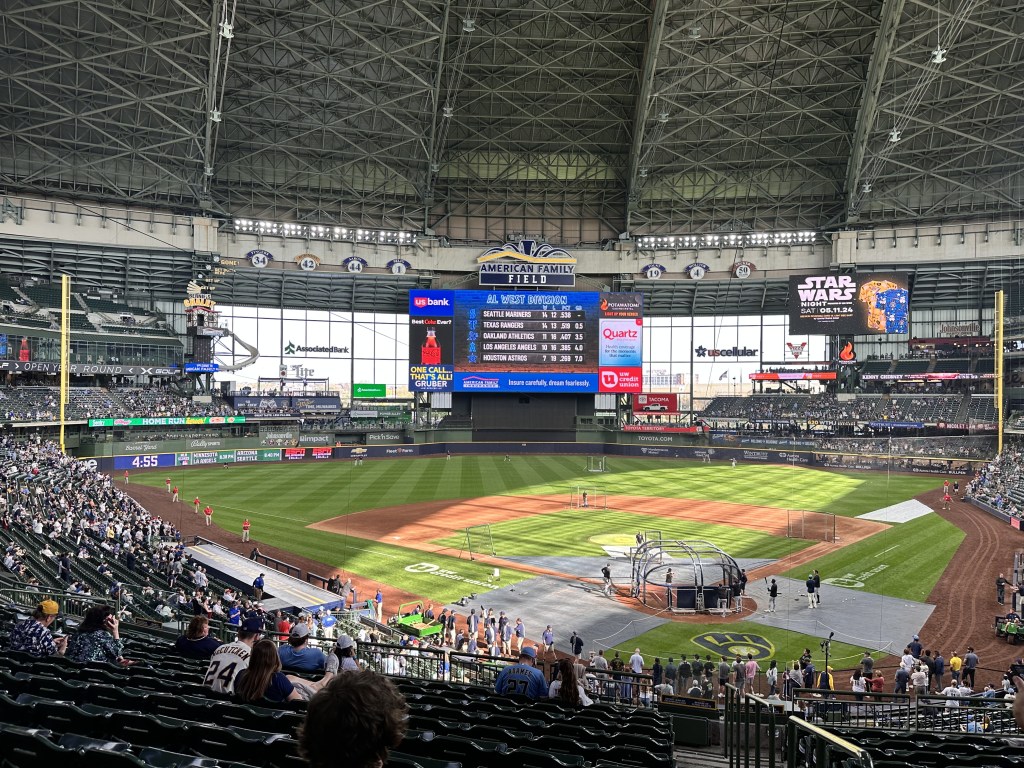
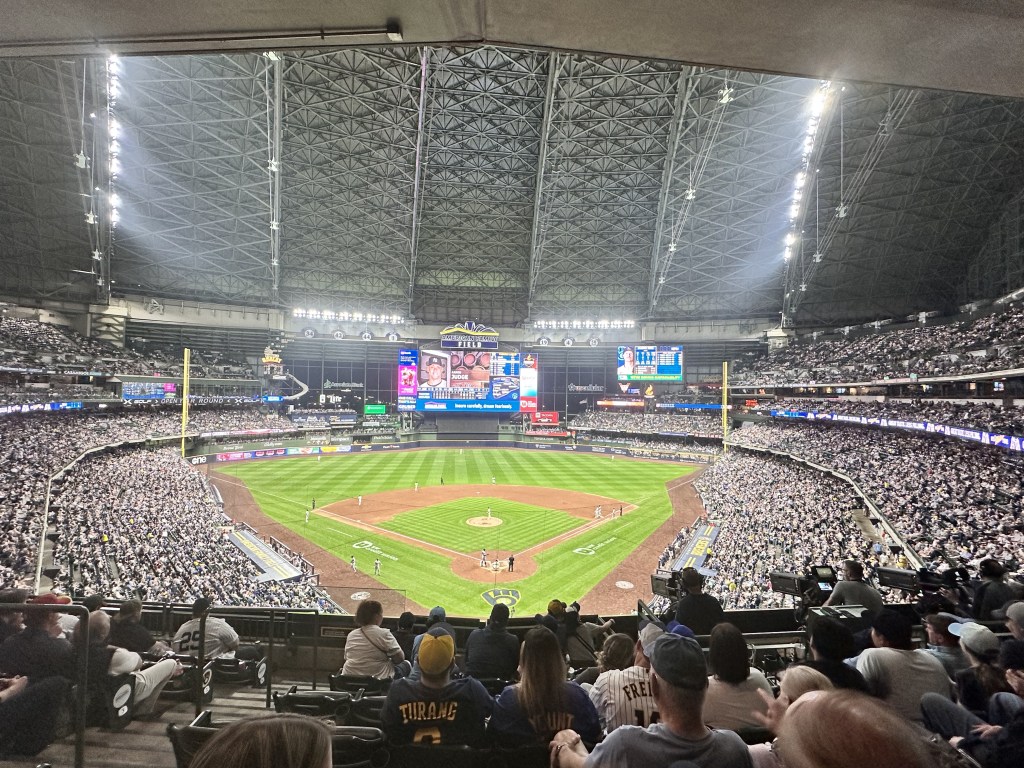
Our seats were in the 300 level. This is a club level seating section. It is one of the few areas in the ballpark you cannot enter without a ticket. We chose to sit here so we could experience more of the ballpark, and to take advantage of the sweeping views from the upper level behind home plate. Our seats were in Section 330, Row 7, and they were fantastic! We could see the entire playing surface, Bernie’s Chalet and slide, the large scoreboard in centerfield, and the open windows flanking each side of the scoreboard.

In addition, the club level is climate controlled and much less crowded than the concourses in other areas. We would highly recommend this club level to others.
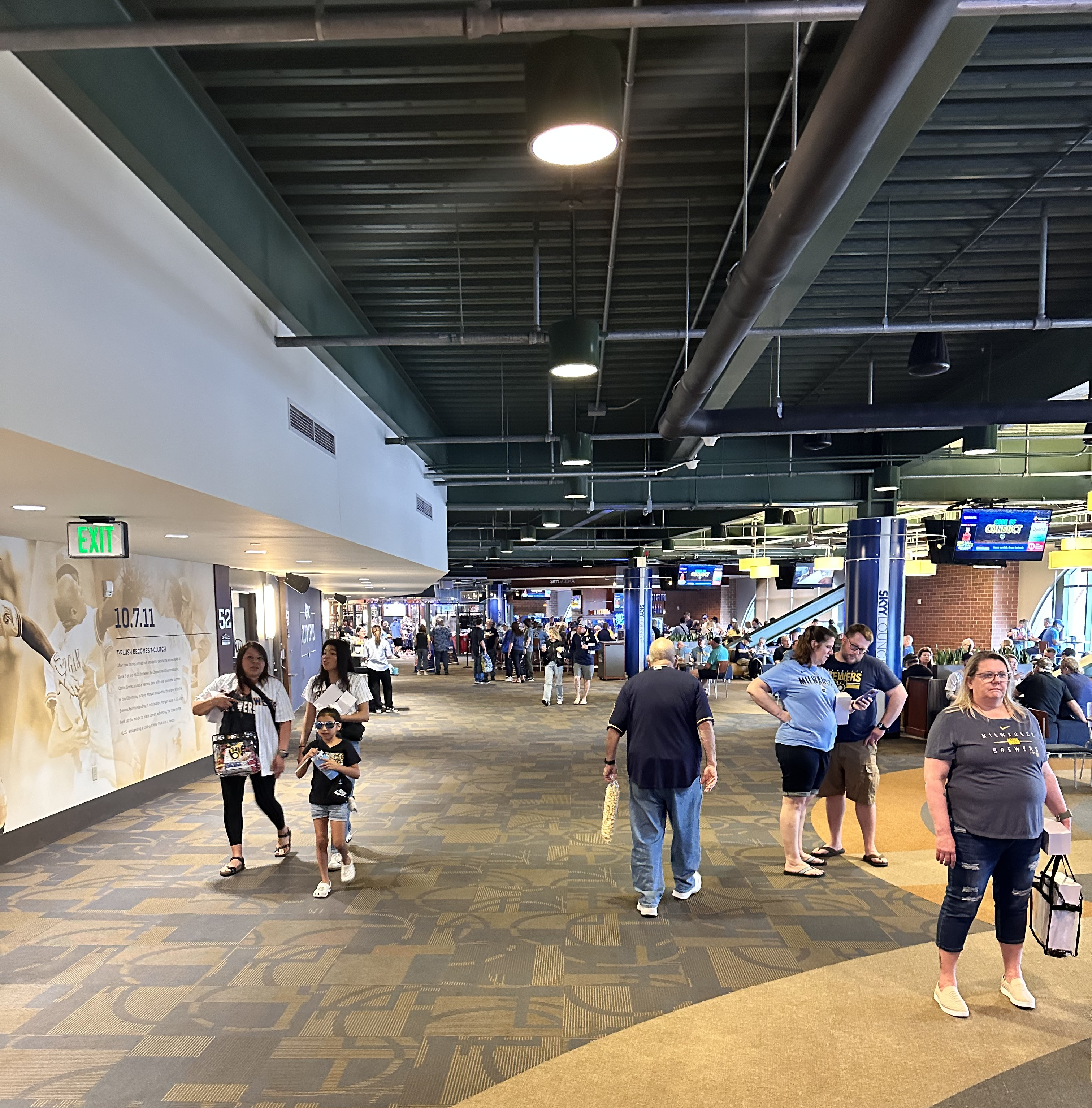
The scoreboard here is the focal point of your view in the outfield. It is large, crystal clear, and provides a ton of in-game information. Overall, however, it is pretty nondescript. It sort of just feels like a big TV in the outfield. It’s not a special design feature like we’ve seen in other ballparks
Bernie’s Chalet is probably the most iconic feature in American Family Field. The Brewers mascot, Bernie Brewer, stands on the porch of his chalet during the game. Whenever a Brewer hits a homerun, he slides down the large sliding board in celebration.
The atmosphere at American Family Field is great! From fans to employees, everyone we interacted with was super friendly. We loved “Roll Out the Barrel”, a polka song the crowd sings along to during the seventh inning stretch. It’s been living rent free in my head ever since. Haha!
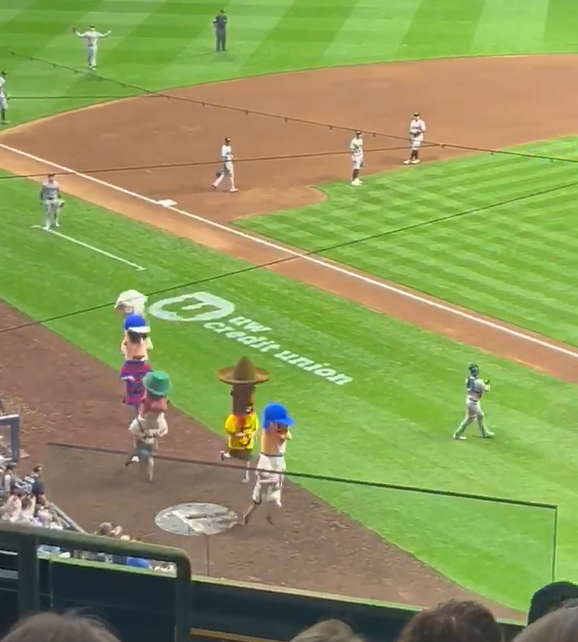
We also loved the sausage race. This is a mascot race, similar to the president race in DC, that involves 5 fans dressed up as different varieties of sausage who race around the warning track. It was funny watching the Yankees fans all pause their pre-inning warmups to watch the race.
Overall, American Family Field was a positive experience. It falls somewhere in the middle of the pack in our rankings. Some of the things we loved were:
- All the easter eggs to search for both inside and outside of the ballpark.
- Many nods to Milwaukee Brewers and Braves history.
- The exterior architecture from home plate and down the baselines was handsome and unique.
- The interior architecture was interesting. Especially the roof structure and the large arched windows along the baseline.
- The ballpark did not feel sterile and lifeless like other domed stadiums we’ve been to.
- Was happy to see the natural grass playing field even though it’s a retractable roof domed stadium.
- The club level seating section provided great views, a climate-controlled concourse, and less crowds.
- The overall atmosphere including friendly yet passionate fans, Bernie’s Chalet, the Sausage Race, and the “Roll Out the Barrel” song.
Some of the things we didn’t like were:
- Remote location. We prefer walkable urban settings.
- Exterior facade was dirty looking. Especially the metal roof structure and the outfield facade which had visible staining / rust.
- Concourses were narrow, dark, and blocked several prominent views to the playing surface.
- No signature gathering spaces / plazas within the stadium.
- Stadium felt enormous, especially from the outside. We prefer more intimate feeling ballparks.
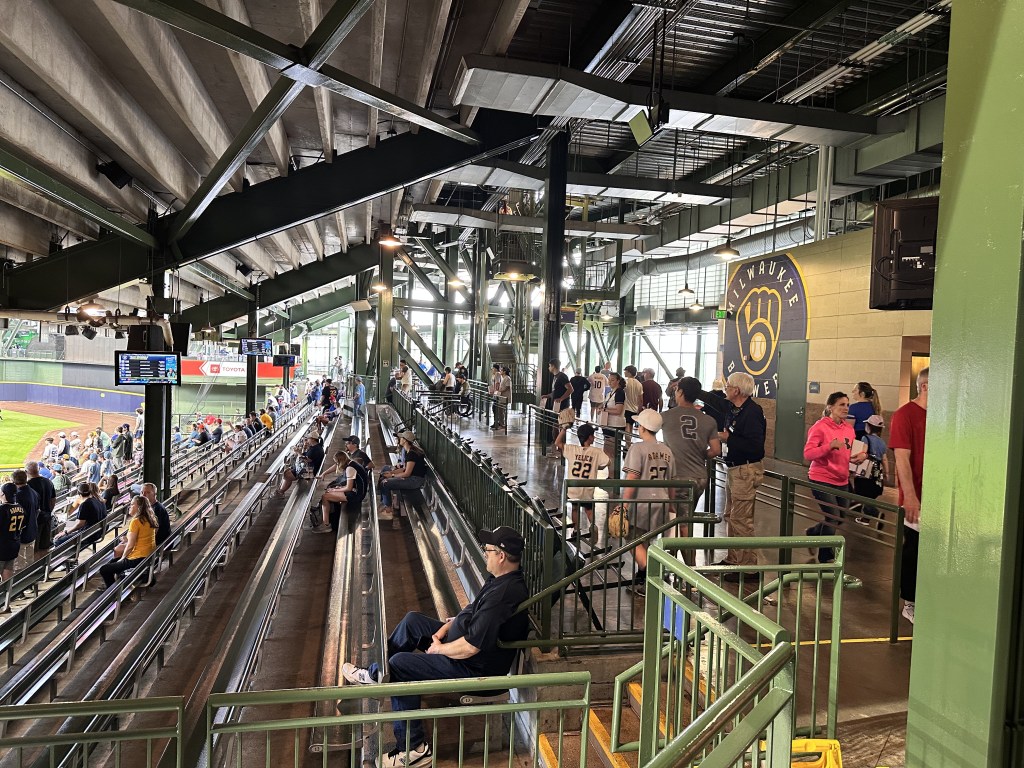
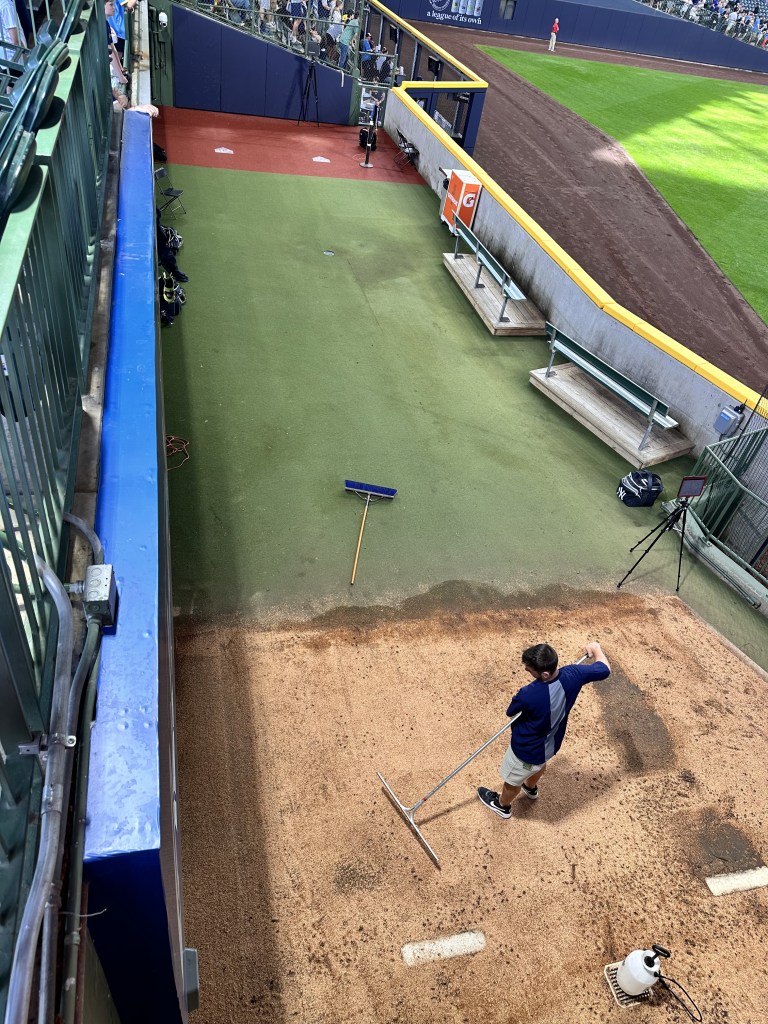
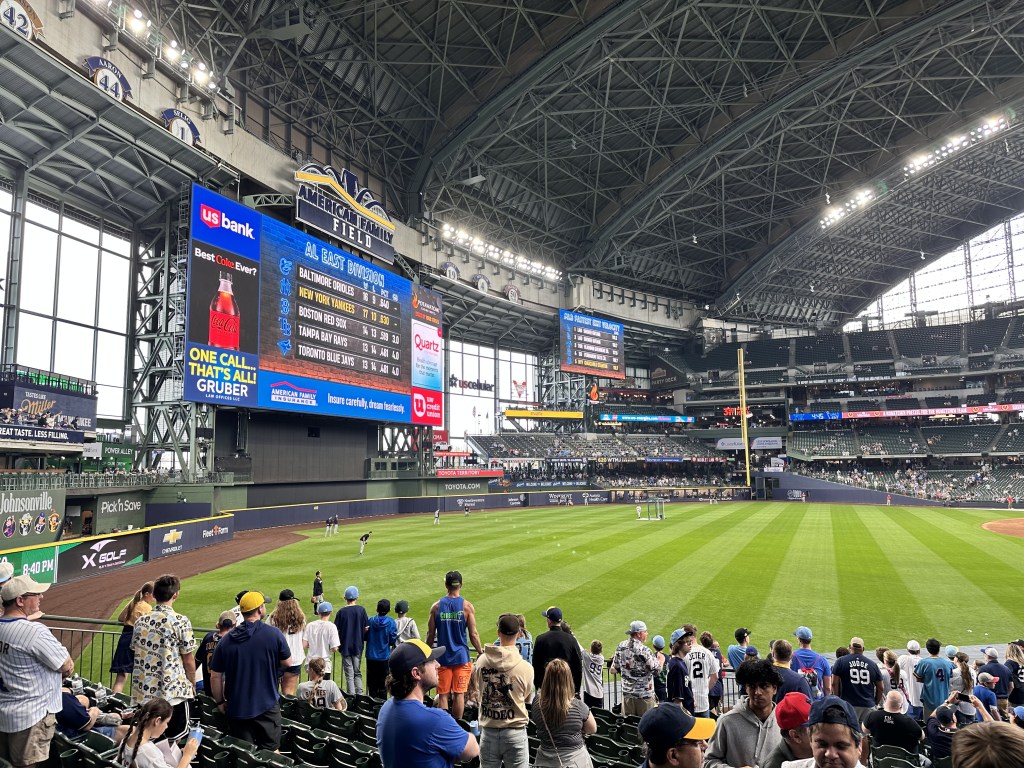
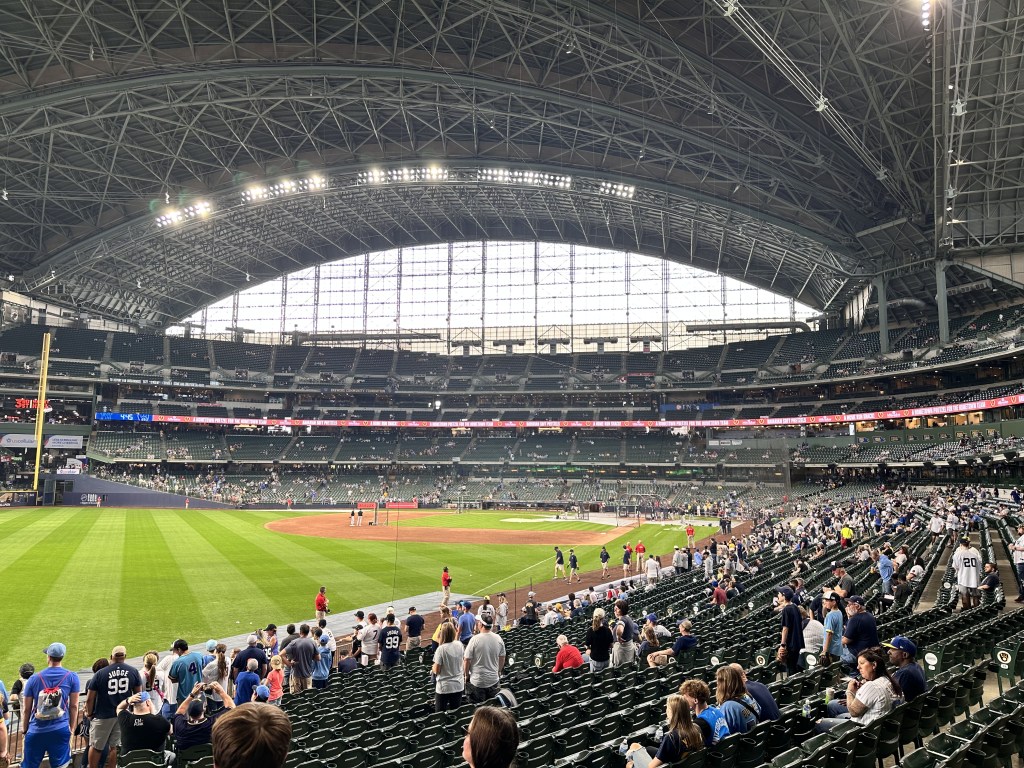
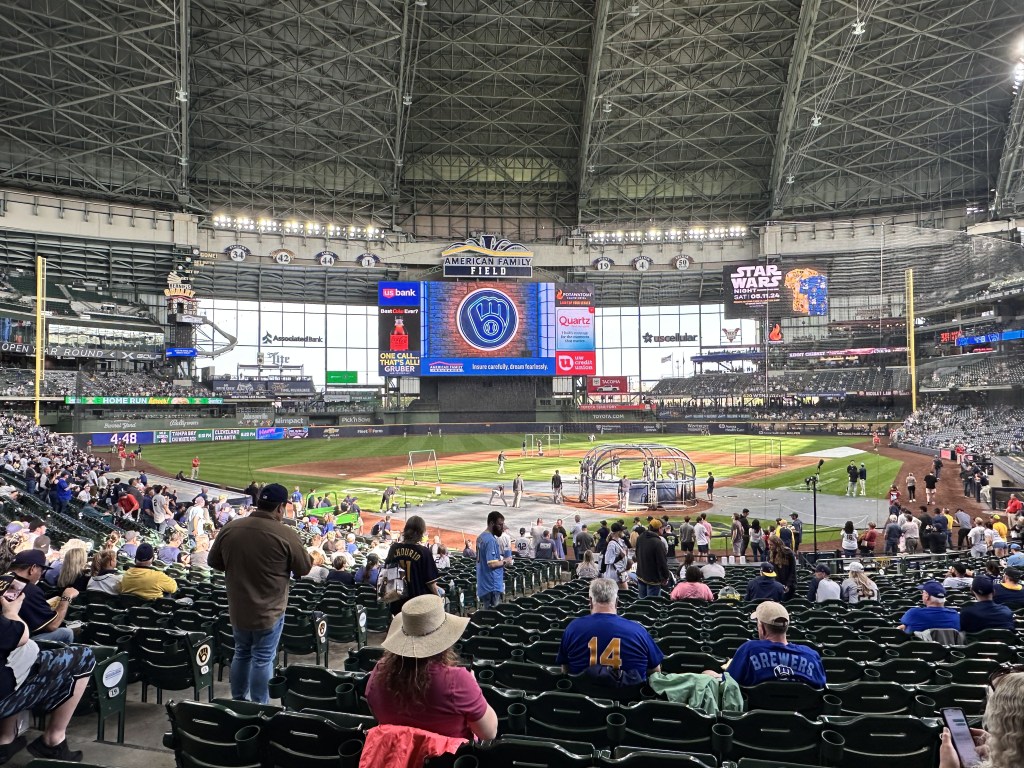
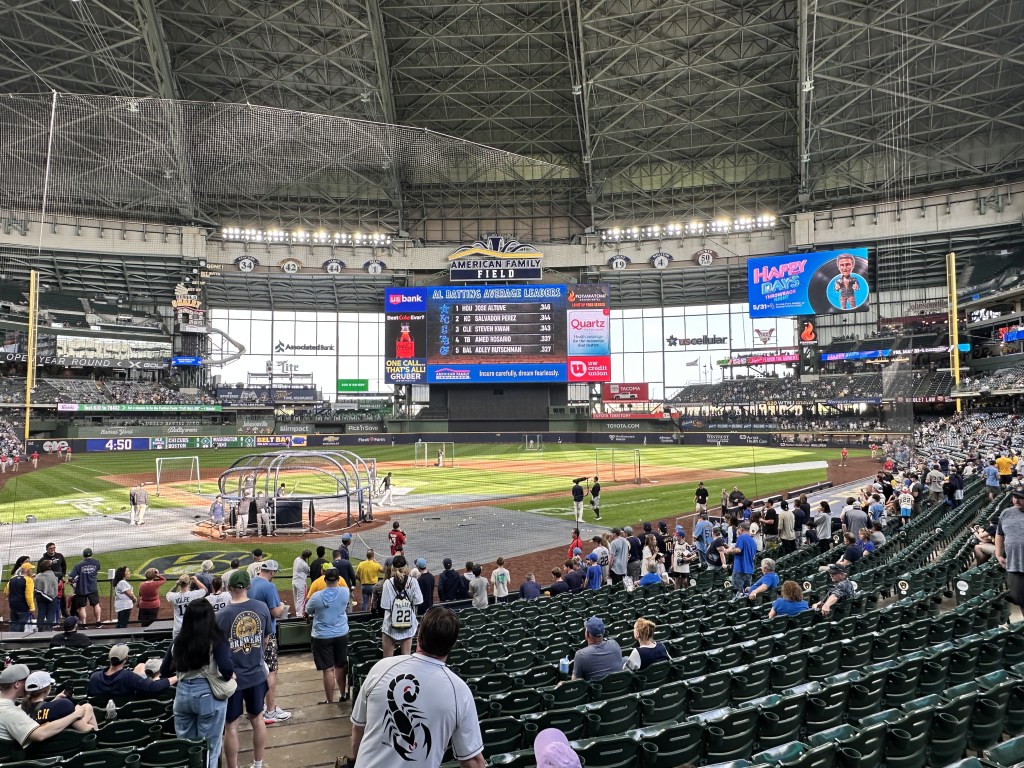
We’ll wrap up this review with several additional miscellaneous photos we captured on our visit.


 Touch 'Em All
Leave a comment