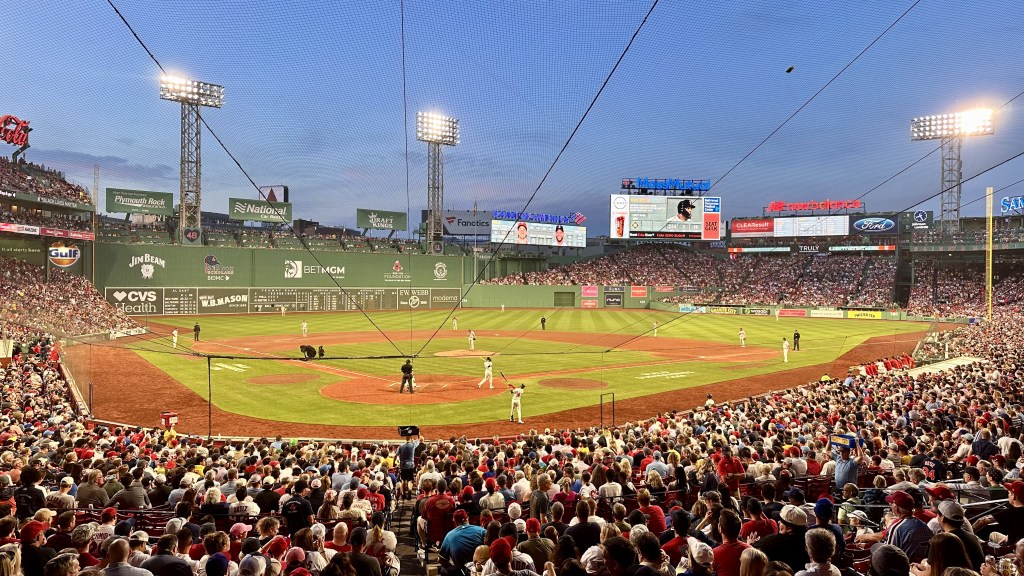
Fenway Park, home of the Boston Red Sox, was ballpark #9 for us. Following is the list of all active ballparks that we’ve visited at the time of this writing:
1 — Baltimore Orioles (1992; date unknown)
2 — Philadelphia Phillies (2004; date unknown)
3 — Pittsburgh Pirates (July 30, 2022)
4 — Atlanta Braves (May 28, 2023)
5 — Miami Marlins (July 7, 2023)
6 — Washington Nationals (August 19, 2023)
7 — Chicago White Sox (September 1, 2023)
8 — Milwaukee Brewers (April 27, 2024)
9 — Boston Red Sox (June 13, 2024)
We were truly unsure what to expect when we planned our visit to Fenway. We’ve heard a broad range of opinions about the stadium. Some people love it because of its history and tradition. Others dislike it because its antiquated and doesn’t have modern amenities.
For us, Fenway Park jumped up towards the top of the list of our favorite ballparks. Sure, it doesn’t have all of the bells & whistles of the newer ballparks, but it checked a lot of other boxes for us.
For this trip, we stayed at “The Verb”, a rock & roll themed hotel that is located directly across Van Ness Street from the ballpark. We booked the Ballpark Package and stayed in one of the Backstage Trailers. Our trailer was Stevie Nicks themed and stocked with complimentary beers & snacks. In addition, every guest has a record player in their room, and access to a huge library of classic vinyl records in the hotel lobby. We know that this is supposed to be a ballpark review, but the hotel accommodations were so unique & special. We highly recommend staying here to any music lovers visiting Fenway from out of town.
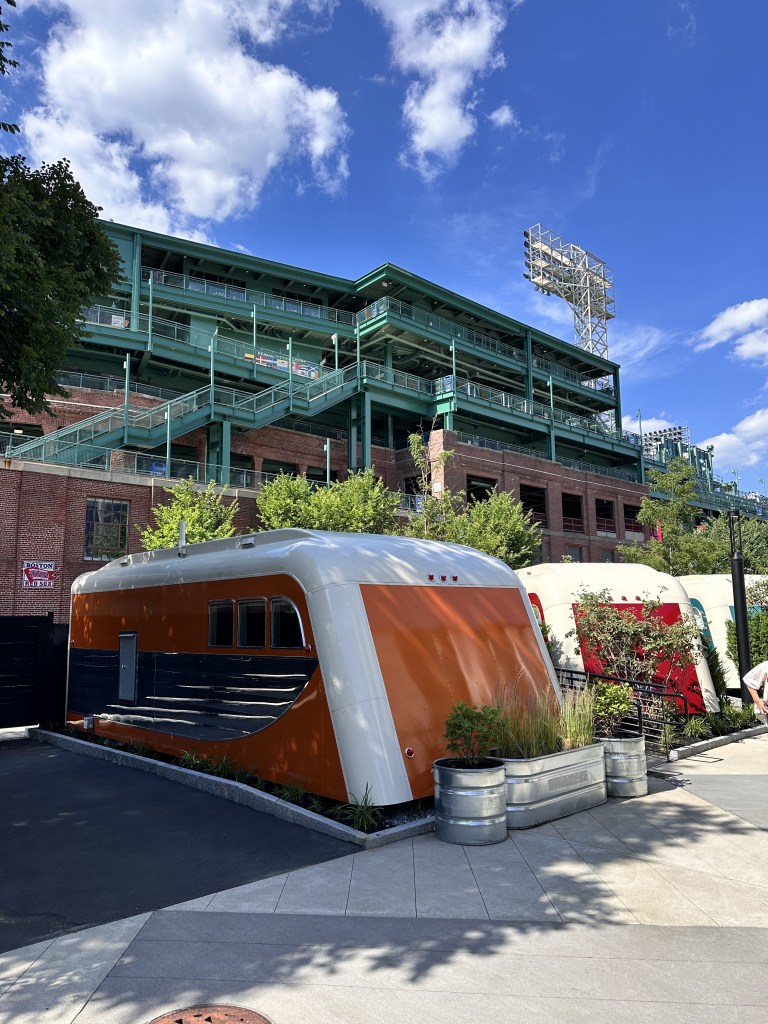
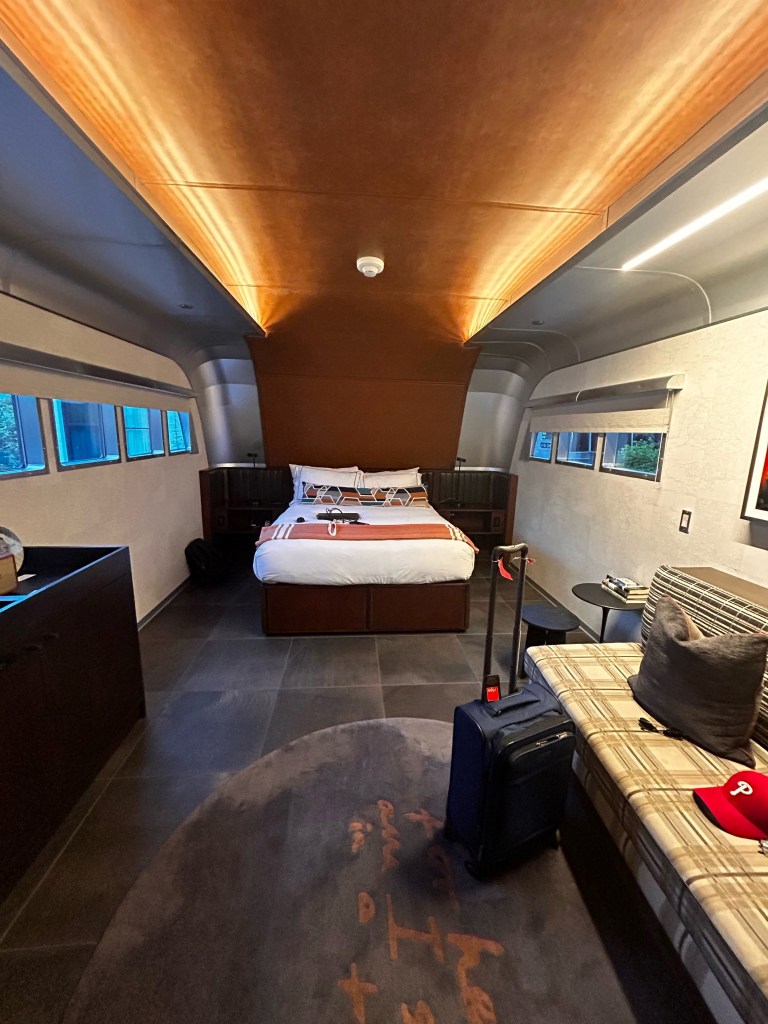
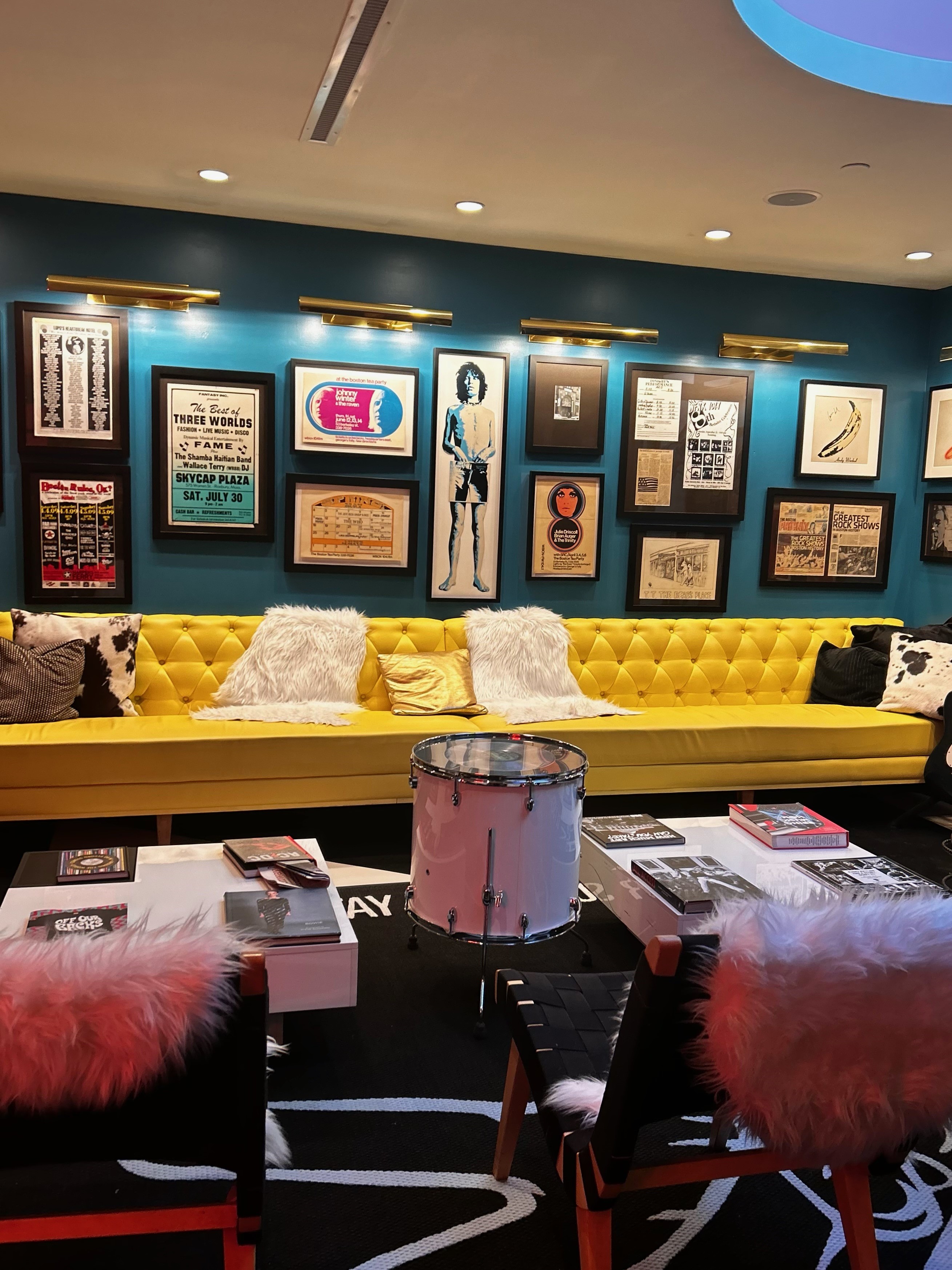
The Verb Hotel and Fenway Park are also conveniently located about one block from the Lansdowne light rail station. This served us well as we spent a day in downtown Boston hiking the Freedom Trail, sightseeing, and eating “lobstah” rolls. It is only about $3.00 and a 20-minute train ride per person to travel from Fenway Park to South Station.
The morning of the game, we wandered over to the ticket window & purchased tickets for a pregame tour. The tickets were $45 per person. The tour was an awesome experience that we’ll tell you more about a little later in this blog post.
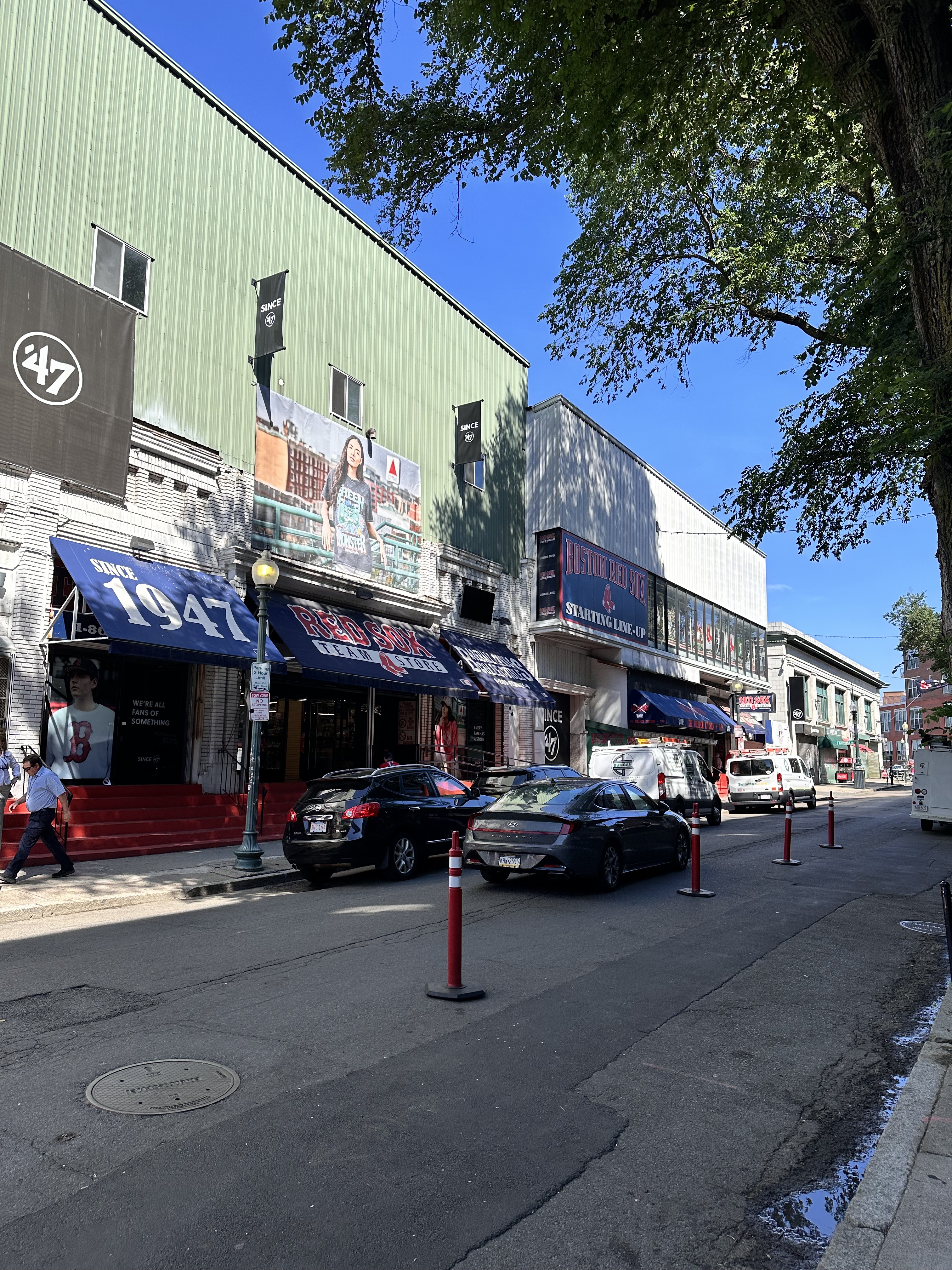
After purchasing the tour tickets, we decided to explore the outside of the ballpark. One of the things we love about Fenway Park is its location in an active urban neighborhood. There are many shopping, dining, entertainment, and transportation options within walking distance. In fact, we were surprised to see quite a bit of activity around the ballpark during the day, when a game was not even in progress.
Closer to gametime, the activity level ramps up, and the streets surrounding the ballpark become packed with fans. It all feels organic, and not forced like some of the manufactured entertainment venues popping up in a lot of the newer stadiums.
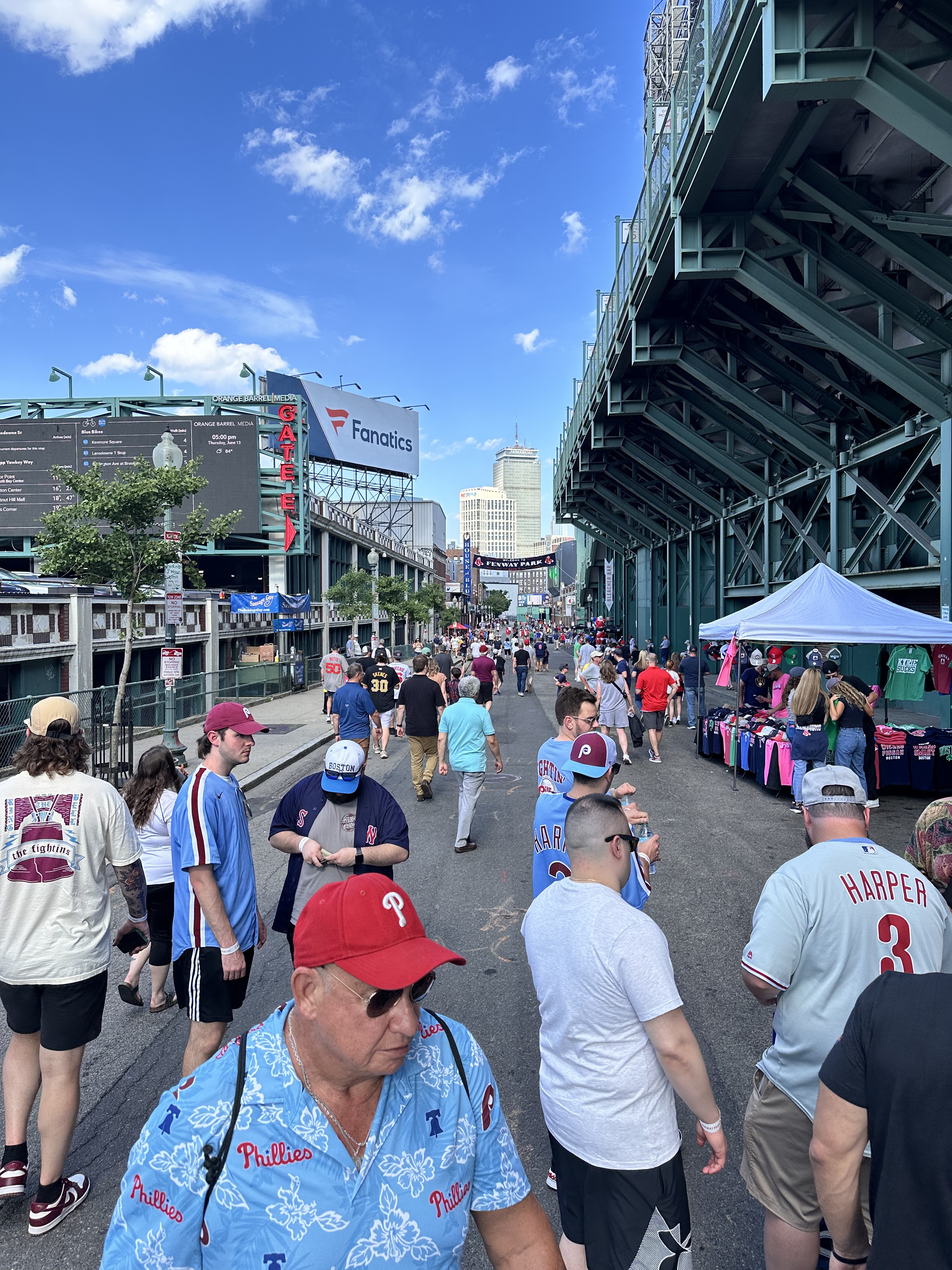
The best way I can think to describe the exterior aesthetic of Fenway Park is “form follows function”. This was not designed to be a refined architectural masterpiece. The park was originally constructed within the constraints of an existing city neighborhood, and has been renovated and expanded many times since, resulting in a quirky and disjointed appearance where no two elevations are the same. The exterior materials are a very simple combination of green painted steel and brick.
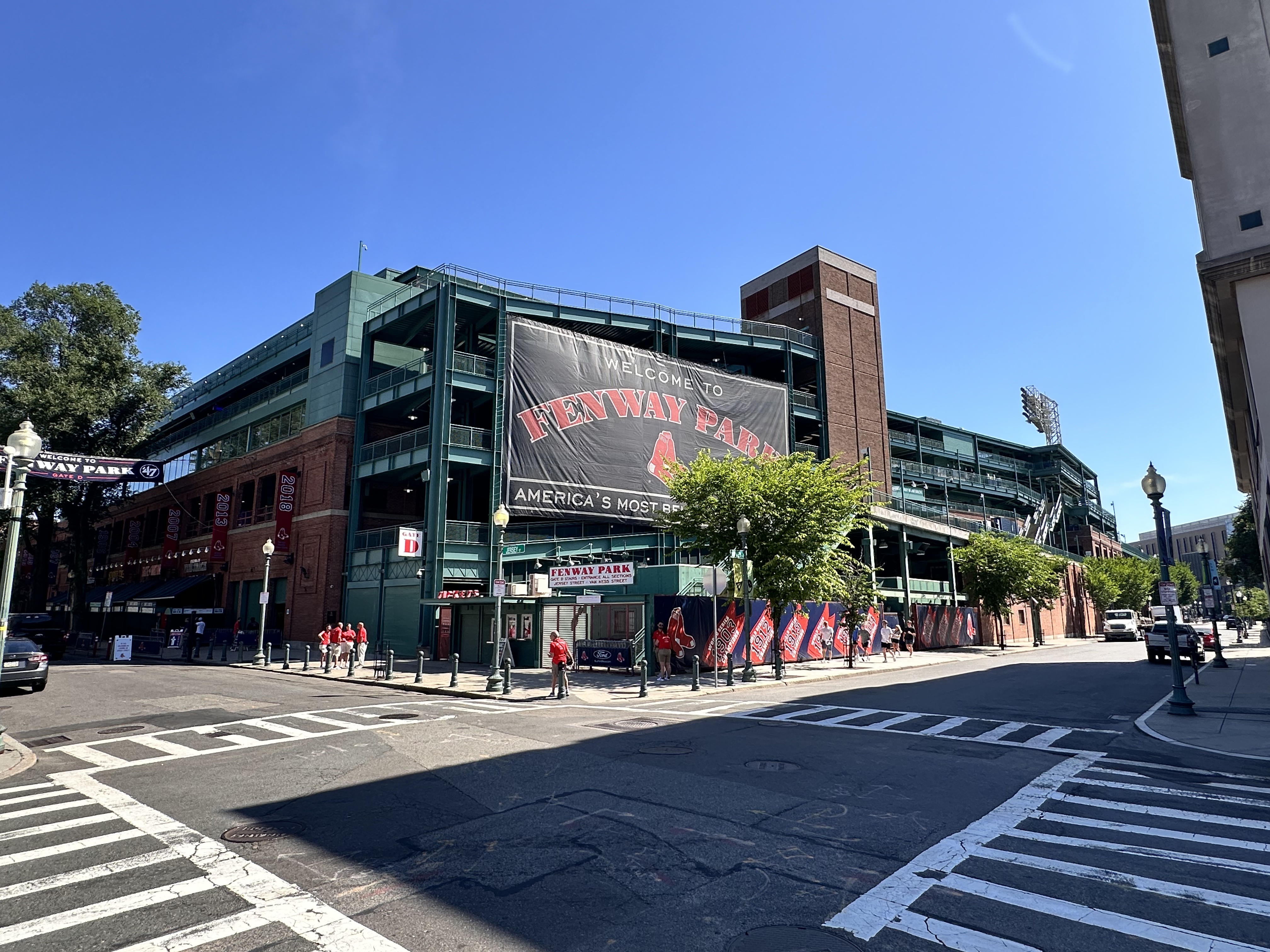
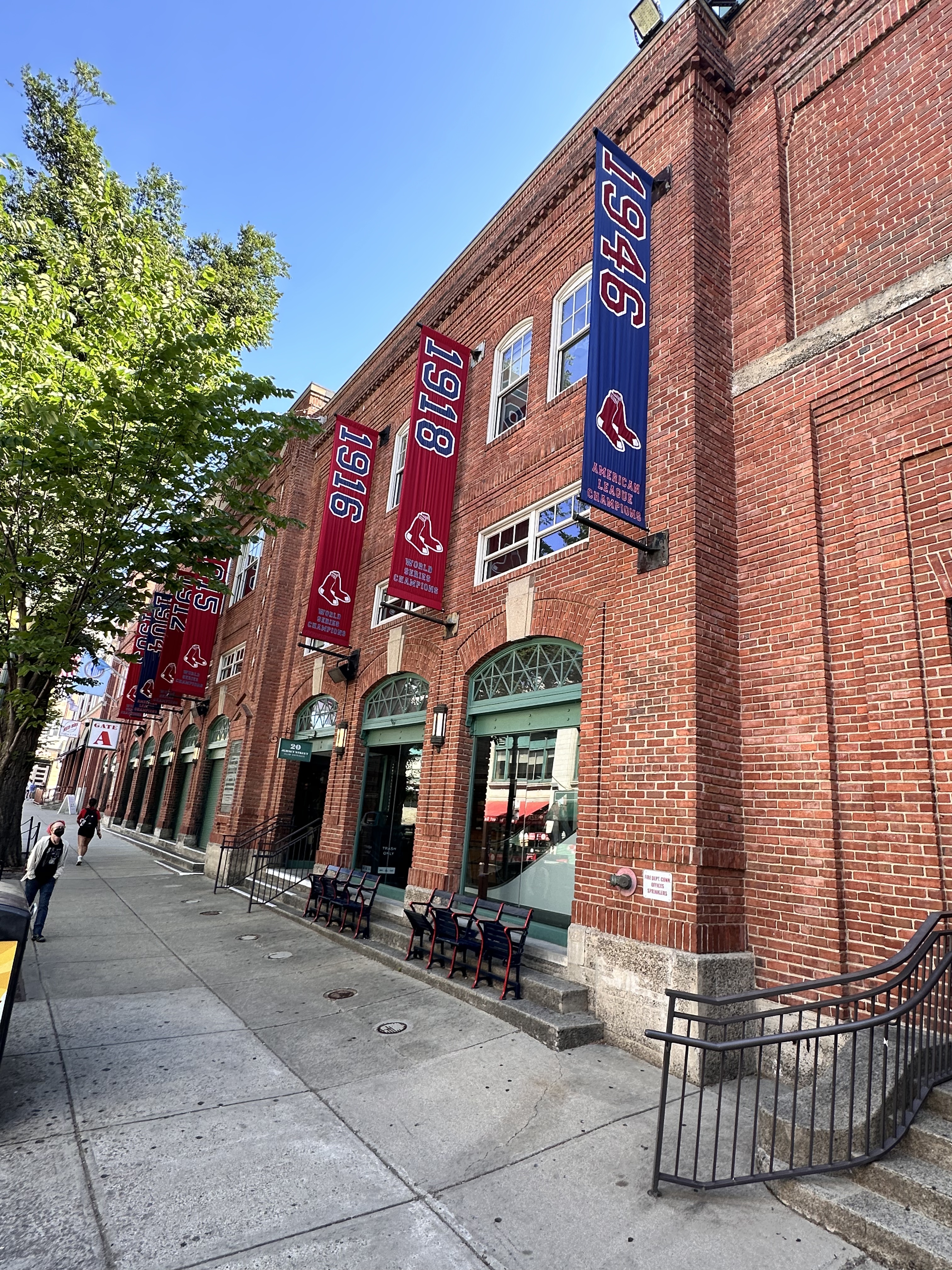
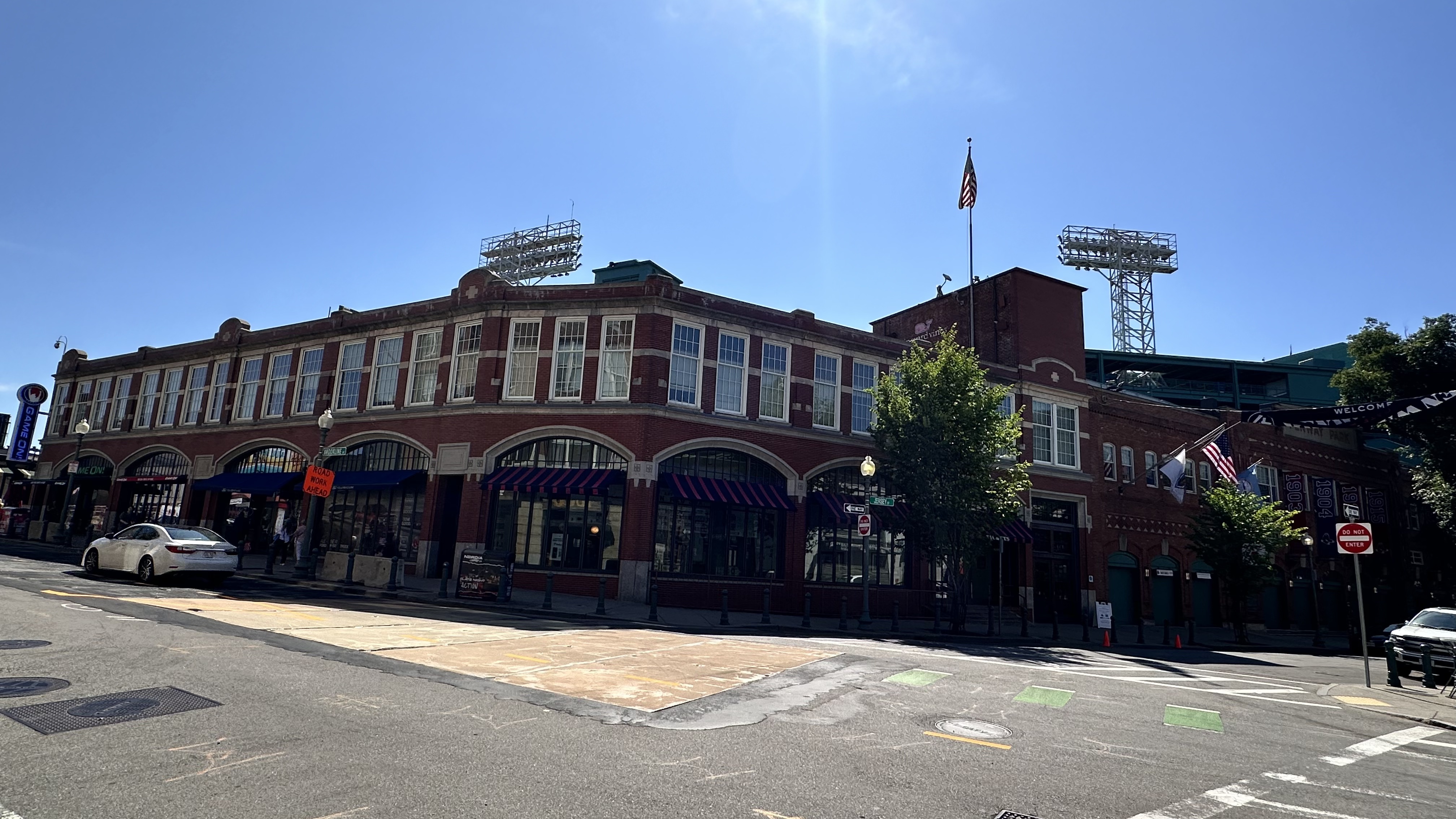
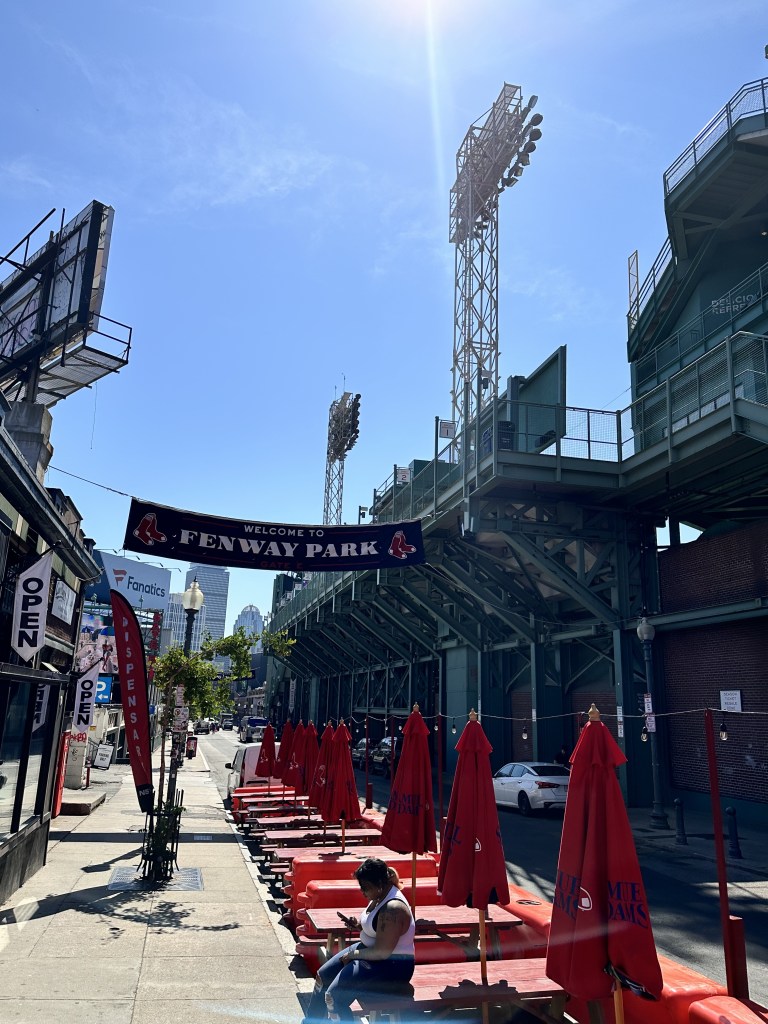
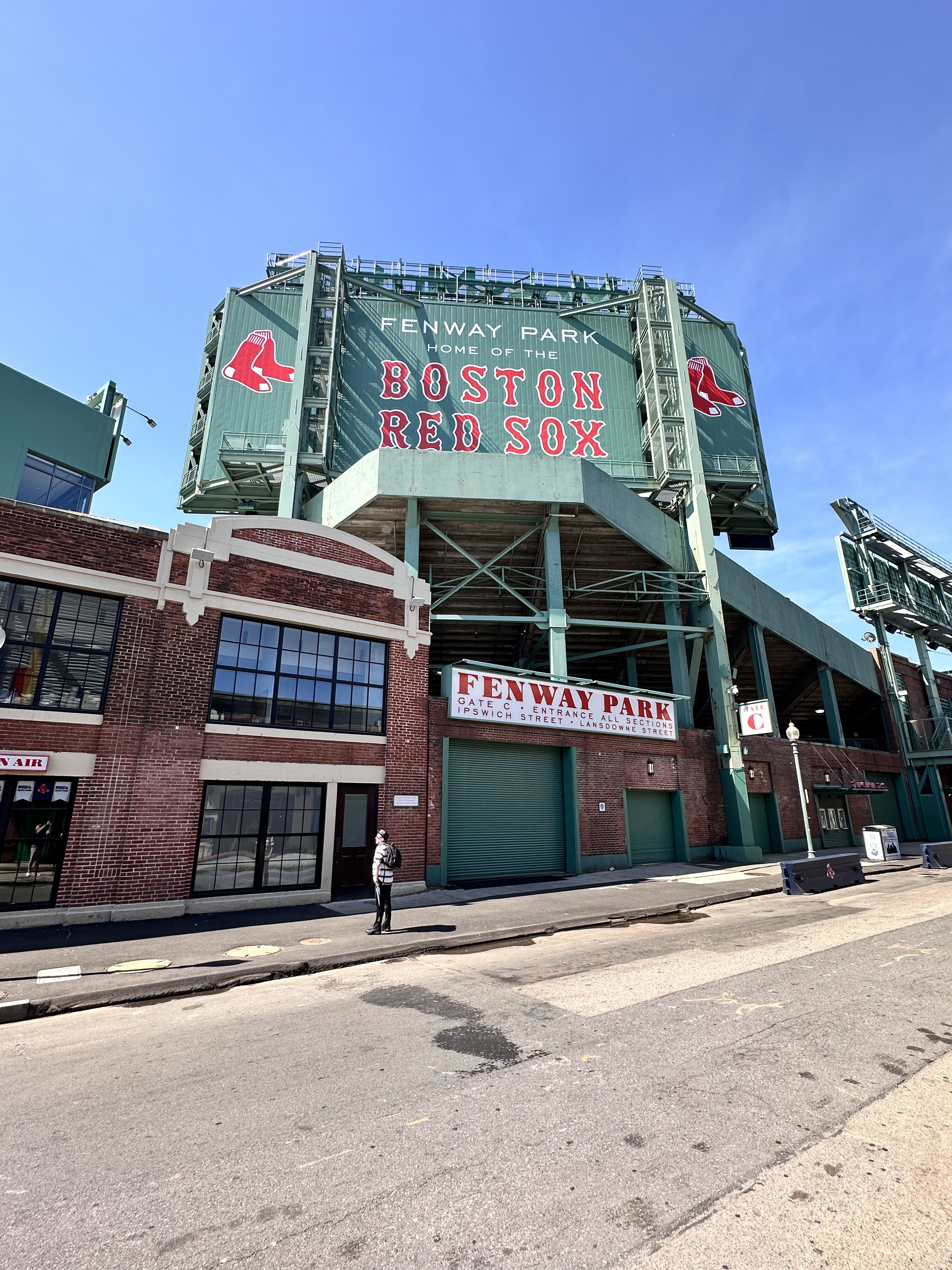
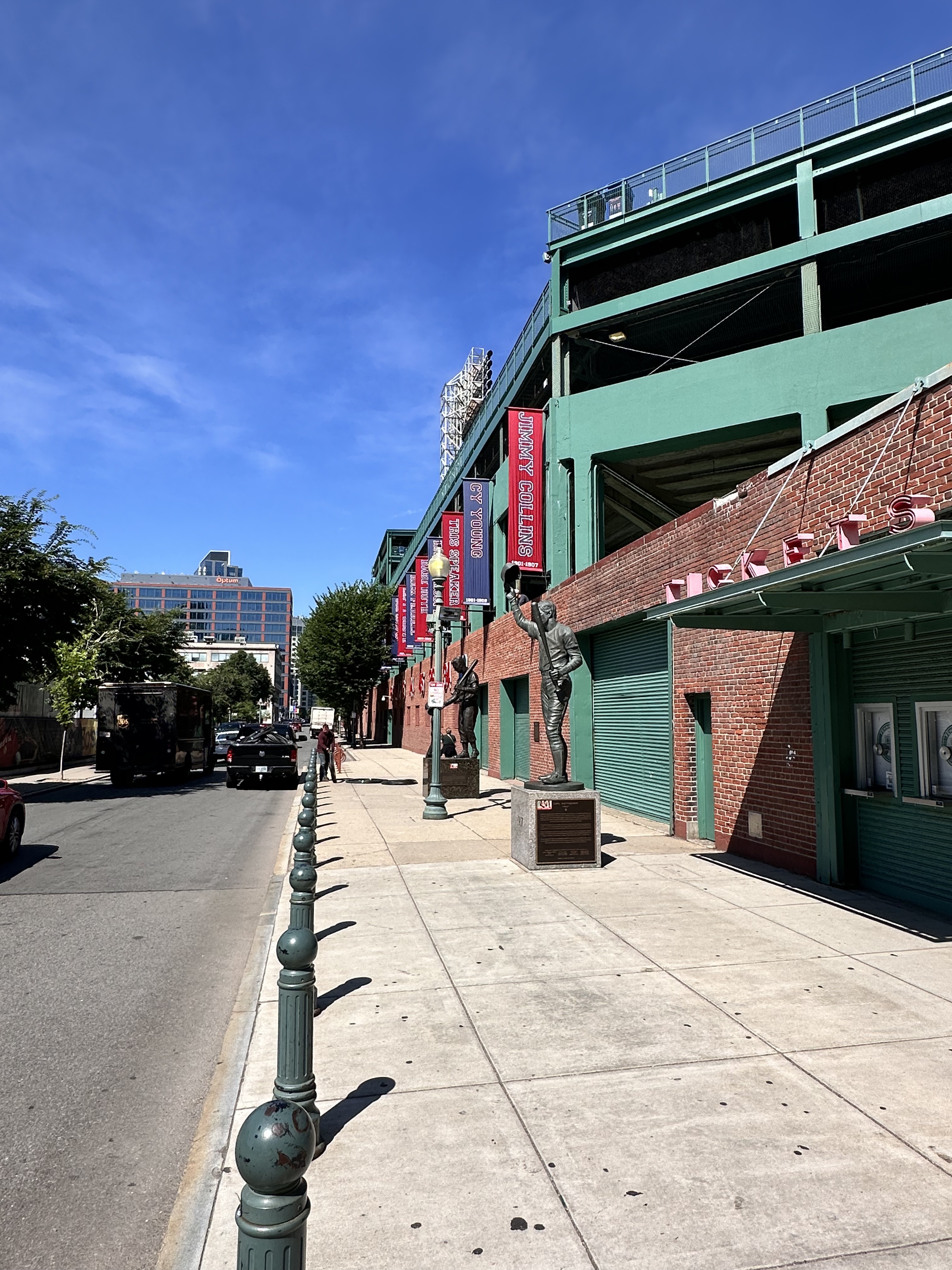
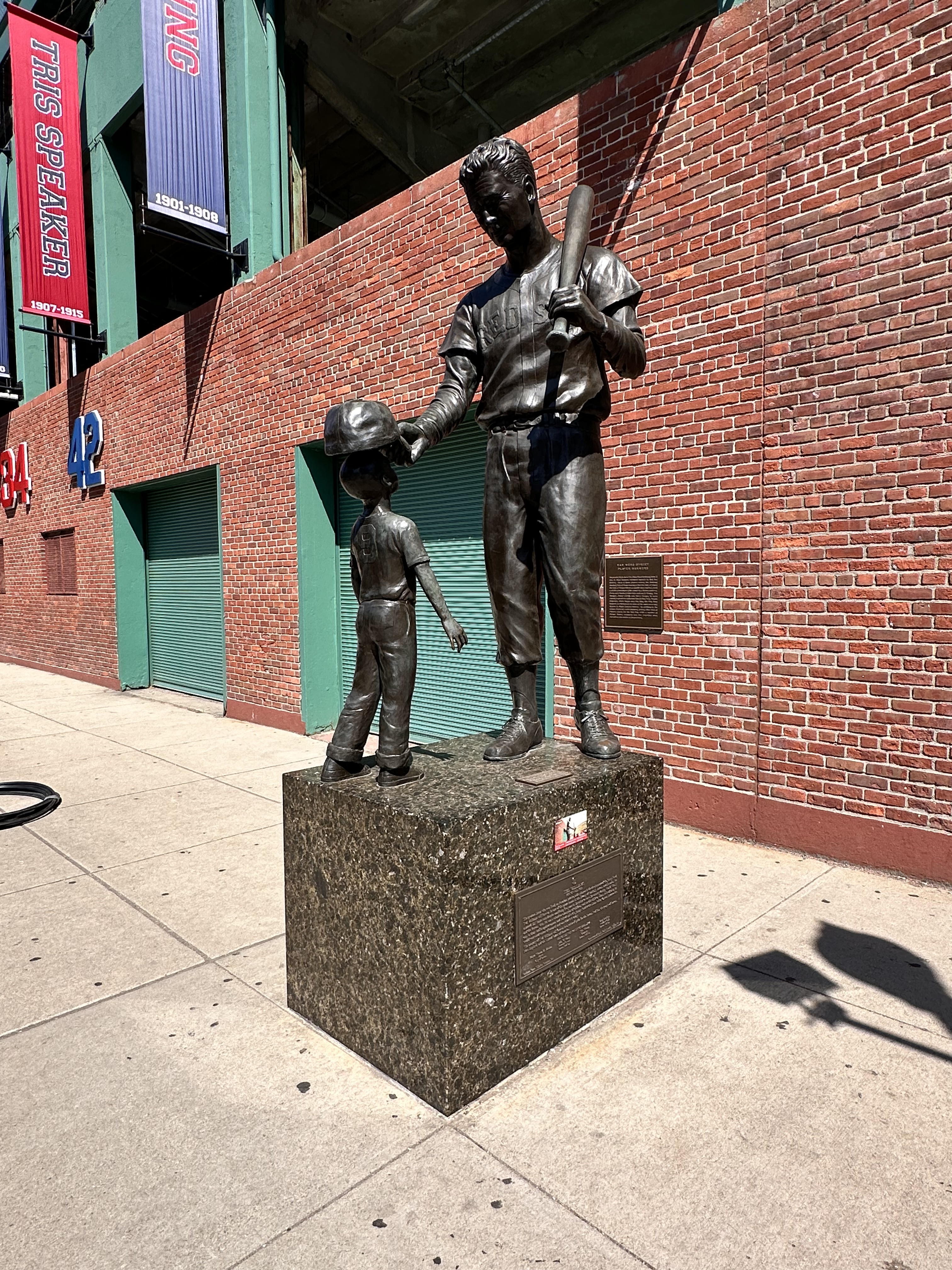
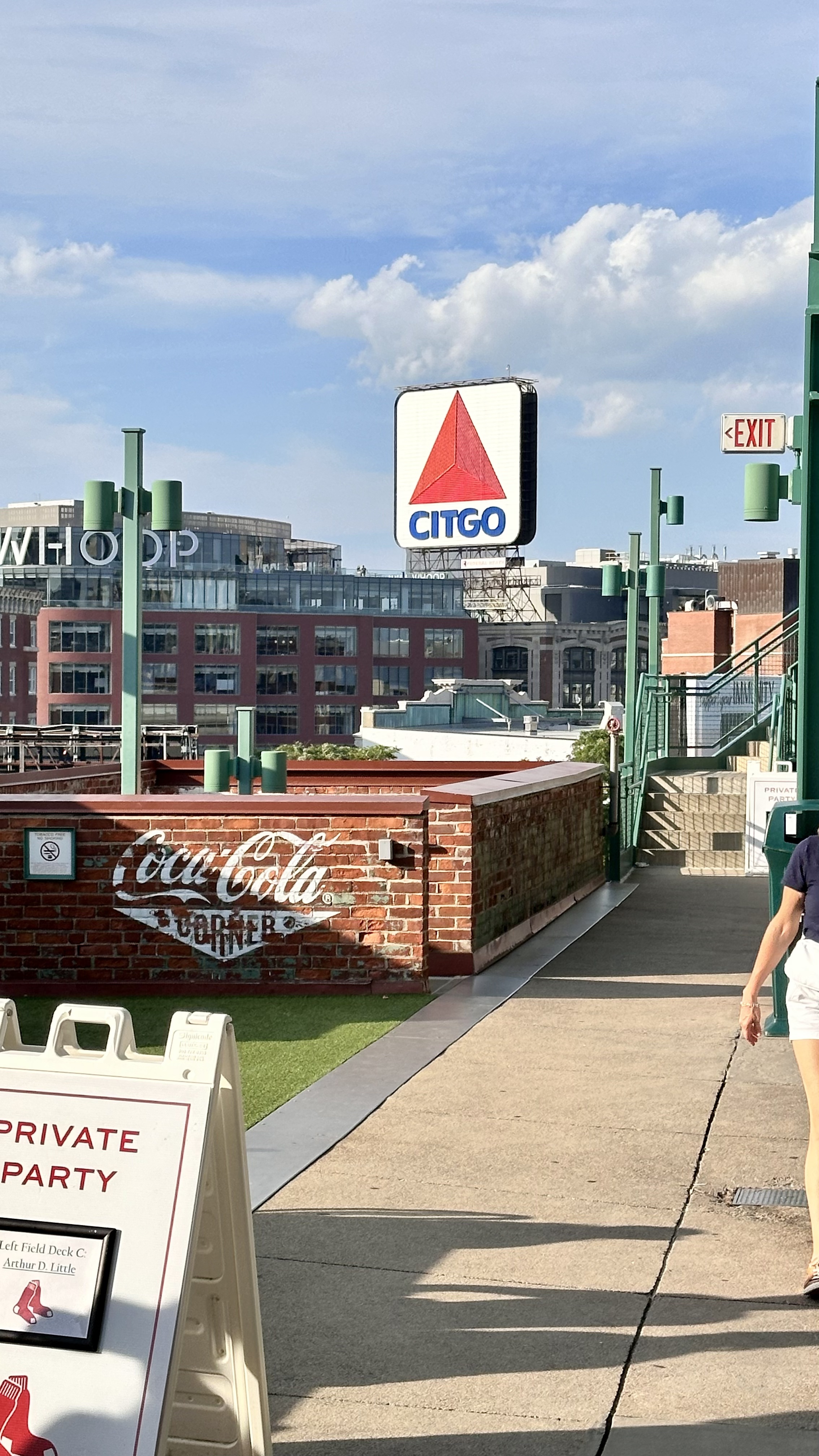
In keeping with the no-frills aesthetic of this ballpark, there were not a lot of easter eggs to find around the exterior. Some things we did see included bronze statues of Ted Williams & Cark Yastrzemski, banners recognizing great players & teams in Red Sox history, plaques to commemorate world series victories, and historic wooden seats.
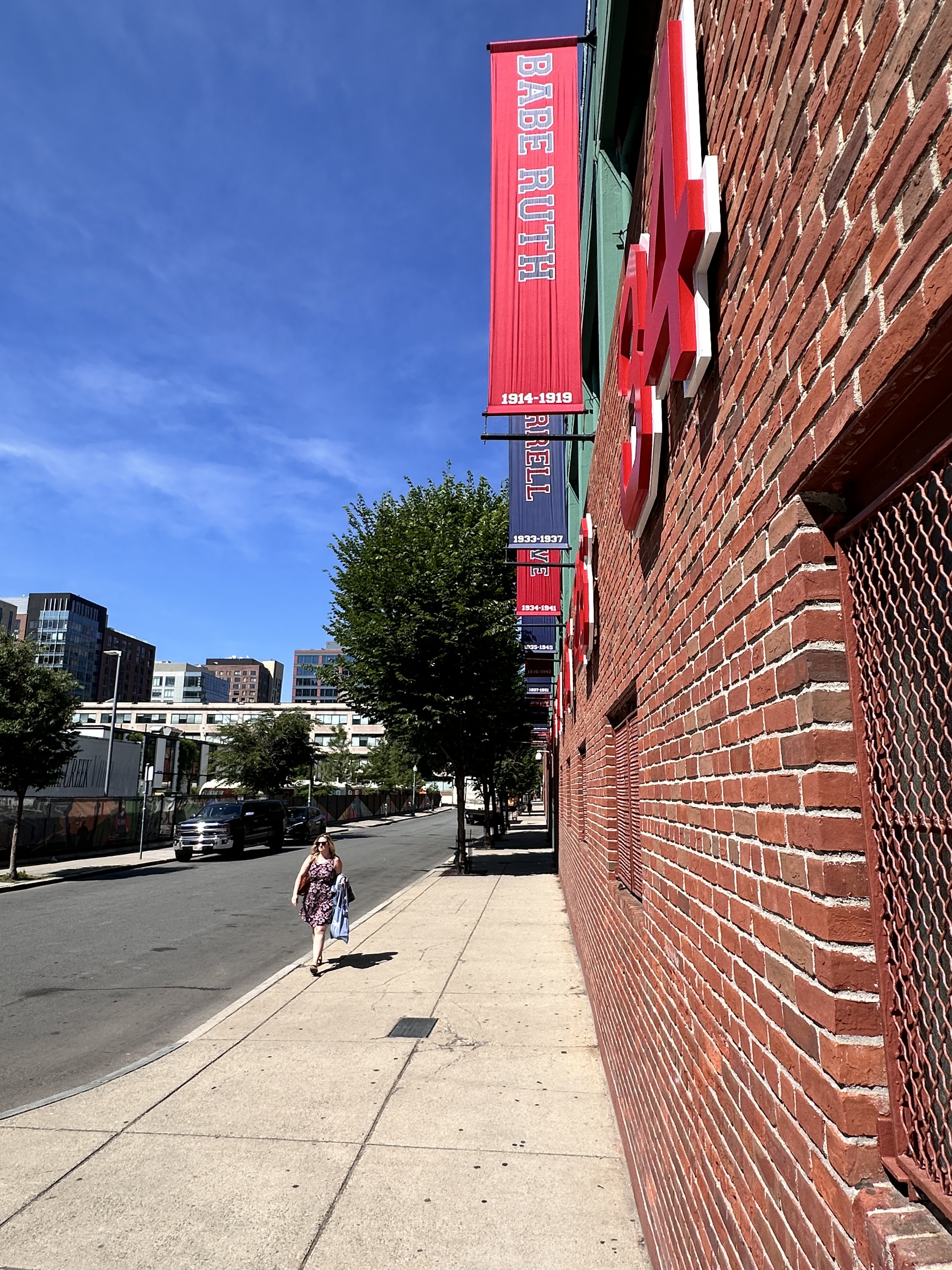
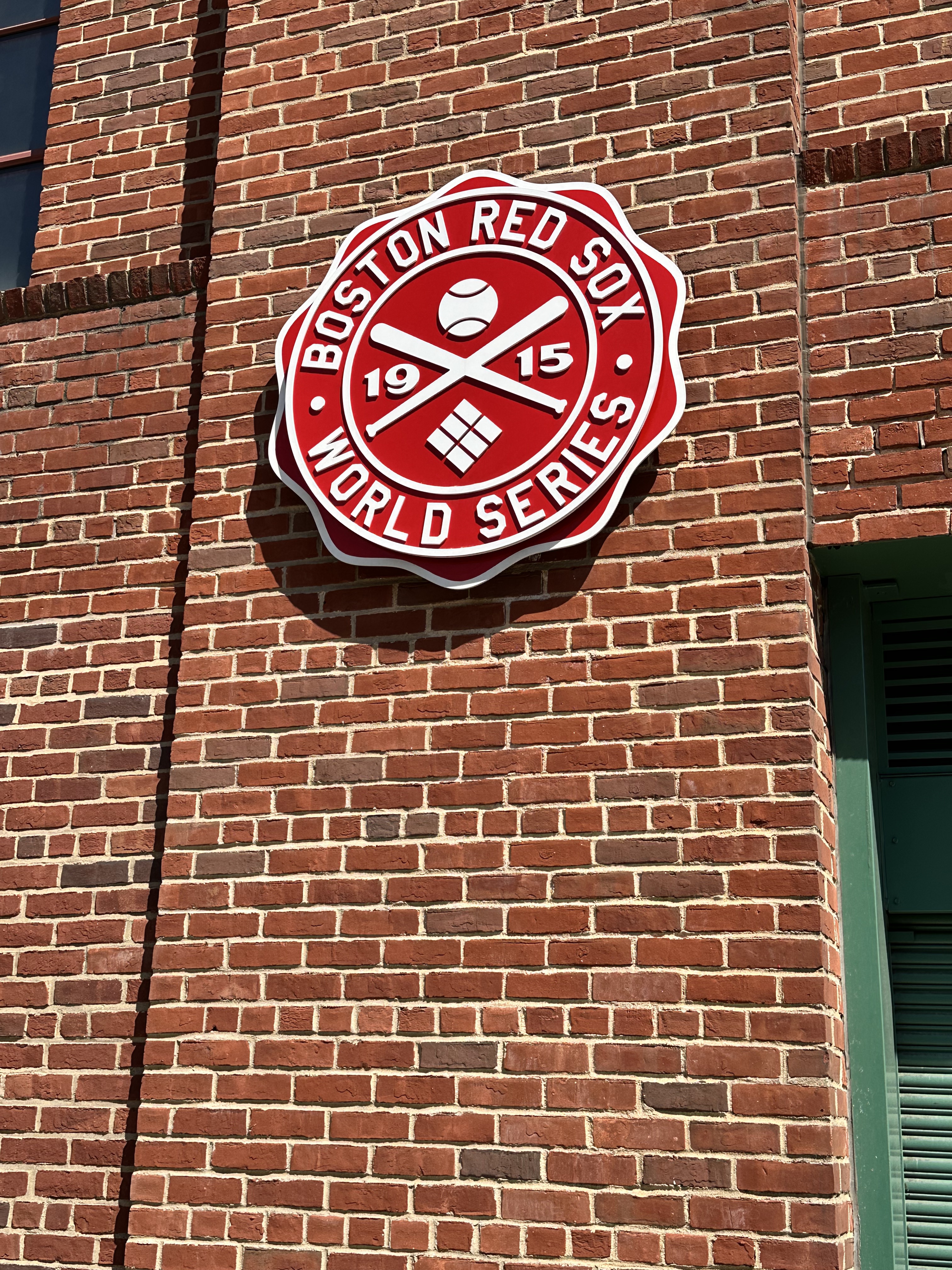
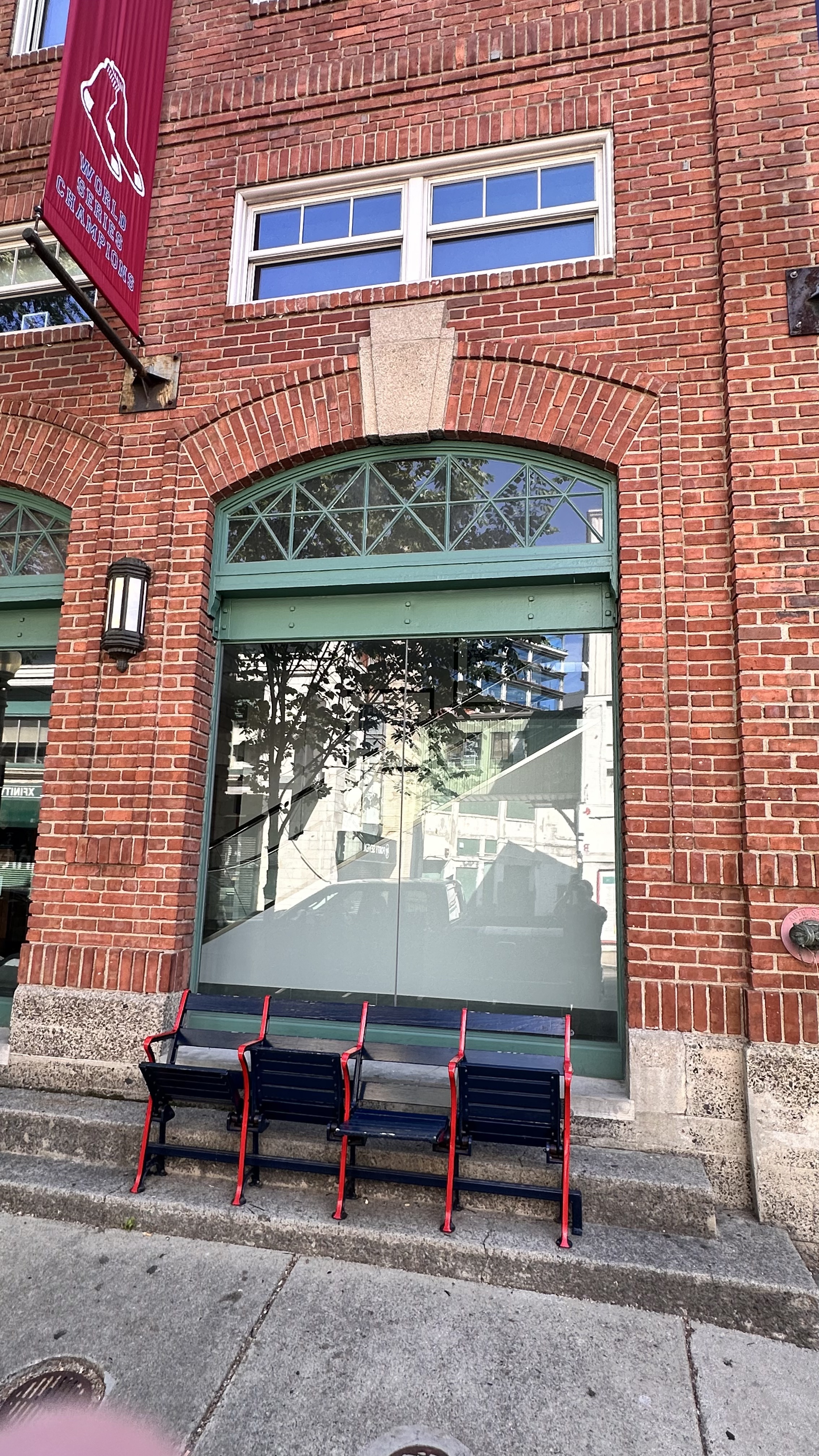
After exploring the exterior of the ballpark, we traveled downtown for some sightseeing, then returned to Fenway for the pregame tour at 4:00. The pregame tour is different from other tours throughout the day. You don’t get as much behind the scenes access. For example, we didn’t get to see the press box or the visitors’ clubhouse. We knew this going in but chose the pregame tour intentionally so we could watch batting practice.
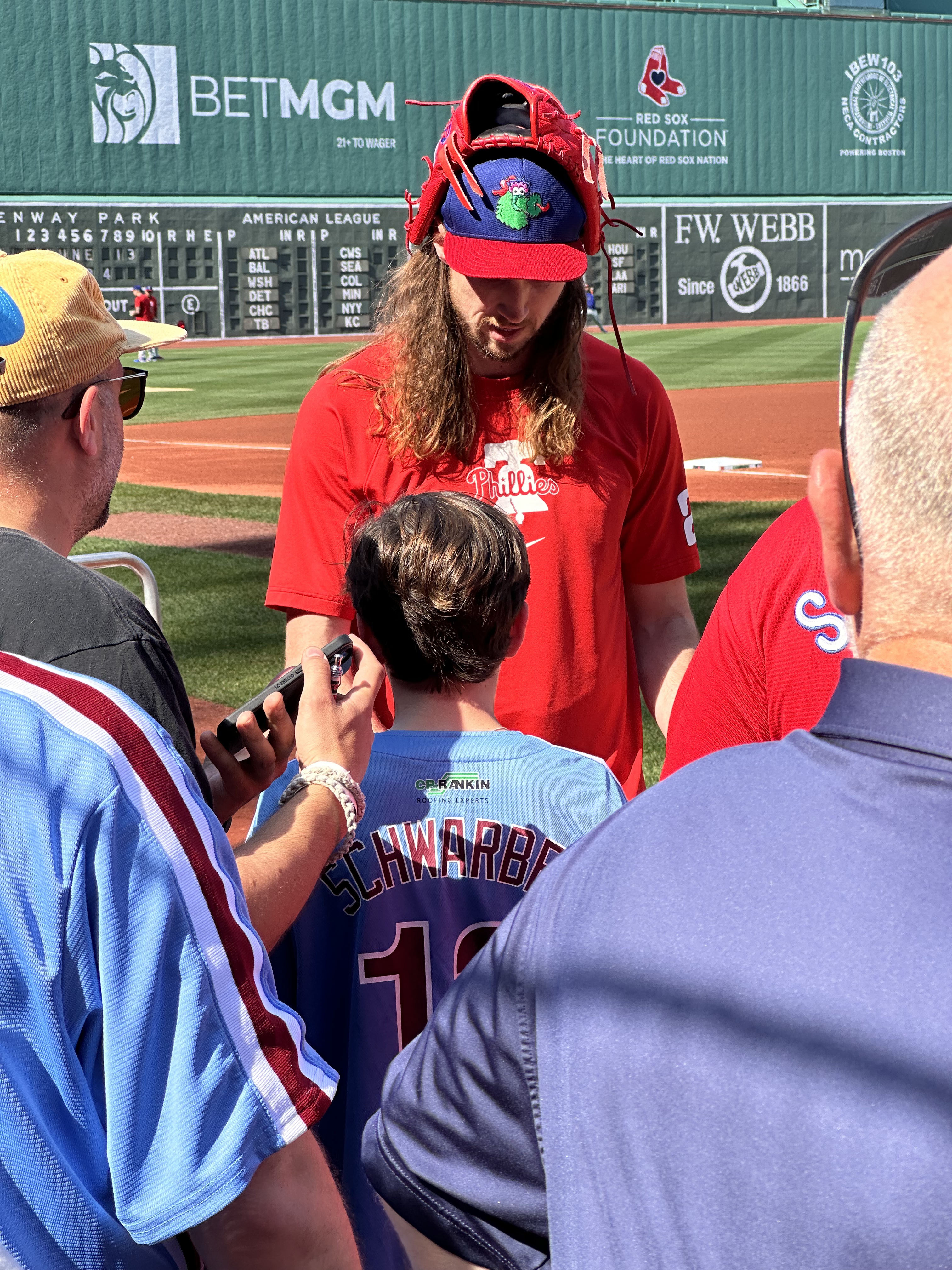
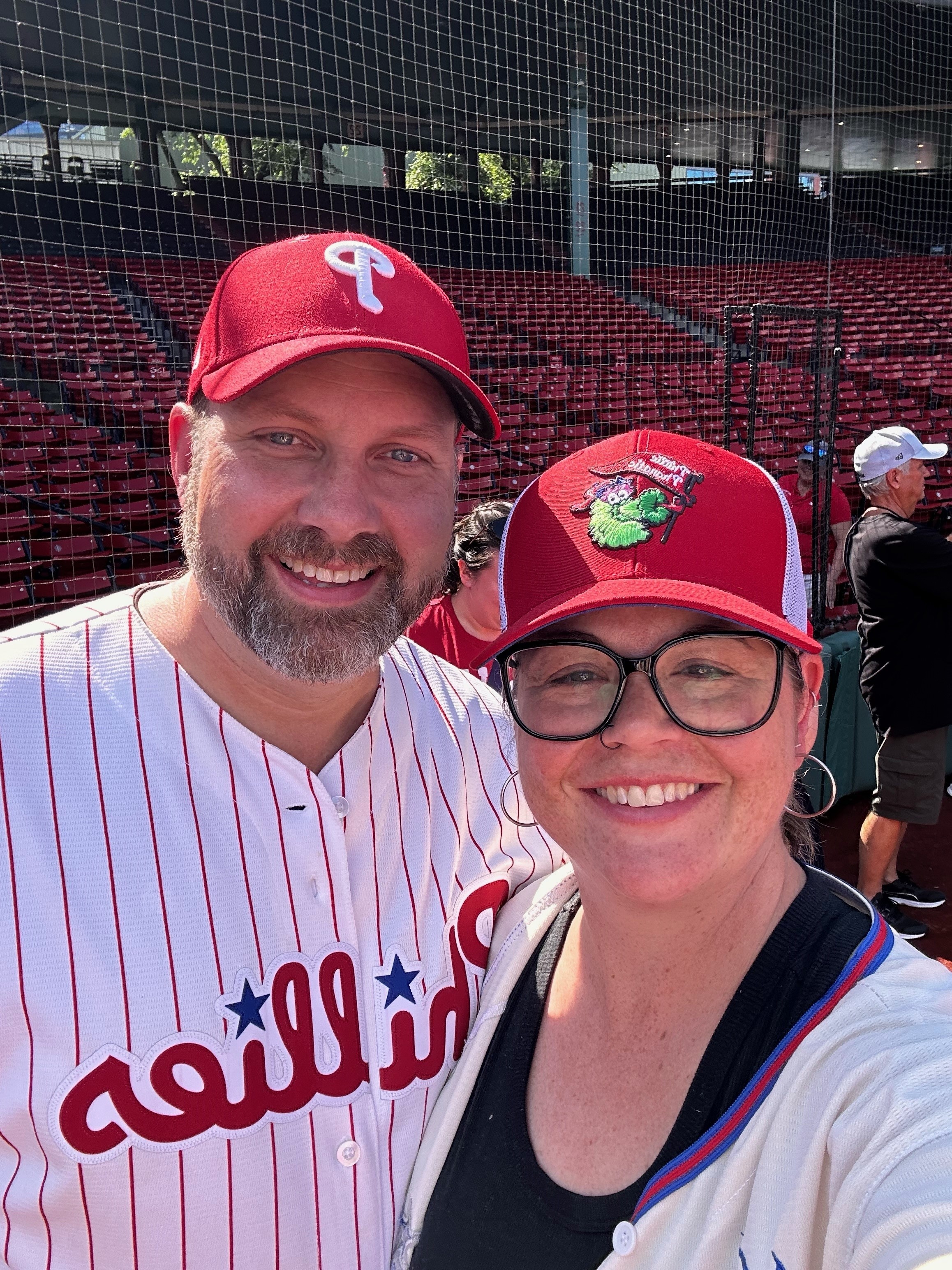
The pregame tour started on the steps of the team store, located across Jersey Street from the ballpark. From there, we walked into the home plate entrance, crossed the concourse, entered the lower-level seating bowl. and proceeded down to field level behind home plate. There we were allowed to stand and watch batting practice for about twenty minutes. Matt Strahm, a Phillies relief pitcher came over and signed autographs while we were there.

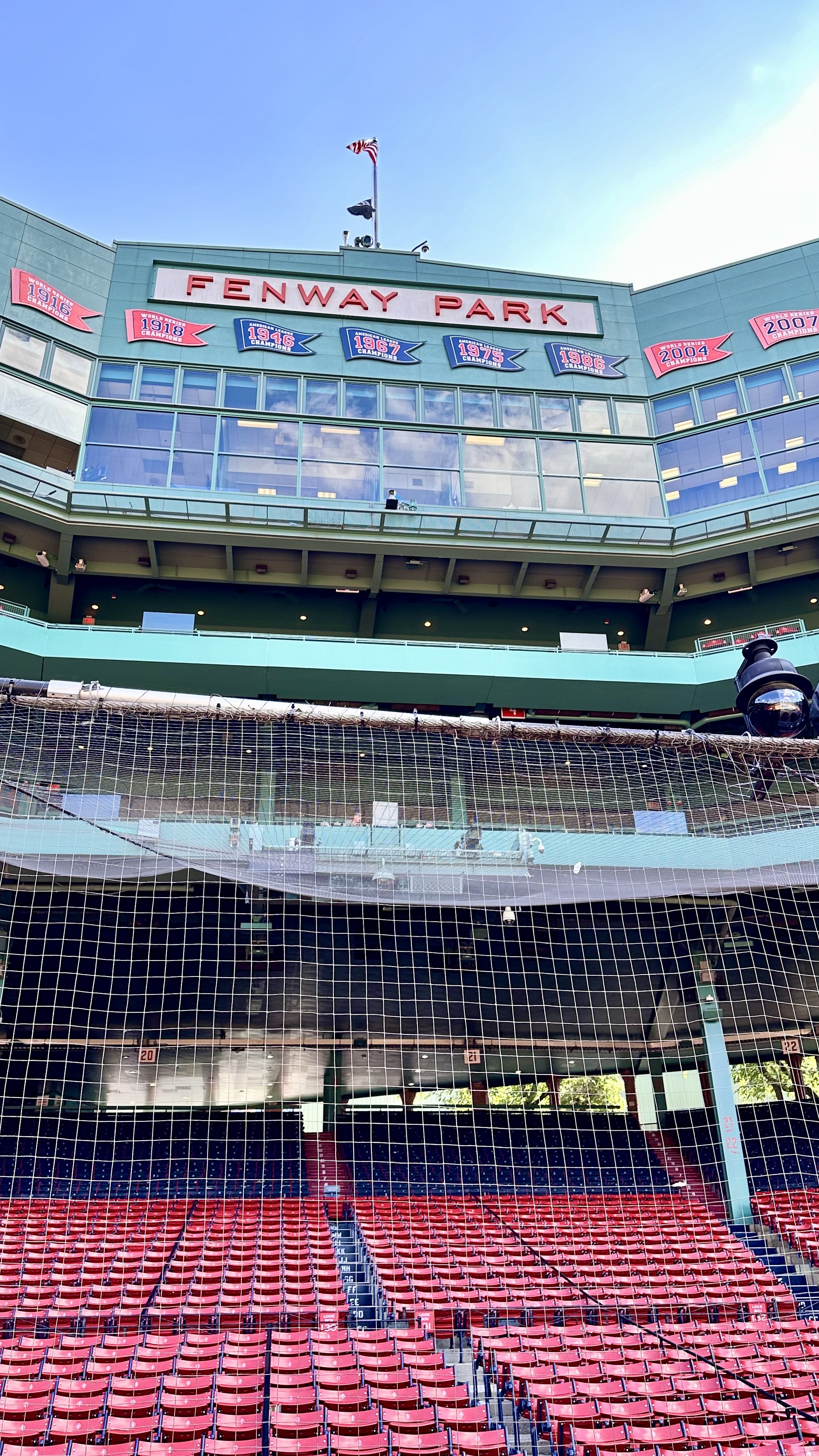
After about twenty minutes, our tour guide led us up to section GS25 where he gave us a history lesson about Fenway Park. We learned several interesting tidbits of information such as the fact that Fenway Park was built in 1912, currently has the 3rd smallest seating capacity in the league and is also the smallest playing surface in the league. We also learned that the original names of the Yankees & Red Sox were the New York Highlanders and the Boston Americans. Boston changed its name because they wore red socks. He also explained the whole story behind the curse of the Bambino, and touched on the Red Sox dark days when Fenway was in disrepair, the team was losing, and they were in danger of being relocated to a different city.
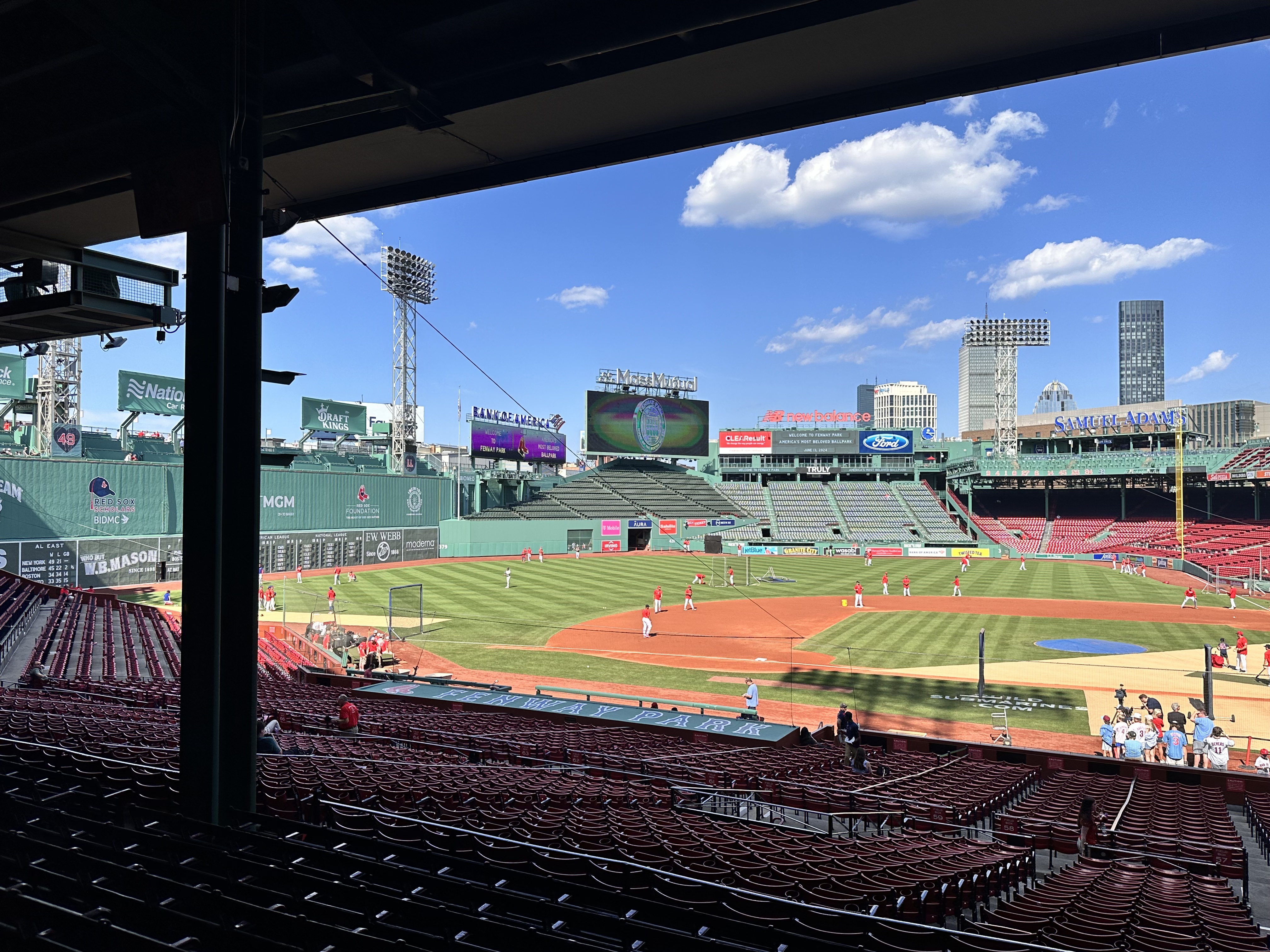
After the history lesson, our tour guide led us up to the Green Monster. We walked past Fisk’s Pole, then down to the Green Monster Seats where we watched the remainder of batting practice. It was an amazing experience!


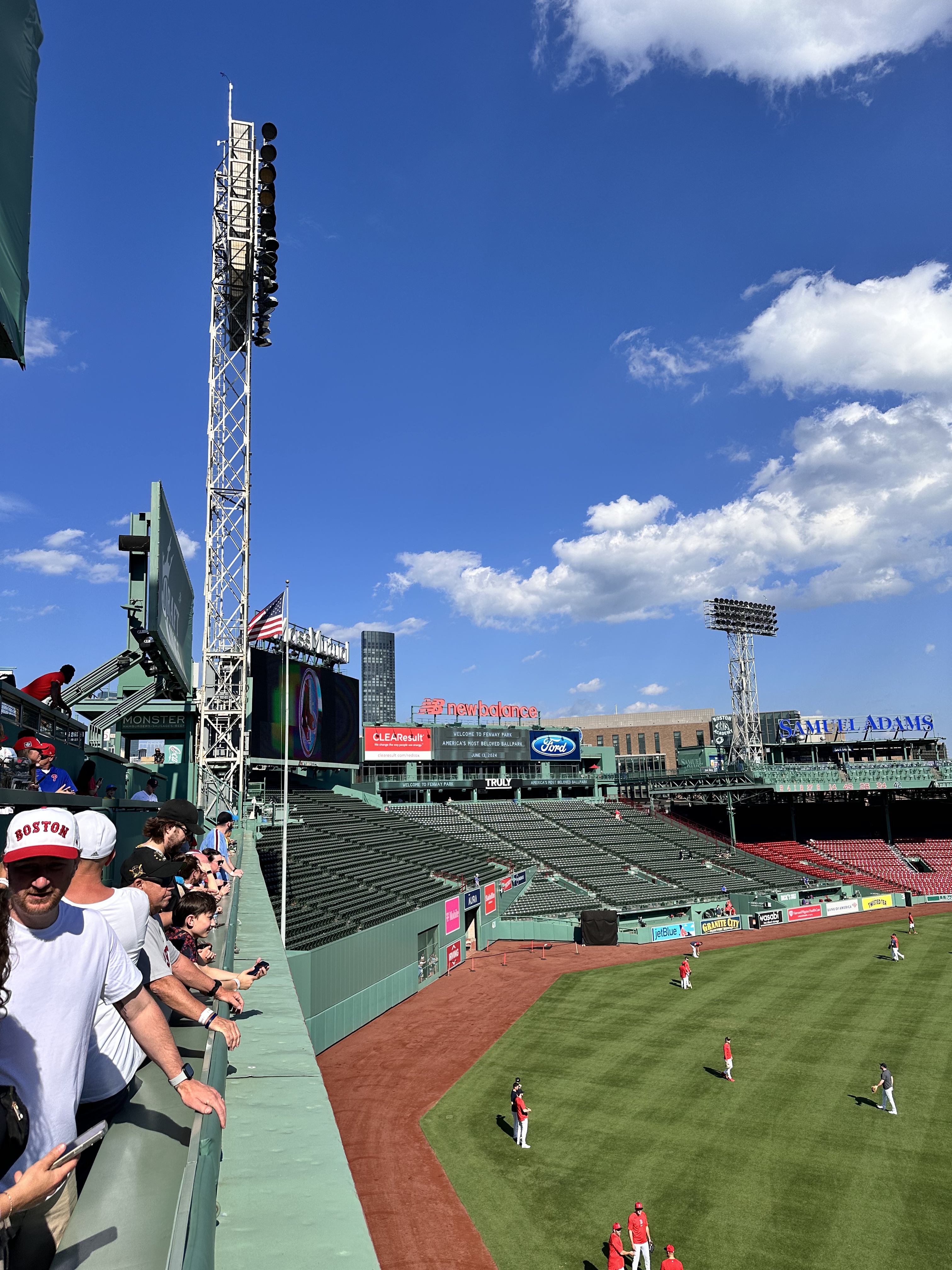
After the tour ended, we had to exit, then reenter using our game tickets. Before going to our seats, we explored the ballpark a little bit more.
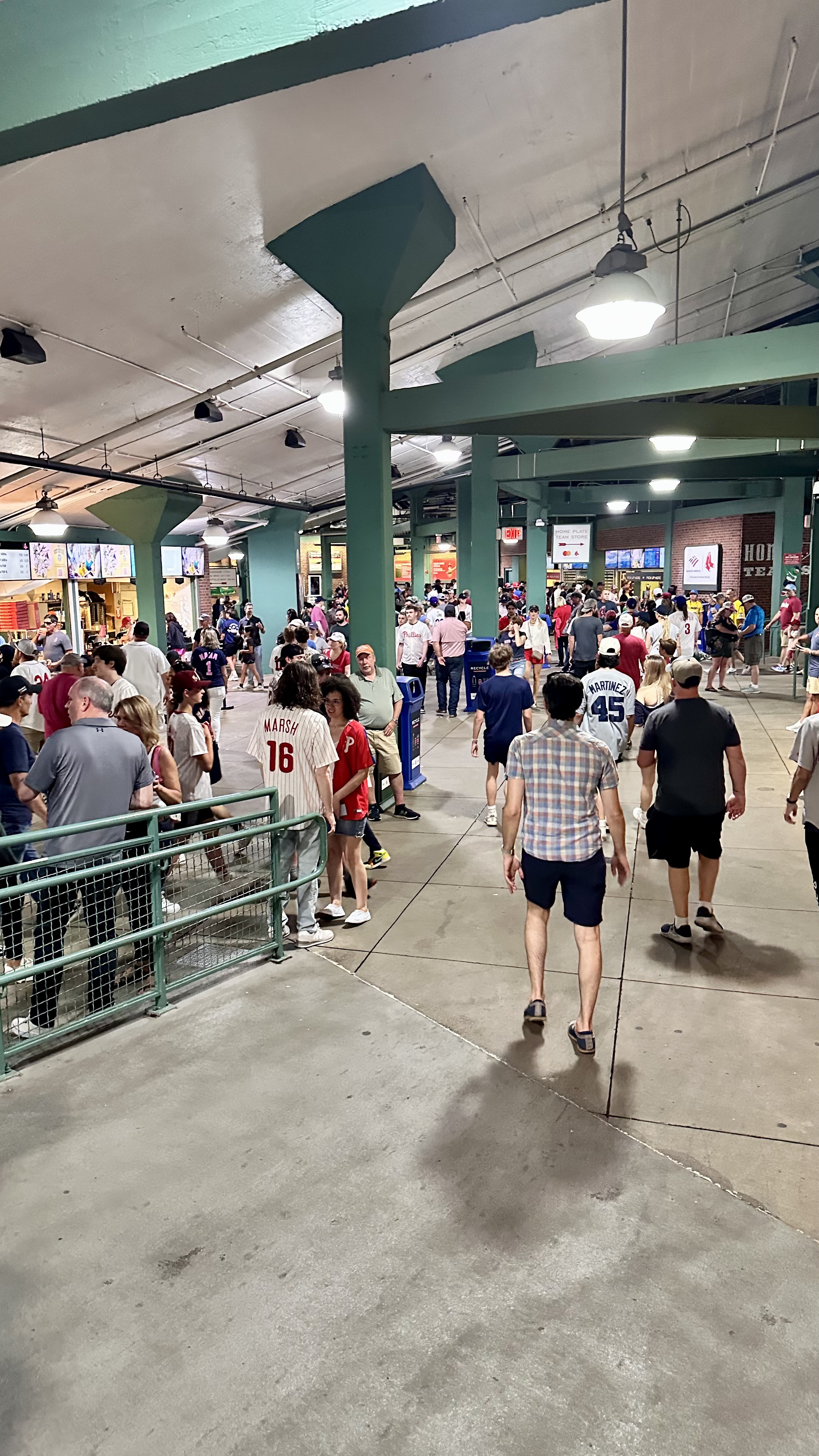
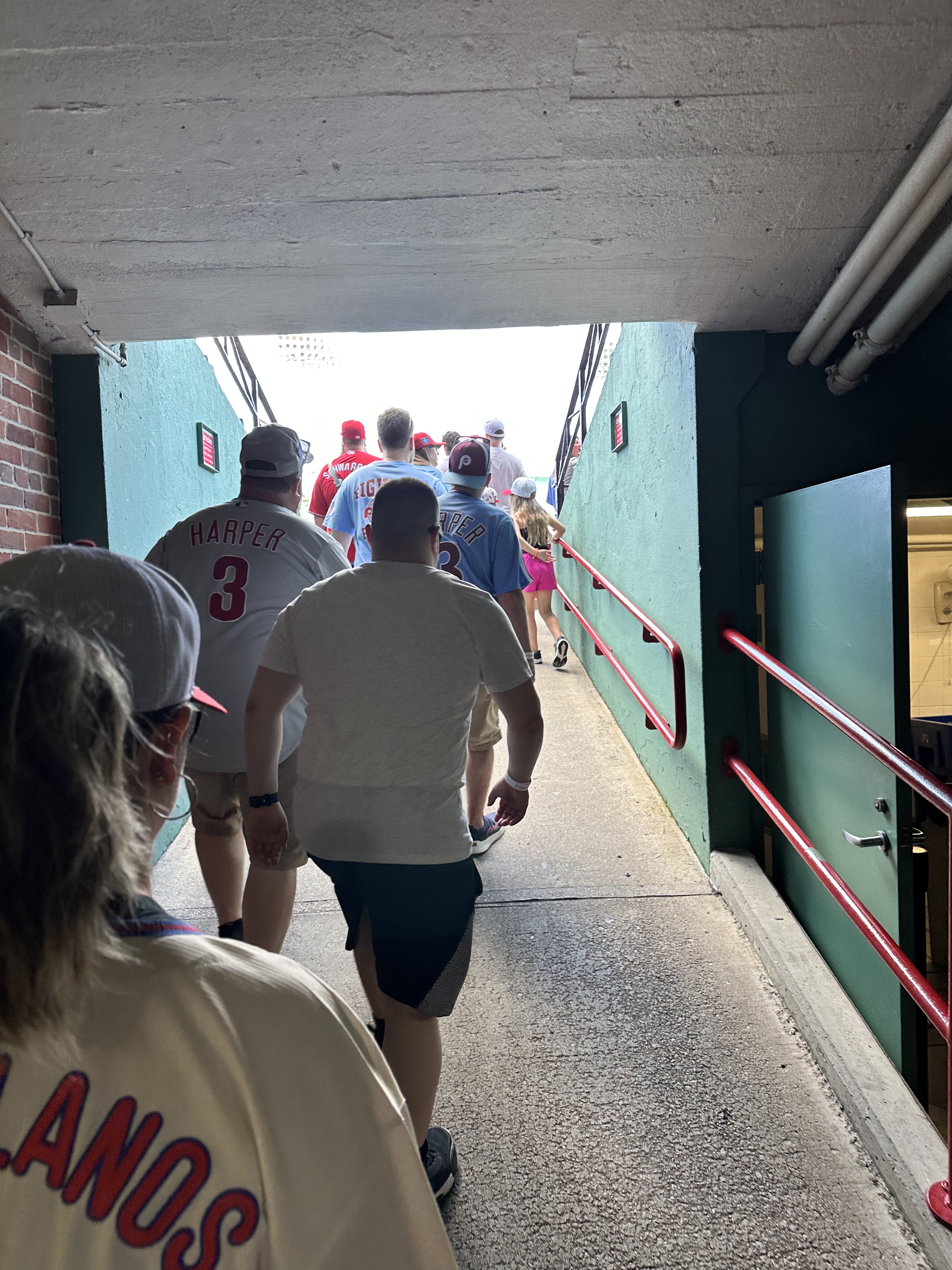
We were surprised to see that the concourse was wide and capable of accommodating the crowd size. It did not feel cramped or claustrophobic to us at all. It is a closed concourse, meaning you cannot see the playing field while getting concessions. However, they do have plenty of televisions broadcasting the came around the concourse.
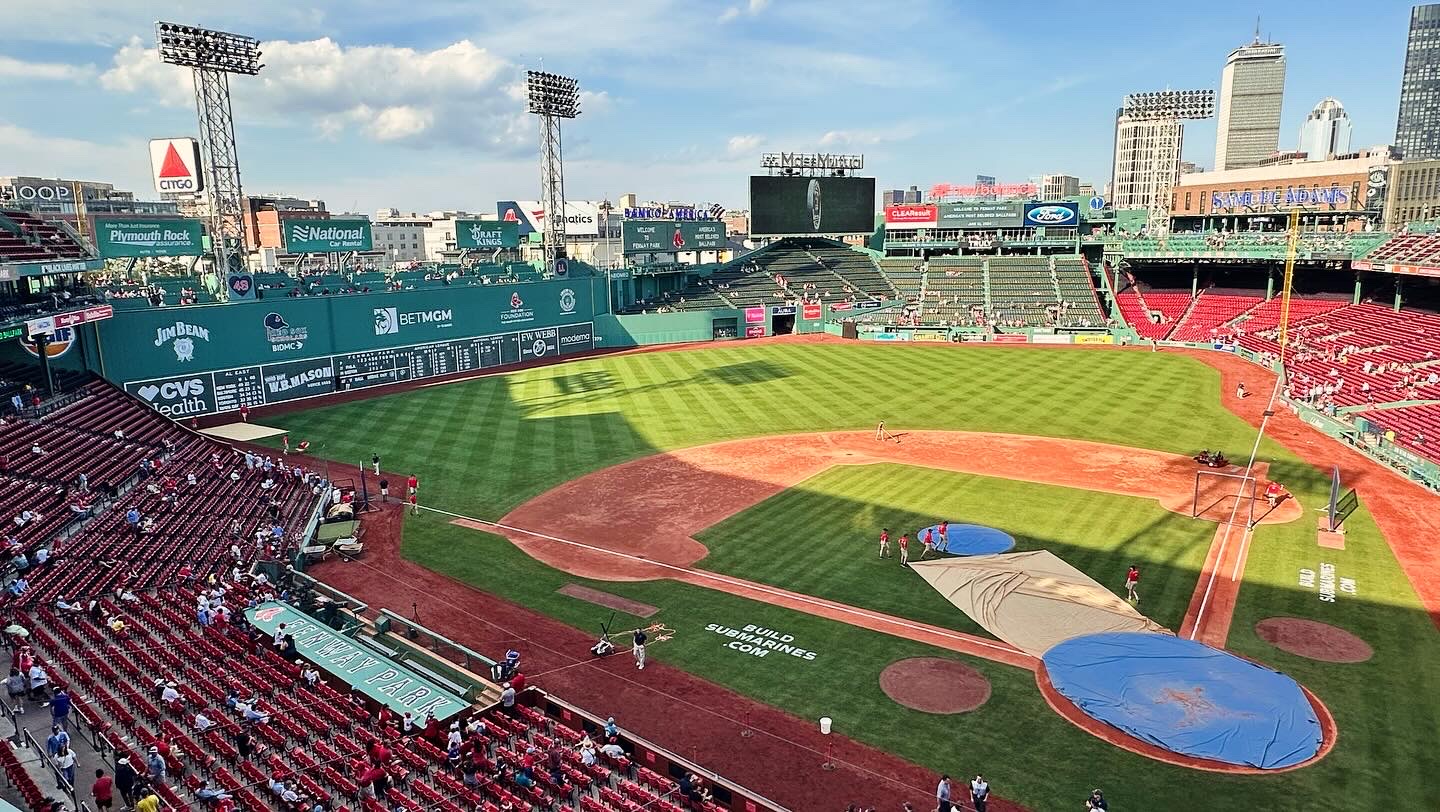
We then went up to the upper level to explore a little bit. It is a beautiful view from up there. Like much of the stadium, the upper-level concourse is disjointed. There are wide portions of the concourse that offer views to the playing field, and there are also narrow closed portions of the concourse with no view to the playing field.
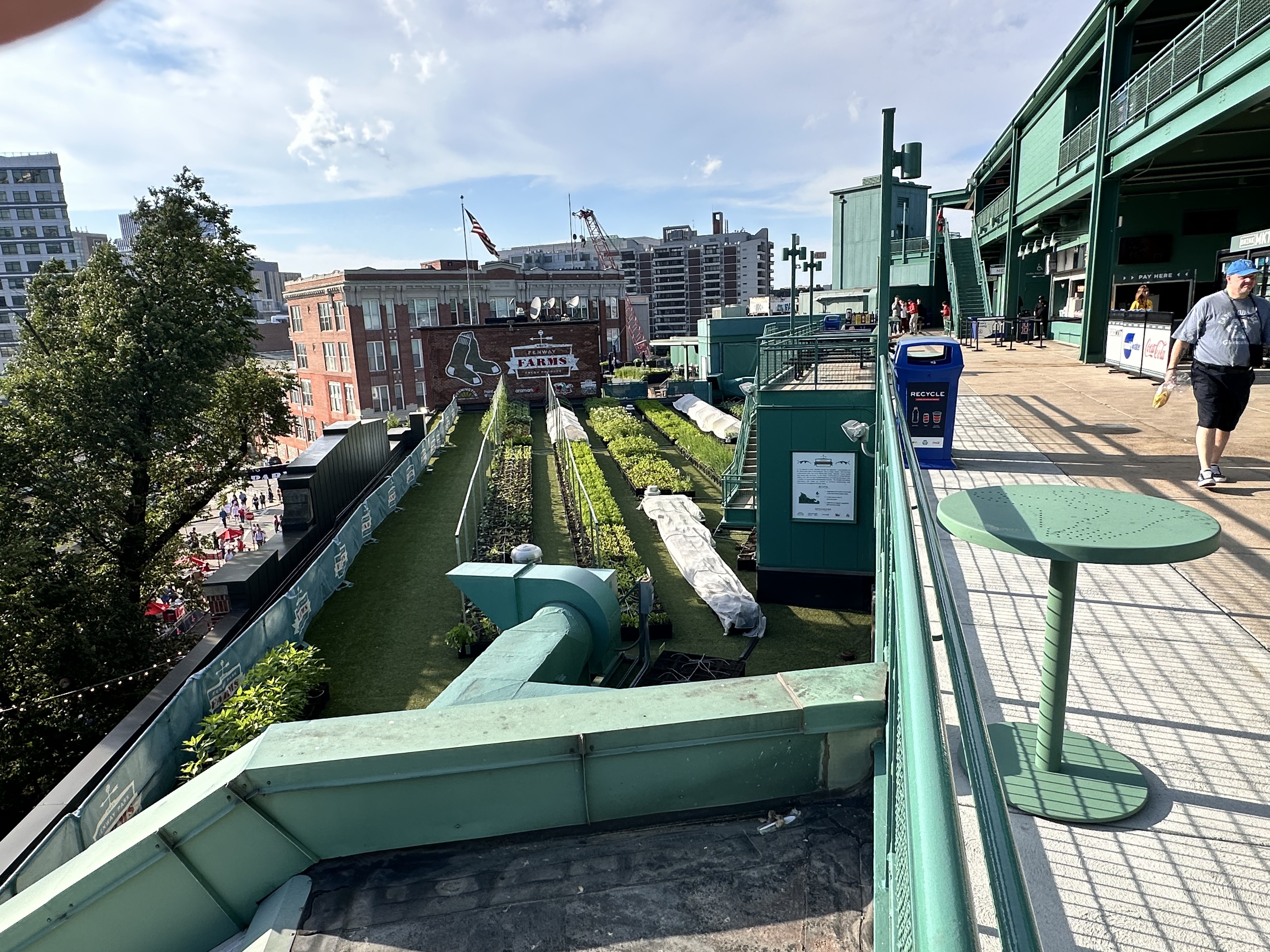
In addition, they have a rooftop vegetable garden called Fenway Farms along the 3rd base side of the upper-level concourse. They grow a variety of produce here that is used in the ballpark concessions.
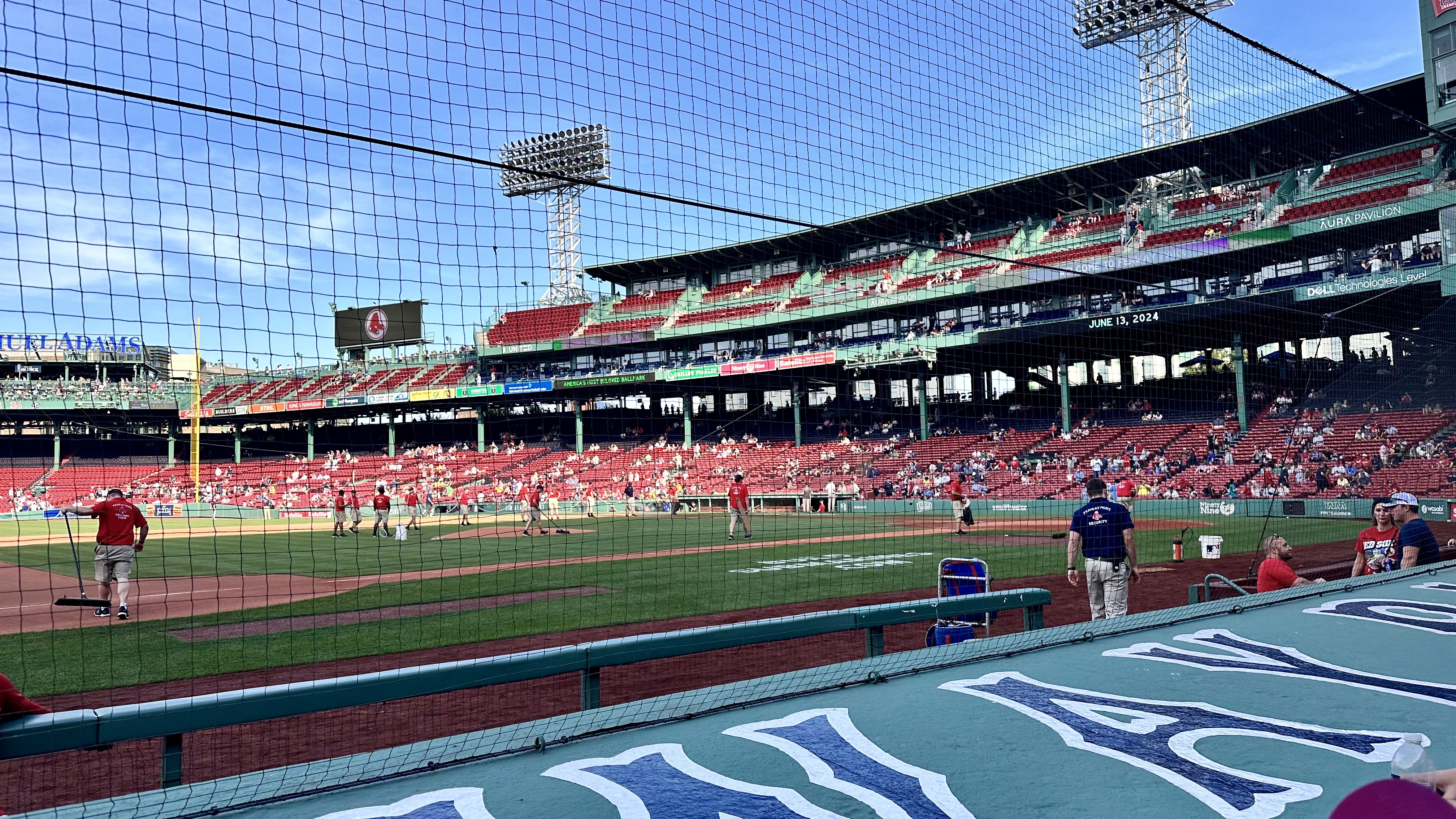
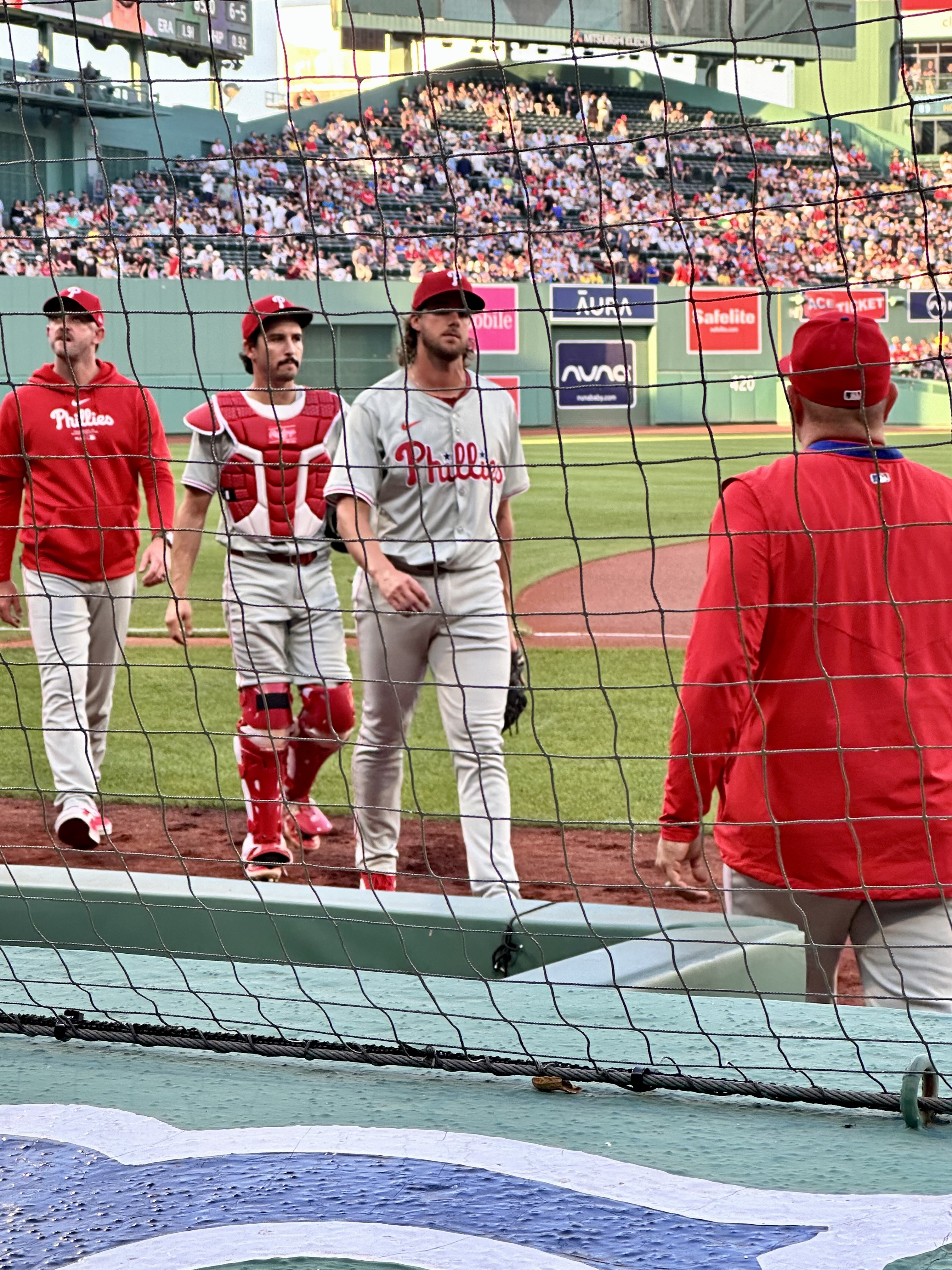
Finally, we went down to our seats. These seats were a Christmas gift from our son & his girlfriend. They went all out and got us front row seats, behind the Phillies dugout. These were, by far, the best seats we have ever had. We were so close that we could literally hear the players conversations.
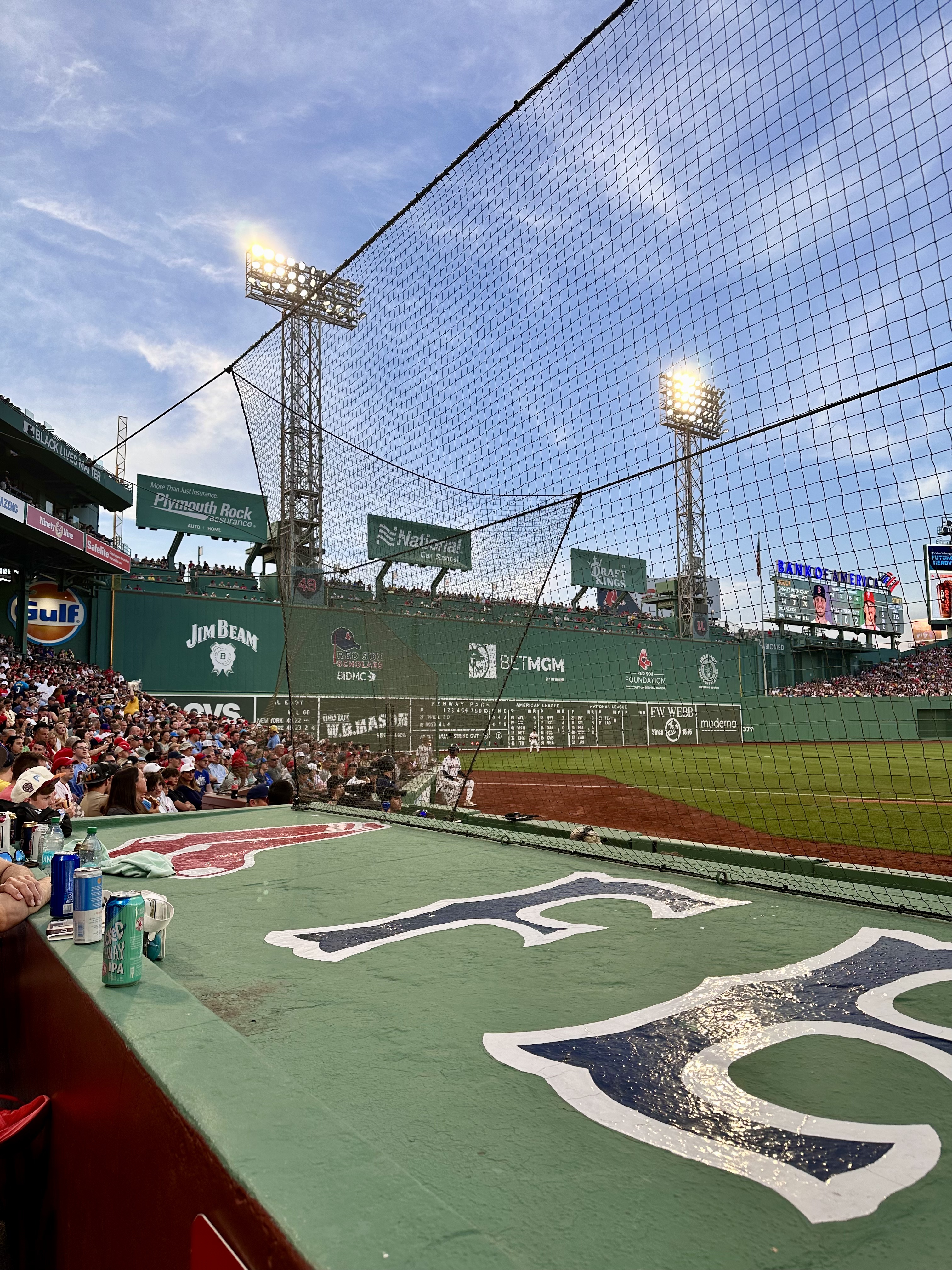

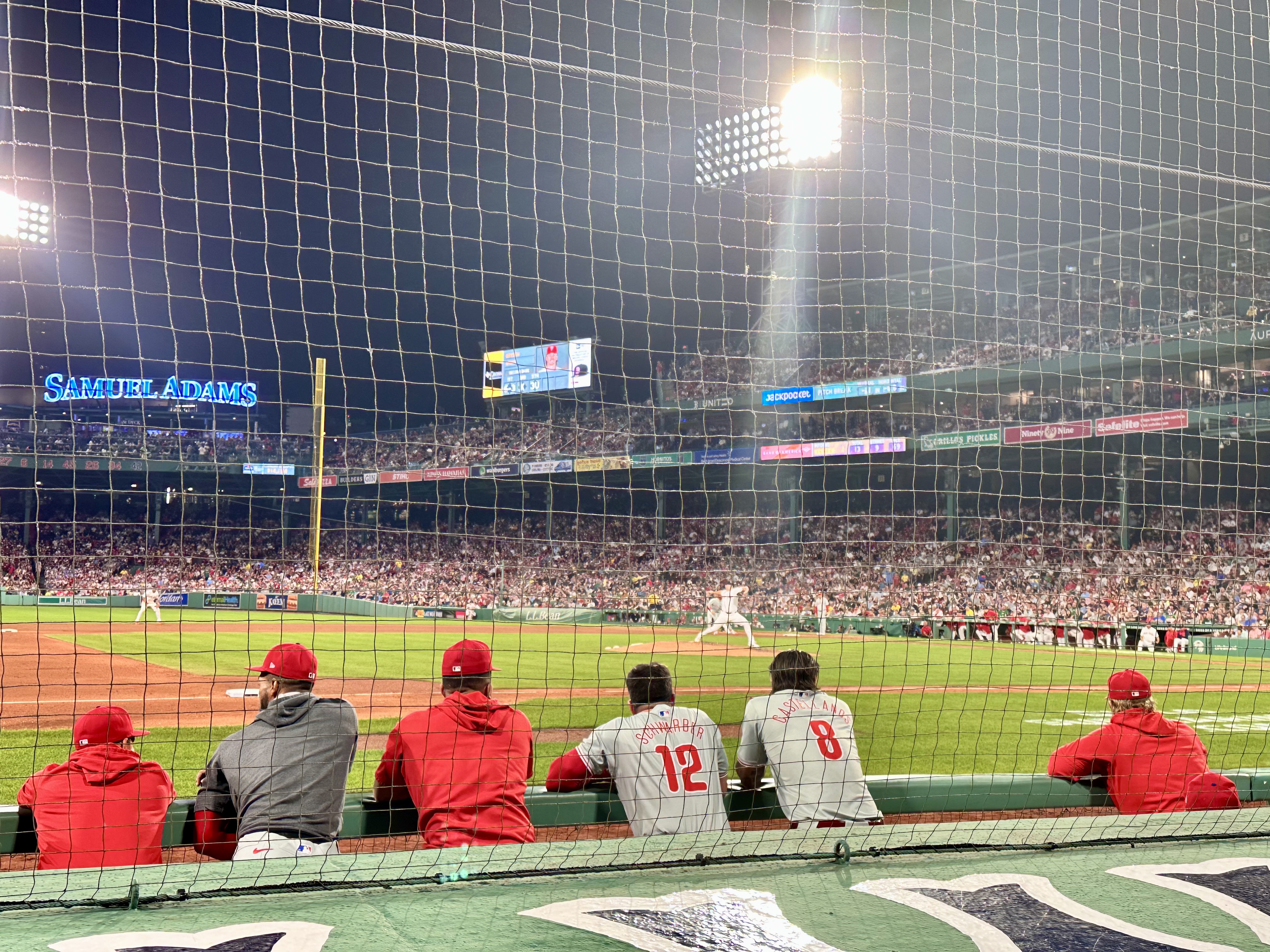
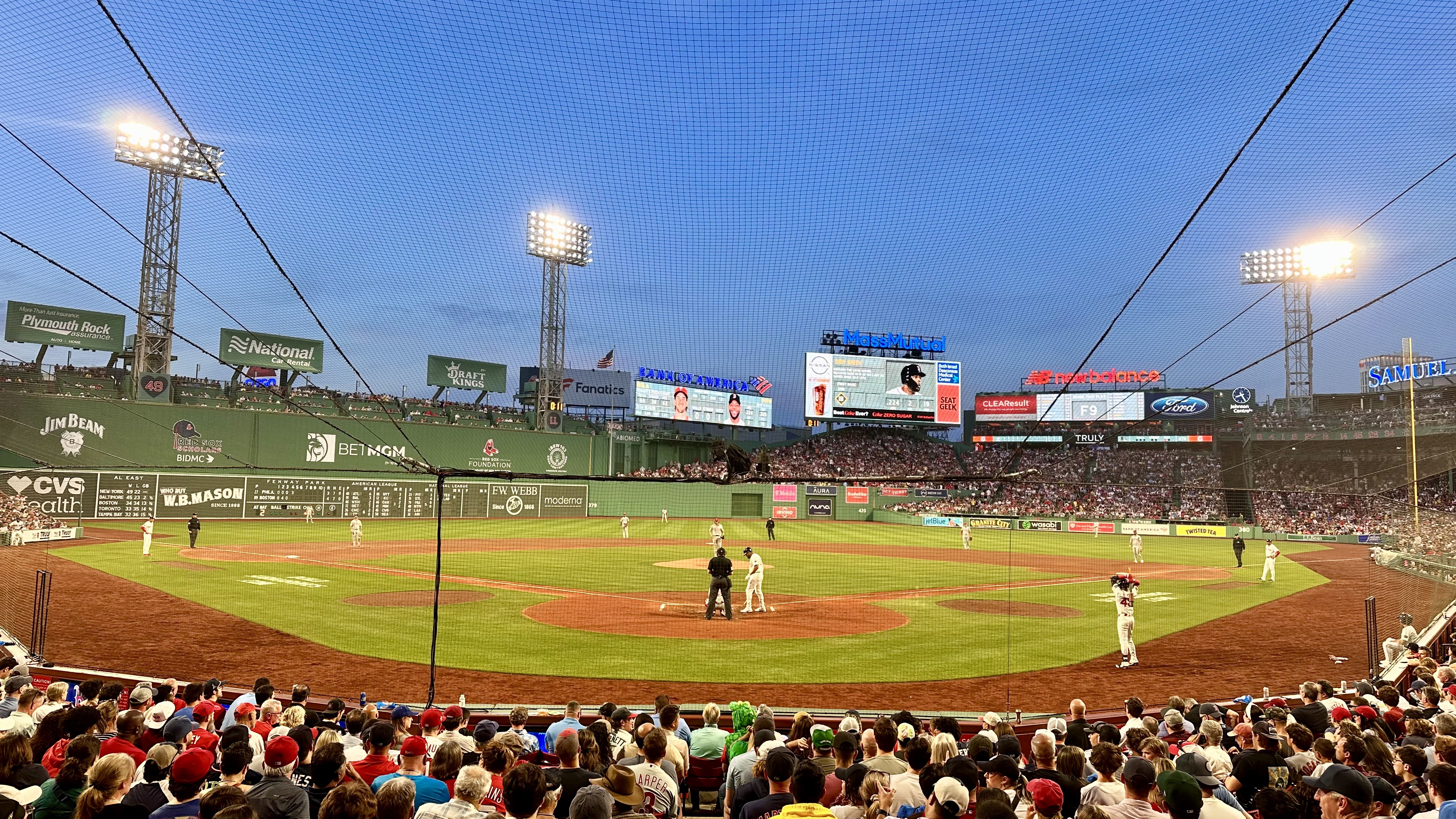
We absolutely loved Fenway Park. As noted earlier, this ballpark has shot up towards the top of our favorites. What it lacks in modern amenities, it more than makes up with its charm. It is like walking into a time capsule. You are sitting in the same seats that fans sat in one week after the Titanic sank in 1912. It is the same hallowed ground that people like Babe Ruth, Ty Cobb, Ted Williams, and many other baseball gods played in.
Fenway Park doesn’t need the frills. It was built for the sole purpose of watching a baseball game, and it serves that purpose well. Even with quirky sight lines, uncomfortable seats, etc., it is an amazing place to watch a ballgame. Because of the intimate size, you feel right on top of the action no matter where you sit. In many ways, it feels like a large minor league stadium as opposed to a major league ballpark.
Also, we are huge fans of urban ballparks that are in walkable neighborhoods. We haven’t been to Wrigley yet but anticipate it will be similar in this regard. At this point, the only ballpark we’ve visited that comes close to the walkability of Fenway would be Oriole Park at Camden Yards in Baltimore.
We definitely hope to return to Fenway Park again in the future!
 Touch 'Em All
Leave a comment